Views: 0 Author: Site Editor Publish Time: 2026-05-26 Origin: Site
Launching a successful clothing line requires more than striking graphics and a strong social media presence. Sourcing a reliable partner stands out as a unique challenge because streetwear procurement fundamentally differs from standard apparel buying. The culture demands perfection in physical execution. Fit, fabric weight, and finishing details define your brand identity from the first touch. A factory's true value goes beyond mere sewing capabilities. It hinges entirely on workflow alignment, bulk consistency across high-frequency drops, and rigorous risk mitigation.
This guide provides an evidence-based roadmap for navigating the complex production landscape. You will learn how to evaluate, test, and contract a manufacturing partner efficiently. Follow these specific steps to secure top-tier production without risking devastating dead stock or intellectual property theft.
Fit and Fabric Dictate Partner Selection: Standard factories struggle with streetwear-specific nuances like 400-600 GSM fleece or complex acid washes.
Samples Are Not Guarantees: Evaluate factories on "workflow alignment" and bulk consistency, not just a single perfect prototype.
Contracts Must Enforce Timelines: Implement strict late-delivery penalty clauses and establish pattern ownership upfront.
Pilot Before Scaling: Use a 50-100 unit pilot order to stress-test communication, Pre-Production Sample (PPS) accuracy, and Quality Control (AQL) standards.
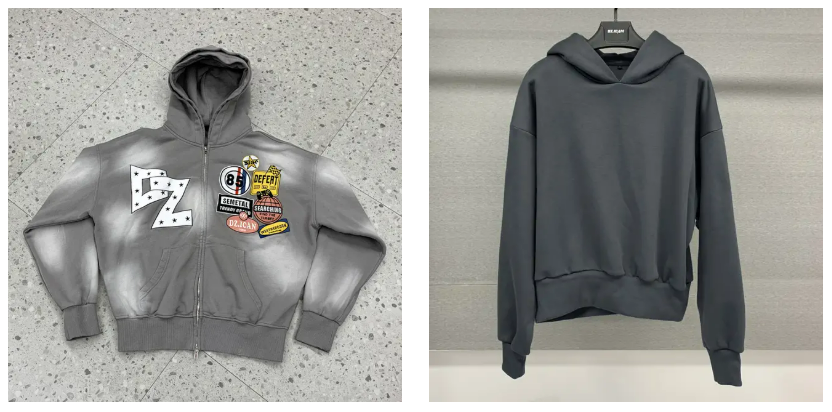
Streetwear relies entirely on engineered silhouettes. Boxy, oversized, and cropped cuts define modern aesthetics. Standard factories often misunderstand this fundamental concept. They mistakenly treat an "oversized" fit by simply grading up a standard pattern. They take a medium block and uniformly add inches to the chest and length. This lazy approach ruins the intended proportion, leaving you with poorly fitting garments. A true drop-shoulder requires precise mathematical balancing so it drapes correctly without bunching near the armpit. If they cannot comprehend modern proportions, your final product will look incredibly cheap.
Premium pieces utilize exceptionally dense materials to achieve a structured look. Handling 260–600 GSM fabrics introduces severe technical hurdles for standard facilities. High-GSM fleece and heavy jersey cotton require specialized heavy-duty machinery. Standard needles often break under the pressure of thick seams. Furthermore, shrinkage calculation becomes much more complex when washing heavy textiles. Factories must also manage seam bulk carefully, especially around the neckline and cuffs. If they lack the right equipment, you will receive warped seams and inconsistent sizing across your batch.
Modern collections depend heavily on specialized finishing techniques to tell a visual story. You might require intense enzyme washes, aggressive stone washes, or intricate distressed detailing. Standard apparel manufacturers treat wash processes as an afterthought. Maintaining visual consistency across a massive bulk run proves exceptionally difficult. A slight chemical imbalance or time variation in the wash drum easily ruins an entire batch. You need a partner who understands how to stabilize surface treatments so unit 1 looks identical to unit 500.
Traditional bulk manufacturing operates on outdated seasonal calendars. They prefer long lead times, massive minimum order quantities (MOQ), and predictable yearly cycles. Streetwear thrives on an agile, small-batch, high-frequency release model. This "drop culture" demands a highly nimble supply chain. You must transition rapidly from concept to release. If your manufacturer forces you into rigid six-month production windows, you will miss vital cultural trends and lose momentum.
When selecting a trusted Streetwear Factory, you must first define your preferred operational model. The industry generally splits into Cut, Make, Trim (CMT) and Full Package Production (FPP). Assess which model fits your current supply chain maturity.
| Production Model | Definition | Best Suited For |
|---|---|---|
| CMT (Cut, Make, Trim) | You source and supply all fabrics, patterns, and trims. The facility only provides manual labor for cutting and sewing. | Experienced brands wanting total control over raw material costs. |
| FPP (Full Package Production) | The facility handles everything from material sourcing and pattern grading to final sewing and packaging. | Startups and growing brands prioritizing speed and simplified logistics. |
A flawless initial order means nothing if they fail on the restock. Establish strict criteria for evaluating how they handle capacity transitions. Transitioning from a 50-unit pilot to a 500-unit restock often triggers massive quality degradation. Factories might secretly switch thread suppliers or rush the cutting process to meet larger demands. Ask them directly about their scaling procedures. They must demonstrate documented workflows for locking in material specifications across subsequent runs.
Scrutinize their printing and embroidery setup extensively. Determine whether screen printing, puff prints, Direct-to-Garment (DTG), and intricate embroidery happen in-house. Outsourcing these specific steps increases your margin for error exponentially. It creates severe workflow misalignment and inevitable delays. When they control embellishments under one roof, you guarantee tighter oversight regarding print placement and color matching.
Require absolute transparency regarding their internal QC framework. Look for standard Acceptable Quality Limit (AQL) inspections. They should implement rigorous multi-step checks encompassing raw fabric inspection, inline monitoring during sewing, and a final garment review before bagging. If they dodge questions regarding AQL standards or cannot explain their defect allowance rate, consider it a massive operational risk.
Founders frequently fall victim to the notorious sample trap. A perfect initial sample often masks deep systemic issues within the broader bulk production line. A master tailor usually crafts this prototype in a highly controlled, quiet sample room. This pristine environment does not reflect the chaotic realities of high-speed assembly lines. You cannot confidently base long-term financial decisions on a single perfect garment. You must test their actual mass-production capabilities.
Your tech pack serves as the ultimate undisputed blueprint. Any omitted detail in this document will undoubtedly result in an error. Do not ever rely on their "intuition" to fill in the blanks. Language barriers and cultural differences make assumptions incredibly dangerous. Detail every single measurement, stitch type, Pantone color, and label placement precisely. If a mistake happens in bulk, a flawless tech pack protects you legally and financially.
Never commit major capital to an untested partner immediately. Outline a strict process for testing them using a strategic micro-run. Select your "hero styles" and place a 50-100 unit pilot order. This intentionally small run stress-tests their communication speed, precision, and shipping logistics. It reveals their true operational capabilities before you scale. Consider this pilot phase an inexpensive insurance policy against disastrous bulk errors.
Always mandate a final PPS approval phase. They must produce a perfect physical pre-production sample before any bulk fabric gets cut. This serves as your absolute last line of defense. The approved PPS becomes the physical benchmark for final quality control inspections. Do not let them rush you through this vital stage. If the PPS feels off, halt the entire operation until they correct the issue.
Startups routinely mismanage their initial funds by overcommitting to early inventory. We strongly recommend a realistic financial framework to keep your business solvent. You must divide your starting capital strategically to survive the expensive iteration phase.
| Budget Category | Suggested Allocation | Purpose |
|---|---|---|
| Prototyping & Design | 35% | Funding tech packs, multiple sample rounds, and pattern revisions. |
| First Bulk Run (Pilot) | 40% | Securing raw materials and covering manufacturing costs for the first drop. |
| Marketing & Operations | 25% | Lookbook shoots, website hosting, and initial ad spend. |
Protect your unique designs aggressively from day one. Detail the absolute necessity of Non-Disclosure Agreements (NDAs) early in the conversation. Use explicit contractual clauses stating you retain 100% ownership of all patterns, grading rules, and tech packs. You do not want them quietly selling your proprietary oversized block to competing fast-fashion brands. If they hesitate to sign an IP release, walk away immediately.
Never wire funds directly to unverified overseas bank accounts. Recommend using secure payment portals like Alibaba Trade Assurance or PayPal Goods & Services for initial transactions. Furthermore, include highly specific invoice notes detailing garment specifications, GSM weights, and delivery dates. If a severe dispute arises regarding quality, these detailed invoices serve as your strongest vital evidence for securing a refund.
Introduce a highly practical negotiation tactic to enforce timelines. Stipulate a 15–20% discount on the final invoice for significantly delayed deliveries. Delays destroy marketing rollouts and seasonal drops. Facilities rarely deliver on time unless you attach clear financial stakes to the deadline. This aggressive clause forces timeline accountability and actively pushes your order up their internal priority list.
The "We Can Do Everything" Claim: Warn against facilities claiming mastery over every possible clothing category. True specialists have highly specific areas of focus. If they claim to make tailored suits, activewear, and heavy streetwear equally well, they are likely outsourcing or lying.
Refusal to Make Samples Before Bulk: Reject anyone who aggressively pressures you for a massive bulk deposit before delivering an approved physical prototype. Honest partners welcome the sampling phase to calibrate their machines.
Opaque Subcontracting Practices: Identify the massive risk of them secretly farming out complex cuts or specialized washes to unvetted secondary facilities. This instantly destroys your quality control framework and introduces wild inconsistencies.
Poor Communication Cadence: Frame communication response time during the quoting phase as a direct preview of the future. If they take four days to answer a basic fabric question now, imagine how they will handle a mid-production crisis.
Lack of Compliance Documentation: Note the growing consumer importance of material traceability and ethical compliance. Ask for labor standards documentation or OEKO-TEX certifications. A lack of paperwork threatens your long-term brand viability.
Shift Your Mindset: Stop treating this process as merely finding a sewer. Focus entirely on building a highly predictable, risk-averse supply chain.
Build a Supplier Matrix: Never rely on a single facility. Keep 3 to 5 vetted backup factories for different product lines to aggressively mitigate capacity constraints.
Leverage Negotiation: Use your established supplier matrix to negotiate better terms, faster turnarounds, and lower MOQs over time.
Take Immediate Action: Finalize your Tech Pack today, double-check your sizing grade rules, and begin reaching out to prospective partners for initial quotes.
A: Lower MOQs usually dictate higher unit costs. Sourcing high-quality blank garments might require only 50 units. However, fully custom cut-and-sew operations typically start around 100 to 300 units per style or colorway to justify the specialized machine setup.
A: You must negotiate pattern ownership explicitly in writing before paying a deposit. Ideally, you should pay a distinct development fee upfront. This legally ensures your brand retains full intellectual property rights to all blocks and templates.
A: Set realistic timeline expectations from the start. You will usually experience 2 to 4 rounds of sampling. This includes the initial prototype, subsequent fit revisions, and finally, the approved Pre-Production Sample (PPS) right before bulk cutting.
A: Local sourcing provides incredible speed, easier communication, and rapid oversight for small capsule drops. Conversely, overseas production offers superior scalability and much better execution for complex, heavyweight garments that require intricate custom finishing.


