Views: 0 Author: Site Editor Publish Time: 2026-06-23 Origin: Site
Launching an apparel brand carries incredibly high stakes. Poor supplier choices routinely lead to inconsistent sizing, missed launch dates, and burned capital. Scaling a clothing line requires you to move past basic print-on-demand services. You must secure a reliable production facility capable of handling bespoke specifications. It takes precision and trust to execute your vision perfectly every time. We will guide you through evaluating and shortlisting a manufacturing partner. You will learn how to align your supplier choice to your brand’s quality standards, timelines, and unit economics. Let us explore the proven frameworks for finding the ideal production facility.
Choosing between premium blanks and cut-and-sew dictates your startup costs, lead times, and required Minimum Order Quantities (MOQs).
Evaluating a hoodie manufacturer requires looking past per-unit pricing to calculate the true "landed cost" (shipping, tariffs, hidden fees).
A robust Tech Pack and a rigorous sampling phase are non-negotiable for mitigating production risks.
Verifiable compliance (e.g., OEKO-TEX, WRAP) and clear communication distinguish professional partners from high-risk vendors.
You must define your production pathway before contacting any facility. Two primary methods exist for creating private label apparel. Each pathway requires different resources, timelines, and technical knowledge. We will help you align your choice to your current capital and brand positioning. This decision shapes your entire supply chain.
Using premium blanks offers a streamlined entry into the apparel market. Factories produce these heavyweight garments in massive quantities without brand tags. You simply purchase them, remove the generic tear-away tags, and add your own branding.
Ideal Use Case: Best for brands testing new markets or requiring low MOQs.
The Process: Involves relabeling and adding prints or embroidery to pre-manufactured heavyweight garments.
Advantage: Faster turnaround times and lower upfront financial risk.
White labeling allows you to focus purely on design and marketing. You skip the complex pattern drafting phase entirely. However, you sacrifice total control over the garment's exact drape and fit.
When you design fully custom hoodies, you enter the realm of cut-and-sew manufacturing. The facility builds your garment from raw fabric rolls based on your exact measurements. You control every single stitch and panel.
Ideal Use Case: Best for established brands needing proprietary fits, specific fabric blends, and custom hardware.
The Process: Requires creating custom patterns, sourcing unique textiles, and developing specific aglets or zippers.
Requirement: Demands higher upfront investment, longer lead times, and detailed technical specifications.
Cut-and-sew production elevates your brand above competitors relying on standard fits. It gives your audience a unique silhouette they cannot find anywhere else. This bespoke approach builds deep customer loyalty through superior, distinctive construction.
Choosing a geographic sourcing strategy impacts your entire business model. You must compare these options without bias. Base your decision purely on desired business outcomes and logistical capabilities. Let us examine the trade-offs between localized and international facilities.
| Production Region | Primary Advantages | Notable Disadvantages |
|---|---|---|
| Domestic (e.g., USA/EU) | Faster shipping logistics. Easier communication due to shared time zones. Strong perceived brand value ("Made in USA"). Accessible factory visits. | Higher labor expenses resulting in higher per-unit quotes. Potentially smaller operational scale. Limited complex fabric mills. |
| Overseas (e.g., Asia, Latin America) | Highly specialized infrastructure. Massive economies of scale. Access to complex fabric mills and advanced dye houses. Lower per-unit quotes. | Longer freight times. Complex import tariffs. Potential language barriers. Significantly higher MOQs. |
Domestic production excels when you need rapid inventory replenishment. You can launch collections faster and maintain tight oversight. Customers often appreciate localized manufacturing, sometimes justifying premium retail positioning. However, scaling your operations locally often strains tight budgets.
Overseas production offers unmatched technical capabilities. International hubs possess specialized machinery for intricate knitting and dyeing. They handle massive orders efficiently. You must carefully manage the extended shipping schedules and navigate complex customs regulations. Plan your seasonal drops months in advance to offset transit delays.
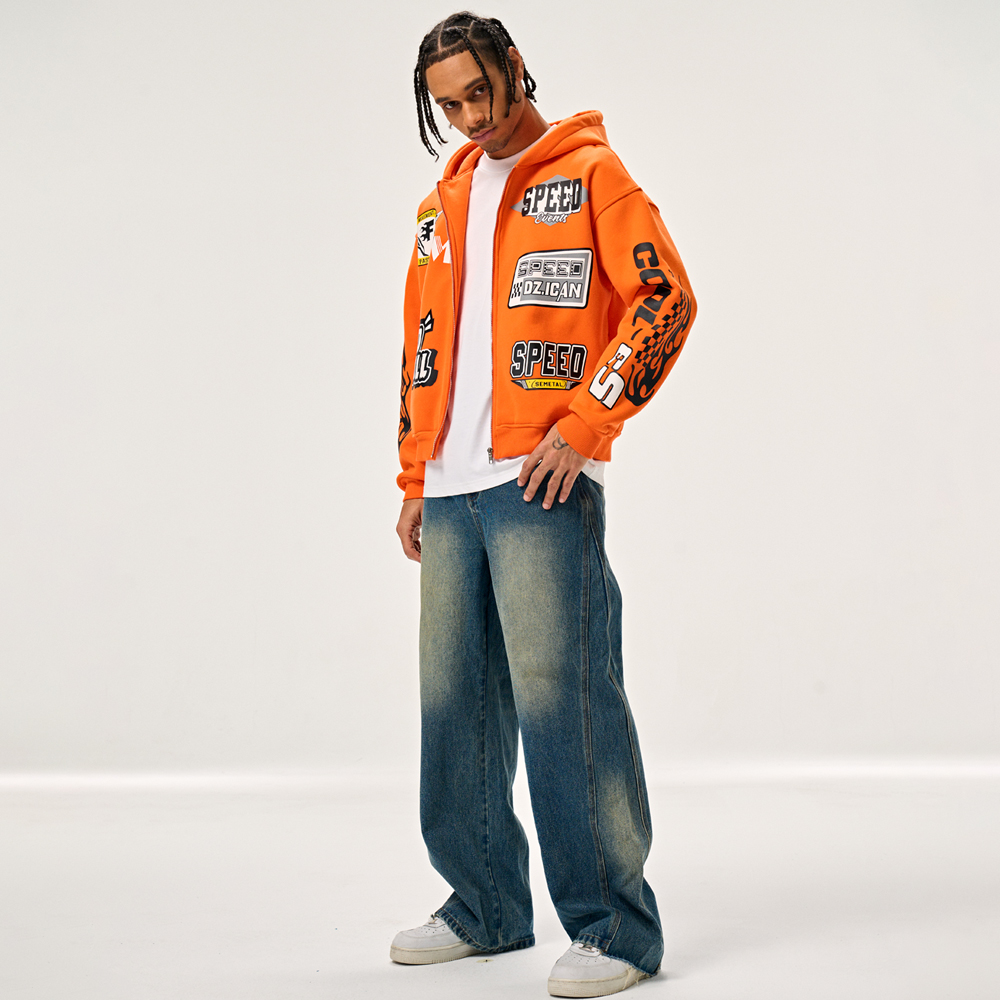
Finding the right hoodie manufacturer private label requires a strict evaluation framework. Do not base your decision on a single attractive sample. You must audit their entire operational capacity. Use these five criteria to filter your prospective partners.
Production Capacity & MOQs: Ensure their minimums align seamlessly to your cash flow. Ask about their maximum output limits. Their maximums must reliably support your projected Q4 scaling without causing delays.
Fabric & Hardware Quality: Verify their ability to source specific weights. Look for facilities handling 350-450 GSM French Terry or fleece. Demand pre-shrunk fabrics to prevent customer returns. Verify their custom dye matching capabilities using standard Pantone codes.
Customization Techniques: Assess their in-house decoration capabilities. Determine if they handle screen printing, puff print, direct-to-garment (DTG), and intricate embroidery. Check their ability to sew custom woven tags cleanly.
Quality Assurance Protocols: Look for standardized in-line inspections. Request their Acceptable Quality Limit (AQL) standards. A professional factory actively monitors defect rates during assembly, not just before shipping.
Ethical Sourcing & Certifications: Require solid proof of fair labor practices. Demand environmental compliance certificates. Look for WRAP, ISO, or OEKO-TEX documentation. These certifications protect your brand's reputation and ensure safe textile processing.
Common Mistake: Ignoring a factory's certification status often leads to public relations disasters. Always verify ethical compliance independently before signing any production agreements.
Sampling acts as your primary insurance policy against mass manufacturing disasters. You test the facility's attention to detail during this phase. A rigorous sampling protocol saves you from receiving unsellable bulk inventory.
Never proceed to bulk production without an approved physical sample. Digital mockups look perfect on a screen. Physical fabrics behave differently during cutting, sewing, and washing. Holding the physical garment remains the only reliable verification method.
A professional tech pack serves as your ultimate source of truth. It functions as a legally binding construction blueprint. It includes graded sizing charts, precise fabric composition, and specific construction details. A thorough tech pack acts as liability protection. If the factory deviates from these specs, they bear the responsibility to fix it.
Apparel development follows three distinct prototyping phases. You must understand each milestone.
Fit Sample: Tests the basic pattern and silhouette. Factories often use substitute fabrics here just to check dimensions.
Pre-Production (PP) Sample: Uses the exact requested fabric, trims, and colors. You approve this sample right before mass assembly begins.
Top of Production (TOP) Sample: Pulled directly from the first batch of your mass-produced order. It verifies the assembly line matches the PP sample exactly.
Do not just visually inspect the PP sample. Advise your team to actively wear it. Wash and dry the garment multiple times. Test it for unexpected shrinkage and annoying pilling. Evaluate the print durability after heavy friction. Only sign the approval document after the garment survives real-world stress testing.
Spotting unreliable vendors early prevents massive logistical headaches later. Some facilities present well initially but harbor deep operational flaws. Watch for specific behavioral cues during your initial outreach.
Professional facilities value clear, immediate dialogue. Beware of vendors dodging direct questions about typical lead times. Refusing video calls signals potential deception regarding their actual facility. Taking several days to reply to basic inquiries indicates poor internal management. If they communicate poorly during the sales pitch, expect worse during actual production.
Trustworthy partners proudly showcase their past work. An inability to provide references from other streetwear or private label brands serves as a major warning. Be wary of any refusal to send past production samples. You need tangible proof of their construction capabilities.
Unprofessional vendors often quote unusually low base rates to secure your deposit. They subsequently reveal hidden setup fees and digitizing charges. They might add unexpected custom tag sewing fees late in the process. Excessive shipping margins also indicate deceptive billing. Demand comprehensive, all-inclusive invoices upfront.
Be highly skeptical of vendors claiming they can execute any design in record time. Legitimate production requires problem-solving. Good factories push back on impossible timelines. They ask clarifying technical questions about your tech pack. A partner agreeing too quickly usually plans to cut corners later.
After filtering out the high-risk vendors, you must select your final partner carefully. Transitioning from outreach to active production requires a methodical approach. You need structured data to make your final choice.
Send a uniform brief to your three to five shortlisted manufacturers. Include the exact same tech pack, timeline expectations, and volume projections in every email. This ensures you are comparing apples to apples. Analyze how thoroughly each facility reviews your RFQ. Their attention to your initial brief indicates their future quality control.
Do not evaluate vendors based purely on base unit manufacturing quotes. You must calculate the comprehensive landed cost. Factor in the initial unit price alongside sampling fees. Add projected freight forwarding expenses and mandatory customs duties. Include transit insurance. This comprehensive metric represents the true expense of getting the product into your warehouse.
Never place your entire annual inventory budget on a first-time factory run. Recommend negotiating a smaller pilot run for the first bulk order. A pilot run tests the manufacturer's quality control effectively. It also tests their delivery reliability. Verify their consistency before committing to massive seasonal inventory orders.
Best Practice: Schedule your pilot run during the factory's off-peak season. You will receive better customer service and faster turnaround times during their slower months.
Summary: Finding the right production facility represents an ongoing partnership, not a one-off transaction. A reliable factory scales alongside your brand's growth.
Final Advice: Prioritize transparency, active communication, and stringent quality control over finding the absolute lowest vendor bid. Cheap production ultimately damages your brand reputation.
Next Step Action: Finalize your comprehensive Tech Pack immediately. Begin reaching out to a curated list of vetted suppliers using a standardized Request for Quote.
A: Standard Minimum Order Quantities vary heavily based on your chosen production method. If you utilize premium blanks, expect MOQs ranging between 50 and 100 units. If you require full cut-and-sew manufacturing, most reliable factories demand 300 to 500 units minimum per style to justify the setup labor.
A: The entire timeline spans several months. Expect 2 to 4 weeks strictly for developing and refining physical samples. Bulk production typically takes 4 to 8 weeks after final sample approval. You must also add freight transit times, taking days for air freight or weeks for ocean shipping.
A: No, a full Tech Pack is unnecessary for standard blanks. A simple digital mockup and a basic spec sheet detailing print placements will suffice. However, a comprehensive Tech Pack remains strictly required for any cut-and-sew project involving custom measurements.
A: You must negotiate ownership rights upfront before paying any deposits. Unprofessional factories sometimes claim ownership of custom patterns to prevent you from leaving. Specify clearly in your initial contract that your brand retains exclusive intellectual property rights to all developed patterns and molds.


