Views: 0 Author: Site Editor Publish Time: 2026-10-08 Origin: Site
Every streetwear brand founder eventually hits the same production wall. You must choose the perfect fabric weight. It might seem like a minor technical detail at first glance. However, the density of your blank dictates the drape, the perceived quality, and ultimately the retail price you can command. Founders frequently stall at this exact crossroad, torn between a heavy, architectural garment and a lighter, more flexible everyday piece.
Analyzing recent market data, the streetwear sector is shifting rapidly. We are seeing a massive transition away from hyper-branded fast fashion. Modern consumers now demand quiet luxury and elevated basics. In this climate, physical garment construction becomes your primary selling point. Buyers actively hunt for silhouettes where the fabric itself acts as the statement piece. This ongoing debate surrounding different hoodie weights is about much more than just thermal insulation. It fundamentally shapes your brand identity. It influences your profit margins. Most importantly, it dictates which manufacturing facilities can actually handle your production without ruining the batch.
At the heart of this decision is GSM, or Grams per Square Meter. This is the textile industry standard metric for measuring fabric density. This comprehensive guide will break down the exact differences between weight classes. We will explore the engineering behind ultra-dense knits, analyze interior fabric finishes, and help you establish the exact technical specifications required for your next collection.
GSM stands for Grams per Square Meter. In apparel manufacturing, it serves as a direct indicator of a fabric's density, thickness, and overall physical weight. When you evaluate a blank sample or select raw materials for a custom cut-and-sew project, the GSM number tells you exactly how much raw cotton is packed into every square meter of the textile.
A higher number naturally indicates a denser, thicker, and generally warmer garment. However, you must remember that GSM solely measures weight. It does not dictate the inherent quality of the yarn or the softness of the finishing process. When a customer unboxes your garment, their initial physical touch determines everything. That tactile experience is dictated largely by the GSM and the milling quality. Bridging the gap between your creative vision and the physical product starts with mastering this metric from an engineering perspective.
To make informed sourcing decisions, brand owners must understand where different weights fall on the industry spectrum. Below is a practical breakdown of standard categories used in professional knitwear production.
| Weight Category | GSM Range | Fabric Characteristics |
|---|---|---|
| Lightweight | Under 300 GSM | Thin, highly breathable, drapes closely to the body. Typically used for activewear or basic promotional merchandise. |
| Midweight | 300 GSM to 400 GSM | Flexible, moderate warmth, comfortable immediately out of the box. The standard for everyday casual wear. |
| Heavyweight | 400 GSM to 600 plus GSM | Rigid structure, architectural drape, significant heat retention. The defining standard for premium and luxury streetwear. |
When analyzing the ongoing industry debate, the 300 to 400 GSM range represents the most reliable workhorse for everyday apparel. These midweight hoodies are characterized by their inherent flexibility, softer drape, and immediate out-of-the-box comfort. Because the fabric is not overly dense, it conforms naturally to the wearer's body shape rather than standing rigidly away from it.
This weight class provides just enough structural integrity to hold a decent silhouette. Simultaneously, it remains thin enough to be comfortably layered under denim jackets, bomber jackets, or heavy overcoats. The fabric moves fluidly with the wearer. Consequently, it serves as a highly practical choice for daily wear across various indoor and outdoor environments.
From a strict business and production standpoint, utilizing midweight fabrics presents a specific set of operational advantages alongside distinct aesthetic limitations.
Lower material density translates directly to reduced fabric costs per yard. This allows emerging brands to maintain healthier profit margins on lower-priced items. Furthermore, seasonal versatility is a massive asset. A 350 GSM piece can be comfortably sold and worn virtually year-round in moderate climates. This drastically reduces the financial risk of holding dead seasonal inventory. From a customization perspective, standard screen printing, direct-to-garment applications, and lightweight embroidery are generally easier for standard factories to execute without causing fabric tension.
In contrast, the primary limitation lies in perceived value. Midweight fabrics often lack the substantial, luxury hand-feel that high-paying consumers expect from hyped drops. Structurally, the hood on a midweight garment typically lies flat and lifeless against the upper back. It fails to hold the coveted standing shape that defines modern high-end aesthetics.
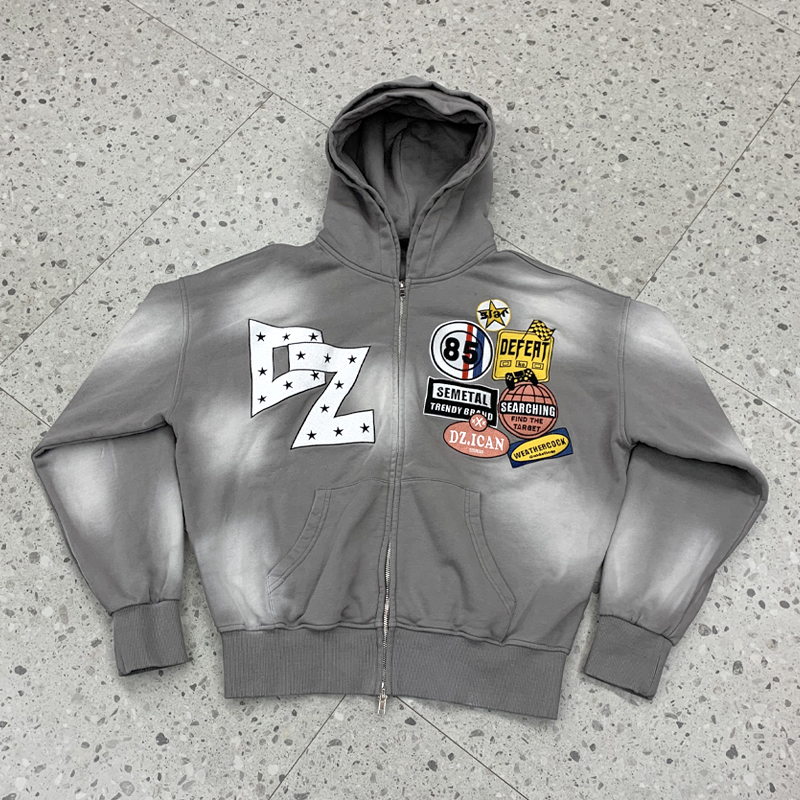
Midweight GSMs are highly recommended for brands targeting a broader, everyday lifestyle demographic rather than the ultra-premium niche. They are particularly effective for spring and summer capsule collections where breathability is a top priority. Specifically, because metal hardware adds bulk and rigidity to the front of a garment, midweight fabrics are generally the optimal choice for zip-up styles. The lighter fabric prevents the zipper track from waving or buckling irregularly when the wearer sits down.
Over the last several years, the visual language of streetwear has shifted dramatically. Luxury fashion houses and avant-garde designers heavily influence this space. The modern silhouette relies almost entirely on Heavyweight hoodies. At 400 GSM and above, the fabric becomes incredibly thick. It no longer simply drapes over the body. Instead, it falls away from it, creating a rigid, boxy, and highly architectural shape.
Consumers are actively hunting for these architectural silhouettes. High-GSM knits are practically mandatory for brands wanting to position themselves in the premium tier. The garment's physical weight instantly signals a higher level of craftsmanship.
Within this ultra-heavy category, the 500 GSM hoodie has earned a reputation as the undeniable sweet spot for premium labels. It hits a highly coveted balance point. It is heavy enough to feel like a substantial piece of outerwear. This immediately signals exceptional quality to the consumer the moment they pick it up off the rack.
Unlike a 600 plus GSM garment, which often feels overwhelmingly heavy and uncomfortably stiff, a 500 GSM fabric remains entirely functional. It provides the necessary structural foundation for a voluminous hood and an oversized torso while still allowing for a reasonable range of motion. Mastering this specific weight is often the critical turning point for independent labels looking to elevate their retail pricing above the 100-dollar threshold.
A frequent concern discussed in brand building communities is whether ultra-heavy fabrics are suitable for female consumers. Heavy fabrics possess an inherently rigid and bulky nature. While historically marketed primarily towards men, modern brands are successfully adapting high-GSM fabrics for massive unisex appeal.
To prevent a massive 450 plus GSM piece from swallowing a smaller frame, technical pattern adjustments are absolutely necessary. Expert pattern makers achieve this by utilizing extreme drop shoulders. They widen the chest measurements to maintain the boxy look, while simultaneously cropping the hem length and adjusting the armhole depth. These precise modifications ensure the garment retains its signature architectural structure without overwhelming the wearer.
When evaluating this debate from a strict business perspective, the return on investment and brand positioning dictate the final decision. Heavyweight garments inherently require substantially higher upfront capital. The denser fabric consumes more raw cotton per yard. The specialized manufacturing process increases labor costs and extends production timelines. Additionally, because the physical weight of the final inventory is much higher, overseas freight and domestic fulfillment costs will noticeably increase.
Despite these elevated logistical expenses, the perceived value of a heavier garment is exponentially higher. Buyers in today's market are psychologically conditioned to associate physical fabric weight with luxury and longevity. A consumer who hesitates to pay 60 dollars for a standard 350 GSM blank is often perfectly willing to pay 120 to 150 dollars for a 500 GSM cut-and-sew piece. Consequently, brands that successfully market high-GSM products frequently enjoy significantly wider net profit margins per unit sold.
The physical behavior of the fabric on the human body is fundamentally different between the two weight categories. Midweight options offer a relaxed, contouring drape. They fall naturally along the slope of the shoulders, looking casual and understated.
In contrast, heavyweight options deliver an architectural, stiff drape. Imagine a customer trying on your piece in front of a fitting room mirror. If the hood lays flat and lifeless against their upper back, the perceived value instantly drops. Conversely, a heavyweight fabric possesses enough structural integrity to keep the hood upright and voluminous around the neck. This coveted standing hood is a single visual cue that immediately signals premium craftsmanship to streetwear enthusiasts.
Sourcing thick fabric is only the first step. Assembling it requires highly specialized factory capabilities. Many standard apparel factories are optimized purely for 300 GSM fast-fashion production. When tasked with sewing 450 plus GSM materials, these facilities encounter severe operational bottlenecks.
Standard commercial sewing needles frequently snap under the sheer density of folded heavyweight fabric. Armpit seams and hood attachments become uncomfortably bulky if not managed with specialized binding techniques. Furthermore, controlling shrinkage on thick cotton blends becomes highly unpredictable without advanced pre-washing treatments. To avoid costly production disasters, partnering with a manufacturer that specifically operates heavy-duty industrial machinery is non-negotiable.
Fabric composition and interior finishing are just as critical as the raw GSM metric. French Terry is a specific knit construction featuring uncut loops of yarn on the interior surface and a smooth, flat face on the exterior. A heavyweight French Terry hoodie, typically milled around 450 to 500 GSM, is highly sought after for its unique thermal properties.
Because the interior loops are left unbrushed, the fabric allows for excellent air circulation and natural moisture wicking. This means a brand can offer the heavy, luxurious, structured drape of a high-GSM garment without trapping suffocating heat against the wearer's body. This structural breathability makes it a strategic choice for brands looking to offer substantial garments that remain comfortably wearable across multiple climates.
On the other end of the spectrum, brushed fleece undergoes a secondary mechanical process. The interior loops are aggressively brushed by wire cylinders to create a fuzzy, soft, and uniform surface. This process breaks the yarn loops and creates a layer of trapped air against the skin, massively increasing thermal insulation.
While a 350 GSM fleece is the industry standard for basic winter wear, a 500 GSM brushed fleece acts almost like a heavy winter jacket. It feels incredibly dense and provides maximum warmth in freezing temperatures. However, brand owners must be cautious. An ultra-heavy fleece garment can become unbearably hot in mild weather or heated indoor environments, severely limiting its seasonal versatility.
Selecting the optimal fabric weight requires a data-driven approach. First, meticulously analyze your drop calendar. Releasing a 500 GSM fleece garment in late April will likely result in stagnant sales as consumers transition to warmer weather wardrobes. In that scenario, a midweight option or a highly breathable heavy French Terry is far more appropriate.
Next, evaluate your audience's purchasing power. If your core demographic consists of younger consumers with limited disposable income, the lower production costs of midweight fabrics allow you to price competitively. If you target older aficionados who scrutinize stitch count and drape, investing in heavyweight materials is absolutely mandatory to meet their elevated expectations.
The specific style and cut of the garment heavily influence the ideal fabric weight. From a technical construction standpoint, traditional pullover styles handle high GSM fabrics exceptionally well. The seamless front panel allows the heavy material to drape cleanly, maximizing the boxy aesthetic without hardware interference.
Applying a 500 plus GSM fabric to a zip-up design introduces complex structural complications. The extreme thickness along the front placket often causes the zipper tape to wave, warp, or bulge awkwardly when the wearer sits down. If your collection heavily features zip-ups, scaling down to a 350 to 400 GSM range ensures the hardware lies flat and functions smoothly.
Never proceed to bulk production without rigorous, real-world testing. Brand founders should always order physical prototypes in both midweight and heavyweight variations. Once the samples arrive, subject them to harsh wash and dry cycles.
Heavyweight cotton is notoriously prone to noticeable shrinkage if the manufacturer bypassed proper pre-washing treatments. Measure the garment meticulously before and after washing to calculate the exact shrinkage percentage. Additionally, test how your intended graphics interact with the fabric. A heavy 500 GSM canvas can support massive, dense embroidery designs without puckering, whereas a 300 GSM fabric might warp under the exact same thread count.
Transitioning from standard wholesale blanks to premium cut-and-sew production requires a manufacturing partner with specific technical competencies. When vetting potential suppliers, you must bypass generic inquiries. Ask direct, technical questions about their machinery and capabilities.
Ask if they have documented experience milling and handling 500 plus GSM fabrics. Inquire about their specific stitching techniques for thick seams. Look for answers involving flatlock stitching or double-needle coverstitching. These techniques help flatten thick fabric joints to prevent uncomfortable interior bulges. Requesting close-up photos of the interior hood construction on their previous heavy projects provides immediate insight into their quality standards.
Thick fabrics interact very differently with embellishments compared to standard materials. A heavy knit provides an incredibly stable and rigid canvas. This makes it ideal for large-scale chenille patches or high-density screen printing. However, the extreme thickness can complicate ink curing if the factory does not properly adjust their platen height and oven temperatures.
Strict Quality Control is paramount. Because rigid fabrics are less forgiving and possess less mechanical stretch, sizing inconsistencies are immediately noticeable to the wearer. Ensure your manufacturer implements a documented quality control protocol that measures every single batch against your technical pack tolerances.
Choosing the right fabric weight is a foundational decision that defines your brand's trajectory. It balances aesthetic desires against practical business margins.
Midweight options offer excellent value, everyday comfort, and wider seasonal appeal. They are perfect for layering, active lifestyles, and maintaining accessible retail price points.
Heavyweight garments, on the other hand, are the ultimate tool for building premium brand identity and luxury positioning. They provide the highly sought-after structured fit and architectural drape that the modern streetwear market demands.
Stop guessing with your production runs. By analyzing your target audience, understanding the nuances of French Terry versus fleece, and rigorously testing your samples, you can make an informed engineering decision. Ready to elevate your brand's physical quality? Partner with a skilled manufacturer equipped for the exact specifications your brand needs. Explore premium manufacturing options and find the perfect specifications for your custom apparel at Yite Clothing to make your next drop a sell-out success.
Generally, the ideal range falls between 400 GSM and 500 GSM. This specific weight class provides the premium, structured, and boxy aesthetic that modern streetwear consumers actively seek. It ensures the garment holds its architectural shape throughout the day without feeling unwearable.
No, fabric weight does not prevent shrinkage. Shrinkage depends entirely on the fabric composition and the pre-washing treatments applied during the manufacturing process. Even a massive, heavyweight 100 percent cotton garment will shrink significantly if it has not been properly pre-shrunk by the factory prior to cutting and sewing.
Yes, in most cases, it is far too warm for peak summer temperatures. However, a 500 GSM French Terry breathes much better than a fleece-lined alternative. Its unbrushed interior loops allow for natural airflow, making it surprisingly suitable for cool summer evenings, coastal climates, or heavily air-conditioned environments.
Yes, both weight classes accept standard embroidery. However, heavyweight fabrics are far superior for large, stitch-dense designs. The thick material provides a highly stable backing that prevents the garment from puckering, sagging, or tearing under the intense tension of a commercial embroidery needle.
Fabric density drastically alters ink absorption and curing. A denser 500 GSM knit provides a highly stable surface, allowing thick puff prints to rise uniformly without warping the underlying fabric. Conversely, lighter fabrics require careful temperature control during curing to prevent scorching or puckering.
The primary difference lies in the structural rigidity. A 400 GSM garment feels like a heavy traditional sweatshirt, offering warmth with moderate flexibility. Jumping to 500 GSM transforms the piece into an architectural garment that holds its own boxy shape away from the body, creating that signature luxury streetwear silhouette.