Views: 0 Author: Site Editor Publish Time: 2026-08-03 Origin: Site
Garment dyeing creates a fundamental tension in apparel manufacturing. The aesthetic appeal of the process yields deeper tones, a softer vintage hand-feel, and unique highs and lows along seams. However, this organic character inherently conflicts with the commercial necessity for strict color uniformity. Uncontrolled shade variation across production runs leads to mismatched sets, high wholesale return rates, and unsellable inventory. Relying on subjective visual checks rather than objective, data-driven parameters is a massive operational risk for any brand scaling a clothing line. You must establish a technical framework to manage this risk effectively. Success requires moving away from visual guesswork and implementing measurable tolerances. You need to evaluate factory-level chemical and environmental controls rigorously. Implementing robust approval workflows allows you to scale production reliably. By defining strict parameters, you can maintain the unique appeal of garment dyeing while ensuring commercial viability across large inventory volumes.
Garment dyeing will never yield 100% color uniformity; success relies on defining and enforcing strict, mathematically measurable tolerances (Delta E) in your tech pack.
Selecting the correct coloring agent—pigment dyes for a high-contrast vintage wash versus reactive dyes for superior color fastness—determines the baseline variance.
Factory capability is the primary variable: reliable partners utilize spectrophotometers, execute strict pre-treatment scouring, and meticulously control dye bath pH, temperature, and timing.
Fabric consistency dictates dye uptake; variations in the base cotton weight and weave will compound color discrepancies, especially in heavyweight sweatpants.
Implementing "color blankets" on actual production fabric during the prototyping phase eliminates back-and-forth delays, allowing for instant, on-the-spot color approvals.
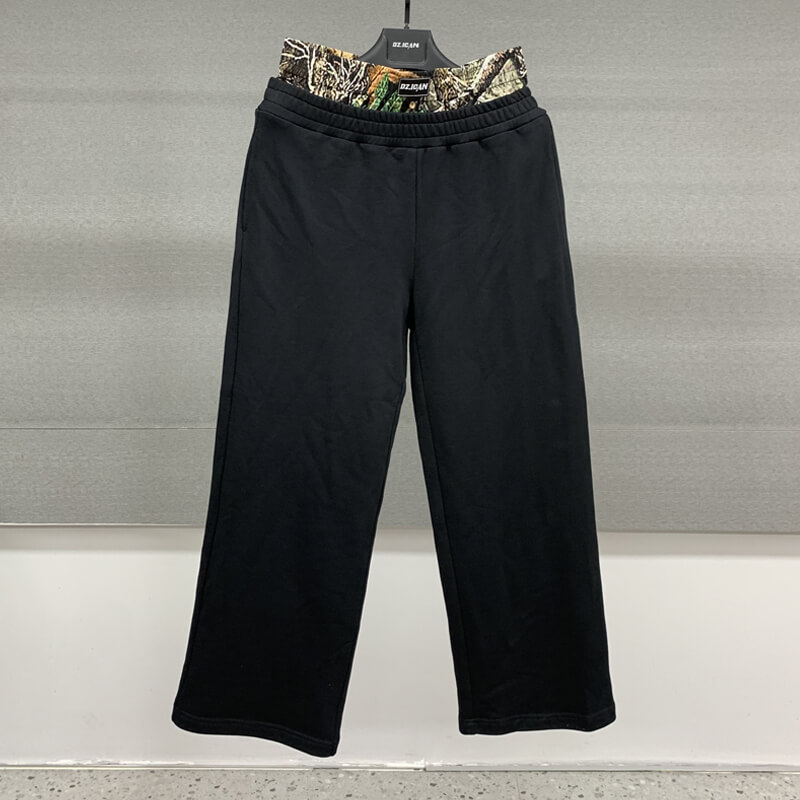
Garment dyeing occurs after the complete construction of the apparel piece. This sequence means that seams, pockets, drawcords, and varying fabric tensions interact differently with the dye bath. When producing Custom Flared Sweatpants, the heavy fabric layers at the waistband and the flared hem will absorb dye at different rates. You must accept a baseline reality: the garment will not look like piece-dyed fabric. The dye penetrates fully constructed areas unevenly, creating the signature washed appearance that consumers actively seek.
You must clearly delineate the boundary between acceptable character and commercial defects. Acceptable character includes subtle color highs and lows at the seams, pocket edges, and waistband. These variations happen because the sewing thread and folded fabric layers restrict dye penetration slightly. Commercial defects involve noticeable lot-to-lot shifts or mismatched panels on the exact same garment. If the left leg is visibly darker than the right leg, the factory has failed in its cutting or dyeing process. You need to train your quality control team to recognize the difference between natural dye migration and poor manufacturing execution.
The choice of coloring agent directly dictates the final look and the expected consistency. You generally choose between pigment dyes, reactive dyes, and direct dyes. Each chemical approach offers distinct advantages and distinct risks for color variation. Pigment dyes do not actually bond with the cotton fibers; they sit on the surface attached by a chemical binder. This creates a highly washed, vintage look but comes with massive inherent shade variation and a high risk of color rub-off. Reactive dyes chemically bond with the cotton fiber molecules, delivering deeper, richer tones and superior color fastness with much lower variance.
| Dye Classification | Chemical Mechanism | Visual Outcome | Variance & Quality Risk |
|---|---|---|---|
| Pigment Dyes | Coats the surface of the fiber using a resin binder. No chemical bond. | Highly washed, faded, vintage look with strong seam contrast. | High inherent shade variation. Prone to crocking (color rub-off) and fading after home washing. |
| Reactive Dyes | Forms a covalent chemical bond directly with the cellulosic cotton fiber. | Deeper, richer, and more uniform tones across the entire garment. | Lower variance. Superior color fastness and longevity. Requires precise temperature control. |
| Direct Dyes | Adheres to the fiber through hydrogen bonding. Requires a fixative agent. | Softer, muted tones. Often used for pastel or mid-tone shades. | Moderate variance. Lower wash fastness compared to reactive dyes unless heavily fixed. |
To control this variance, you must introduce the concept of Delta E (dE) in colorimetry. Delta E is a mathematical metric that quantifies the visual difference between two colors. You cannot rely on subjective terms like "close enough" or "a little too dark." Buyers must stipulate acceptable dE ranges in their vendor compliance manuals. For garment-dyed apparel, a dE of less than or equal to 1.5 to 2.0 is a standard commercial tolerance. Anything exceeding this metric should trigger an automatic factory rejection before the goods ever leave the loading dock.
You must audit specific, measurable processes when vetting a factory for your apparel programs. A factory's ability to control color variation depends entirely on its internal standard operating procedures. You need to look past the showroom samples and investigate the dye house floor. The chemical and environmental controls implemented during production dictate the consistency of your final inventory. If a factory cannot explain their water filtration system or their heating gradients, they are guessing at your colors.
Pre-treatment and scouring protocols are non-negotiable. Before any dye touches the fabric, factories must perform a consistent half-bleach process. This involves treating the garments with caustic soda (sodium hydroxide) at temperatures around 80-90°C, followed by a thorough, temperature-controlled rinse. This scouring phase saponifies and strips natural cotton waxes, spinning oils, and environmental impurities from the fibers. Skipping or rushing this step prevents even dye absorption. If a factory cuts corners here to save time or water, you will receive blotchy, uneven garments with severe shade variation.
Dye bath variable management requires strict environmental controls. The dyeing process is highly sensitive to minor fluctuations. Factories must manage several critical elements to minimize lot-to-lot variation. Water quality is the most common point of failure. Water pH and mineral content must remain consistent. Hard water containing high levels of calcium and magnesium ruins dye dispersion, causing the dye molecules to clump and create patchy coloring on the fabric. Factories must use industrial water softeners and monitor pH levels continuously.
Temperature regulation and chemical dosing are equally critical. The dye bath requires precise temperature regulation curves and exact dwell timing. Rapid heating causes uneven dye strike rates, where the outside of the garment absorbs all the dye before it can penetrate the folds. Workers must strictly adhere to dye concentration formulas. Automated recipe dispensing systems are vastly superior to manual mixing, as they eliminate human error in weighing out dye powders and auxiliary chemicals.
Verify Water Filtration: Ask the factory for their daily water hardness logs. Hard water is the enemy of reactive dyes.
Check Dispensing Systems: Look for automated chemical dispensing units rather than workers scooping powder from buckets.
Review Heating Gradients: Ensure the factory uses programmable logic controllers (PLCs) on their dye machines to control the rate of temperature increase.
Inspect the Scouring Process: Confirm that a full caustic scour is standard operating procedure for all cotton goods prior to dyeing.
Replacing human visual assessment with objective measurement tools is mandatory. Reliable factories use digital spectrophotometers on the floor. These devices measure light reflectance and calculate exact Delta E values against your digital master standard. Furthermore, factories must use standardized light boxes equipped with D65 (daylight) or TL84 (store light) light sources. This equipment ensures that color matching occurs under controlled, repeatable lighting conditions, eliminating the variables of ambient weather or poor factory lighting.
The physical properties of your raw material directly influence the final garment-dyed result. You cannot separate fabric selection from the dyeing process. The weight, weave, and composition of the fabric dictate how the chemical dye bonds with the garment. Understanding these interactions helps you engineer better tech packs and set realistic production expectations. A dye recipe that works perfectly on a 200 GSM t-shirt will fail completely on a 450 GSM fleece.
Cotton purity is the foundation of predictable garment dyeing. 100% cotton remains the industry standard for this process. You must avoid blending risks. Even minor inclusions of polyester will create unpredictable shade differences. Polyester requires disperse dyes and high heat, whereas cotton uses reactive or pigment dyes at lower temperatures. If you dye a cotton-poly blend in a standard cotton dye bath, the polyester fibers will remain white or take on a dull, heathered appearance. Furthermore, mixing carded and combed cotton fibers in the same garment will cause mismatched dye uptake due to differing fiber surface areas and impurity levels.
The thickness of Heavyweight Sweatpants significantly affects dye penetration. When dealing with 400+ GSM fleece or dense French terry, the fabric structure restricts liquor flow inside the dye machine. The thick terry loops and dense face yarn require specialized handling. Factories must adjust their standard operating procedures to accommodate this bulk. The sheer volume of cotton absorbs massive amounts of water, changing the dynamics of the dye bath entirely.
| Fabric Variable | Impact on Garment Dyeing | Required Factory Adjustment |
|---|---|---|
| High GSM (400+) | Restricts dye liquor penetration into the core of the yarn. Causes surface-level dyeing and white streaks in folds. | Increase liquor-to-goods ratio (e.g., from 1:10 to 1:20). Extend dwell time at peak temperature. |
| Dense Terry Loops | Traps air and resists wetting out during the initial dye bath phase. | Add specialized wetting agents during the scouring phase to ensure full saturation before dye is introduced. |
| Mixed Cotton Grades | Carded cotton absorbs dye differently than combed cotton, leading to panel shading. | Mandate strict fabric sourcing. Ensure all panels of a single garment are cut from the exact same fabric lot. |
To prevent patchy dye distribution on heavy fabrics, factories must increase the liquor-to-goods ratio. They need more water and dye solution per kilogram of fabric to ensure full saturation. Cycle times must be extended to allow the dye to penetrate the core of the thick yarns. Precise mechanical agitation is required to unfold the heavy garments continuously during the cycle. If the machine is overloaded, heavy garments will knot together, resulting in severe crease marks and undyed white streaks across the fabric surface. You must ensure your factory does not overload their rotary dyeing machines just to speed up production.
You must enforce a strict, step-by-step approval process to prevent costly full-production errors. The prototyping phase is where you identify and mitigate implementation risks. Approving a small fabric swatch is insufficient for garment-dyed programs. You need workflows that account for the entire constructed garment and the specific dye recipe interacting with your exact production fabric.
Implementing the color blanket strategy is highly effective for on-the-spot approvals. A color blanket involves dyeing a physical grid of custom color variations directly onto your exact production fabric roll. The factory modifies the dye recipe slightly across different sections of the blanket, adjusting the concentration of red, blue, or yellow dye by fractions of a percent. This strategy allows you to see how the dye interacts with your specific fabric weight and texture. You can grant instant approvals based on this physical grid, completely bypassing the weeks-long, iterative lab dip loop.
Request the Blanket: Instruct the factory to cut a 2-meter section of your actual production fabric.
Grid the Variations: The dye house applies 4 to 6 slight variations of your target color recipe onto the fabric.
Evaluate Under Standard Light: Review the blanket in a D65 light box to eliminate ambient lighting variables.
Select and Lock the Recipe: Choose the best match, record the exact recipe code, and attach that physical swatch to your tech pack.
You must understand the critical difference between fabric lab dips and full-garment strike-offs. Traditional lab dips are small, flat squares of fabric dyed in a beaker. They do not represent the final product. Because Wide Leg Sweatpants utilize a massive volume of fabric, any subtle color variations become highly visible. Pocket-to-body discrepancies or uneven dye penetration at the flared hem will ruin the garment. A beaker cannot replicate the mechanical agitation of a 500-pound rotary dye machine.
Testing on a fully constructed prototype is non-negotiable. A full-garment strike-off runs a completed, sewn garment through the actual production dye machine. This test reveals exactly how the seams will pucker, how the drawcords will absorb color, and how the heavy waistband will look. Approving a full-garment strike-off ensures that your production run will match your expectations structurally and visually. It also highlights any issues with thread shrinkage or hardware tarnishing before you commit to dyeing thousands of units.
Receiving, sorting, and selling garment-dyed inventory requires precise logistics. You must manage the inherent variations to prevent customer complaints about mismatched sets. If a customer buys a matching hoodie and sweatpant, those two items must look identical. Achieving this requires strict protocols from the cutting room to the warehouse floor. You cannot simply dump all the inventory into a single bin and hope for the best.
Preventing intra-garment shade differences starts in the cutting room. Mixing fabric from different rolls, or even different ends of the same roll, during assembly is a catastrophic mistake. Fabric rolls can have slight variations in tension or moisture content that affect dye uptake. For complex garments, front panels, back panels, and pockets must be cut from the exact same fabric layer. Factories must use a ply-numbering system. Every single cut piece gets a sticker identifying its ply number. The sewing operators must only assemble pieces with matching ply numbers. This practice ensures that all components of a single garment react identically in the dye bath, preventing noticeable panel-to-panel shade differences.
You must mandate strict lot tracking from the factory floor. The factory must label every garment with its specific dye batch number on the care label or a secondary tearaway tag. When the inventory arrives at your warehouse, you must segregate these batches physically and digitally in your warehouse management system. Distinct dye lots should never be mixed in the same picking bin. When fulfilling orders for matching sets, warehouse staff must pick the top and bottom from the exact same dye lot. This lot segregation framework is the only way to scale garment-dyed inventory while maintaining acceptable color consistency for the end consumer.
Garment dyeing introduces unavoidable natural variables into apparel production. However, rigorous factory auditing, proper fabric selection, and objective color measurement transform this process from a high-risk gamble into a controlled, scalable operation. You can achieve the desirable vintage aesthetics without sacrificing commercial uniformity. By moving away from subjective visual approvals and enforcing strict mathematical tolerances, you protect your inventory investment and maintain brand integrity.
When shortlisting manufacturing partners, demand specific capabilities. A capable factory utilizes digital spectrophotometers to measure Delta E. They execute standard caustic soda scouring protocols without exception. They possess robust lot-tracking capabilities and demonstrate a willingness to provide color blankets on your actual production fabric. These traits are non-negotiable for consistent quality. Do not settle for factories that rely on guesswork and manual chemical mixing.
Take immediate action to secure your next production run:
Update your tech packs to include a strict Delta E tolerance requirement of dE ≤ 2.0.
Request detailed dye-house process documentation and water quality reports from your current vendors.
Mandate full-garment strike-offs for all new styles before authorizing bulk production.
Implement a strict lot-tracking system in your warehouse to ensure matching sets are picked from the same dye batch.
A: Acceptable variation is defined using Delta E metrics. For solid piece-dyed fabrics, a dE of 1.0 to 1.5 is standard. For garment-dyed or pigment-dyed apparel, the tolerance expands up to 2.0 due to the organic nature of the process and varying dye uptake at the seams.
A: Reliable factories use digital spectrophotometers. These devices measure light reflection and quantify exact color data against a digital master standard. This technology eliminates human visual bias and negates the impact of inconsistent environmental lighting on the factory floor.
A: High-GSM, dense cotton fabrics absorb dye much slower. They require longer mechanical agitation, higher dye liquor ratios, and precise temperature curves. These adjustments ensure the dye liquor fully penetrates the core of the thick yarns rather than just coating the surface.
A: A 100% perfect match across different dye runs is highly improbable due to ambient environmental factors and water fluctuations. The goal is staying within a strict, commercially acceptable Delta E tolerance range and ensuring you ship matching sets from the exact same lot.
A: A color blanket is a physical swatch grid showing multiple dye recipe variations applied directly to your actual production fabric roll. It allows buyers to review options and make instant, accurate color sign-offs on the spot, bypassing lengthy lab dip iterations.
A: Without a proper scour using caustic soda to half-bleach the cotton, natural impurities, spinning oils, and waxes remain on the fiber. These residues block dye absorption, resulting in severe streakiness, poor color fastness, and high shade variation across the garment.


