Views: 0 Author: Site Editor Publish Time: 2026-08-01 Origin: Site
Neck rib stretching—often referred to on the factory floor as "bacon neck" or gaping—is a primary driver of customer churn and negative reviews for apparel brands. While consumers attempt temporary fixes like boiling, sewing hacks, or ice water treatments, these methods do not address the root cause. Preventing neckline failure is a manufacturing responsibility, not a consumer maintenance task. The core business problem lies in the tension between minimizing unit costs in bulk production and specifying the necessary materials and construction techniques to ensure long-term garment shape retention. Cutting corners on neck ribbing leads to rapid degradation, destroying the perceived value of the garment. This guide equips buyers with the exact technical specifications, material requirements, and quality assurance frameworks needed to prevent neckline failure before bulk production begins.
Material Composition is Non-Negotiable: Integrating 3% to 5% elastane/spandex into the neck ribing is the most reliable method for ensuring stretch recovery.
Fabric Weight Matching: Heavyweight T-Shirts require proportionally denser neck ribbing; mismatched weights cause the collar to collapse under the garment's drape.
The Golden Ratio: Specifying the correct neckband-to-neckline ratio (typically 80% to 85%) prevents the factory from overstretching the fabric during assembly.
Construction Reinforcement: Shoulder-to-shoulder taping and twin-needle cover-stitching are essential structural barriers against mechanical stretching.
Pre-Production Validation: Standardized wash-and-wear testing on pre-production samples is required to verify recovery metrics before approving bulk runs.
Understanding why cotton ribbing loses memory requires looking at the physical limitations of 100% cotton in high-stress areas. Cotton lacks inherent elasticity. It suffers from mechanical fatigue when subjected to repeated stress. The continuous cycle of pulling a shirt over the head and the stress from hangers degrade the yarn structure over time. Without an elastic component, the cotton fibers stretch out and fail to return to their original position, resulting in a permanently distorted neckline. When you specify 100% cotton for a neckband, you are essentially guaranteeing that the collar will fail after a dozen washes. The fibers simply do not have the molecular structure to snap back. In a factory setting, we see this immediately during stretch testing. A pure cotton rib will extend to 150% of its width and only recover to 125%, leaving a permanent 25% distortion. This mechanical fatigue is unavoidable unless synthetic memory fibers are introduced into the yarn blend during the knitting process.
Furthermore, the gauge of the knit plays a significant role in how quickly this memory loss occurs. A loose knit will fail much faster than a tight knit, but even the tightest 100% cotton knit will eventually succumb to the daily mechanical stress of being pulled over a human head. The yarn itself begins to micro-fracture. These microscopic breaks in the cotton fibers reduce the overall tension of the knit structure. Over time, these micro-fractures compound, leading to the visible sagging and waving that consumers despise. You cannot engineer your way out of this physical limitation using only cotton. The material science simply does not support long-term shape retention under high-stress conditions.
Neckline integrity directly correlates with perceived garment quality. When a collar stretches out after a few washes, the consumer views the entire garment as cheap or defective. Stretched necklines are a critical failure point that prevents repeat purchases. This directly impacts Customer Lifetime Value. For brands producing Private Label T-Shirts, maintaining a tight, structured collar is essential for building brand equity and ensuring customer loyalty. A single bad experience with a gaping collar can permanently alienate a buyer. They will associate your brand label with poor manufacturing standards, regardless of how good the body fabric feels or how vibrant the screen print looks.
We track return data across multiple production runs, and neckline failure consistently ranks in the top three reasons for customer dissatisfaction. It is a highly visible defect. Unlike a slightly twisted side seam or a loose thread on the hem, a stretched collar sits right under the wearer's face. It frames the garment. If that frame is distorted, the entire presentation is ruined. Investing the extra fraction of a cent per unit to upgrade the neckband material is the most cost-effective marketing strategy a brand can employ. It guarantees that the garment will look good on the hundredth wear, turning the customer into a walking billboard for your quality standards.
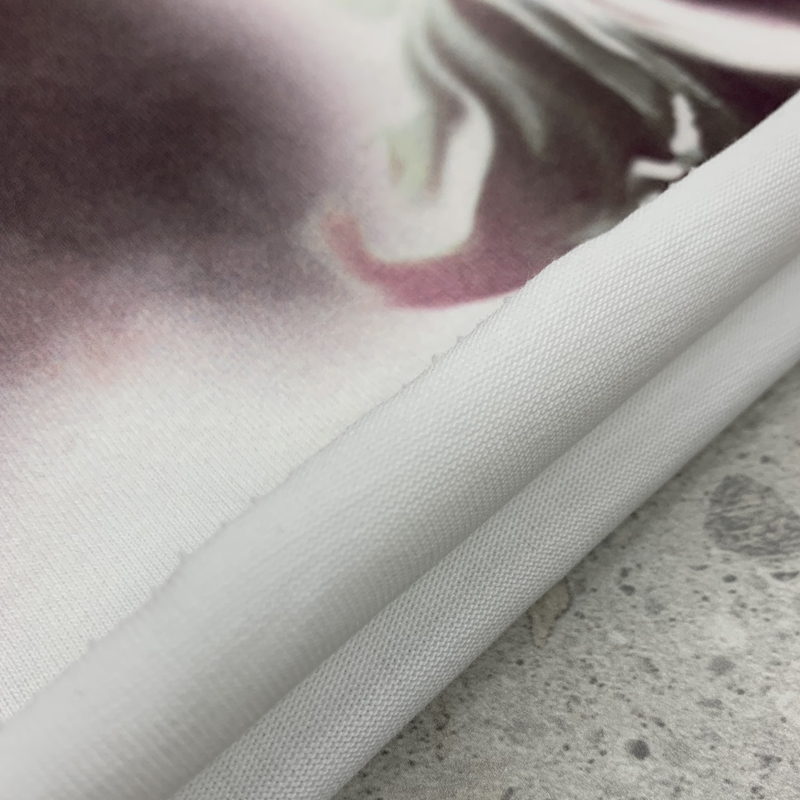
The ideal composition for neck bands is a blend of 95% cotton and 5% spandex or elastane. Elastane acts as a structural memory agent. It forces the ribbing back to its original diameter after extension. This small percentage of synthetic fiber provides the necessary stretch recovery to withstand daily wear and tear, ensuring the collar remains flat and tight against the neck. When drafting specifications for Custom T-Shirts, this blend should be your baseline standard. Do not accept substitutions. Some factories will try to push a 98/2 blend to save money, but 2% elastane is often insufficient for heavy daily use. You need that full 5% to guarantee snap-back recovery after repeated wash and dry cycles.
The integration of elastane must be handled correctly during the knitting process. The elastane core is typically wrapped in cotton fibers. This ensures that the synthetic material does not touch the skin, maintaining the soft hand-feel of cotton while providing the mechanical benefits of spandex. If the factory uses cheap, exposed elastane yarn, the collar will feel scratchy and may degrade faster when exposed to high heat in a consumer dryer. Always specify core-spun elastane yarn for your ribbing to ensure maximum comfort and durability.
Comparing 1x1 and 2x2 rib knits reveals distinct structural differences. A 1x1 rib knit offers a tighter, denser structure, making it ideal for standard crewnecks where a close fit is desired. A 2x2 rib knit provides more stretch and a distinct visual texture, often used in relaxed fits or heavier garments. Choosing the right knit type depends on the intended fit and the required density for recovery. For a standard, high-quality crewneck, 1x1 is almost always the superior choice. It provides a smooth surface that sits flat against the collarbone and resists rolling.
Let us look at a direct comparison of these two knit structures in a production environment:
| Feature | 1x1 Rib Knit | 2x2 Rib Knit |
|---|---|---|
| Visual Appearance | Smooth, fine vertical lines. | Textured, pronounced vertical channels. |
| Stretch Capacity | Moderate stretch, excellent snap-back. | High stretch, slower recovery. |
| Best Application | Standard crewnecks, fitted garments. | Oversized fits, heavy winter wear. |
| Seam Bulk | Low bulk, easy to cover-stitch. | Higher bulk, requires careful tensioning. |
Using self-fabric—the same jersey fabric as the t-shirt body—creates modern, clean-finished necklines. However, this alternative requires strict specifications. Self-fabric collars must contain at least 4% elastane to avoid immediate, irreversible gaping. Without this elastane content, the jersey fabric will quickly stretch out and fail to recover, ruining the garment's aesthetic. Jersey knit is inherently less elastic than rib knit. If you try to use a 100% cotton jersey for a neckband, it will fail on the very first wear. The fabric will simply roll outward and stay there.
When executing a self-fabric collar, the cutting direction is paramount. The neckband must be cut on the true bias or exactly perpendicular to the grainline to maximize the mechanical stretch of the knit. If the factory cuts the band off-grain to save fabric yardage, the collar will twist and warp after washing. You must specify the cutting grain in your tech pack and verify it during the pre-production sample review. A twisted self-fabric collar is a glaring sign of poor manufacturing oversight.
Addressing the specific challenge of heavyweight fabrics (e.g., 200gsm to 300gsm) is necessary. Thick fabric naturally reduces inherent stretch recovery. The ribbing GSM must be specified to ensure it can support the weight of the body fabric without sagging. Balancing heavyweight thickness with soft-combed rib options prevents neck irritation and skin abrasion. Proper matching ensures Heavyweight T-Shirts maintain their structure and comfort. If you put a 180gsm rib on a 250gsm body, the collar will collapse under the weight of the shirt. It will look flimsy and cheap.
As a general rule, the ribbing should be 20% to 30% heavier than the body fabric. For a 250gsm heavyweight shirt, you should specify a 300gsm to 320gsm rib knit. This extra density provides the structural backbone needed to hold the collar shape against the heavy drape of the garment. It also ensures that the collar does not wear out faster than the rest of the shirt. Heavyweight garments are expected to last for years; the neckband must be engineered to match that lifespan.
Pattern drafting math dictates that the neckband must be cut shorter than the actual neck opening. This ratio is typically 80% to 85% of the opening circumference, depending on the stretch percentage of the fabric. An incorrect ratio forces sewing operators to over-tension the band during insertion. This results in pre-stretched, wavy collars right off the machine. Calculating and enforcing the correct ratio is a mathematical prevention of gaping. If the band is cut at 100% of the opening, it will stand up away from the neck. If it is cut at 70%, it will gather the body fabric and create unsightly puckers.
To determine the exact ratio for a specific fabric, we use a simple stretch test on the factory floor. We take a 10-inch sample of the ribbing and stretch it comfortably. If it stretches to 12.5 inches, it has a 25% stretch capacity. We then calculate the ratio to ensure the band sits flat without pulling the body fabric. This is not guesswork; it is basic geometry applied to textile mechanics. You must demand that your factory performs these calculations for every new fabric blend you introduce.
Twill tape applied across the back neck and shoulder seams prevents the neckline from expanding beyond its constructed width. This tape acts as a structural barrier, locking the shoulder seams and back neck in place. While adding neck tape increases the manufacturing cost slightly, the benefit in bulk manufacturing is substantial. It significantly reduces the risk of mechanical stretching and improves the garment's overall durability. The tape absorbs the stress of the hanger and the pulling motion, protecting the vulnerable collar seam.
There are several types of tape used in production, and selecting the right one is important:
Cotton Twill Tape: The industry standard. Strong, durable, and comfortable against the skin.
Self-Fabric Tape: Uses the body fabric. Softer, but provides less structural rigidity than twill.
Grosgrain Ribbon: Used in premium applications. Extremely strong, but can be scratchy if not applied correctly.
Mobilon Tape: A clear elastic tape often hidden inside the shoulder seams. Provides stretch recovery without adding bulk.
Twin-needle cover-stitching over the collar seam provides mechanical advantages over single-needle stitching. Cover-stitching flattens the seam allowance, creating a cleaner finish on the inside of the garment. More importantly, it provides a secondary layer of structural reinforcement against stretching. This stitching technique helps distribute stress across the seam, preventing the collar from pulling away from the body fabric. A single-needle topstitch is prone to popping under high tension. The twin-needle setup uses a looper thread on the bottom that allows the seam to stretch with the fabric without breaking.
When specifying twin-needle stitching, you must also dictate the stitch density, measured in Stitches Per Inch (SPI). A standard t-shirt should have an SPI of 10 to 12. If the factory drops the SPI to 6 or 8 to speed up production, the seam will be weak and prone to gaping. High stitch density locks the fabric layers together securely, ensuring the collar maintains its drafted dimensions through years of wear and washing.
Cutting a neck hole and setting a ribbed band (set-in) differs from wrapping the raw edge with binding. Set-in collars are standard for most t-shirts, offering a classic look and good durability. Bound necklines provide a cleaner, flatter finish, often used in athletic wear or premium streetwear. Choosing the right method depends on the garment's intended use and aesthetic goals. Both methods require precise execution to prevent stretching. A poorly executed bound neckline will pucker and wave immediately.
The set-in method is generally more forgiving in bulk production. The operator has more control over the tension distribution as they guide the band and the body fabric through the overlock machine. Bound necklines require specialized folder attachments on the sewing machine. If the folder is not calibrated perfectly to the thickness of the fabric, the binding will stretch unevenly, resulting in a defective collar. Unless you are working with a highly skilled factory, set-in collars are the safer choice for consistent quality.
Buyers must include exact callouts in their tech packs to ensure neckline durability. Specifications should read: "95/5 Cotton/Spandex 1x1 Rib, 250gsm, 82% Neckband Ratio, Twin-Needle Topstitch." Vague tech packs lead to manufacturers defaulting to cheaper, 100% cotton tubular ribbing. Clear, detailed instructions eliminate ambiguity and hold the manufacturer accountable for the required construction standards. If you just write "ribbed collar," you will get the cheapest material available on the local market.
Your tech pack should also include detailed technical drawings showing the exact placement of the topstitching and the neck tape. Include a Bill of Materials (BOM) that explicitly lists the elastane content and the yarn count for the ribbing. Do not leave any room for interpretation. The factory floor operates on exact instructions. If a detail is missing from the tech pack, it will not be executed in production. Treat your tech pack as a legally binding engineering document.
Post-purchase consumer behaviors, such as stretching hangers through the neck opening, ruin t-shirts. Manufacturing-level mitigation strategies can help. Integrating hidden internal hanging loops provides an alternative way to hang the garment. Designing customized care labels that educate consumers on bottom-up hanger insertion can also mitigate this issue. Proactive design choices extend the garment's lifespan. You cannot control how a consumer treats the shirt, but you can build in defenses against common abuse.
Another effective strategy is to reinforce the back neck with a half-moon patch. This is an extra layer of body fabric sewn into the inside back neck, right below the collar seam. It adds significant structural rigidity to the area most affected by hanger stress. While it adds a small cost to the unit price, it elevates the perceived value of the garment and drastically reduces the incidence of back-neck stretching.
Evaluating the cost implications of premium neck construction requires a framework. Adding elastane, neck tape, and twin-needle stitching typically adds cents per unit. However, these additions save dollars in returns and lost customers. Auditing a manufacturer's previous work for neckline finishing quality is essential. Inspect samples for correct ratios, even stitching, and proper stretch recovery before committing to a bulk order. Pull on the collar of the sample. If it does not snap back immediately, reject it.
When reviewing samples, measure the neck opening flat, then stretch it to its maximum capacity, and measure it again after it relaxes. The relaxed measurement should be within 2% of the original flat measurement. If the variance is higher, the factory is using inferior ribbing or incorrect tension settings. Do not approve bulk production until the pre-production sample passes this basic mechanical test.
A standardized wash-test protocol for pre-production samples is critical. Subject samples to 3 to 5 wash and dry cycles. Define acceptable tolerances for neck opening expansion post-wash. If the collar expands beyond the acceptable limit, the material or construction method must be adjusted. Wash testing verifies recovery metrics before bulk production begins. Cotton shrinks, and elastane reacts to heat. You must know how these materials will behave in a consumer's laundry room.
Here is a standard wash test protocol you should implement:
Measure the neck opening width and drop on the unwashed sample.
Wash the sample in warm water (40°C) with standard detergent.
Tumble dry on medium heat until completely dry.
Allow the garment to rest flat for 2 hours to regain ambient moisture.
Remeasure the neck opening and calculate the percentage of change.
A change of more than 3% in the neck opening dimensions is grounds for rejecting the sample and requiring a pattern or material adjustment.
Common risks during bulk scaling include operators stretching the ribbing while sewing. This leads to immediate puckering or gaping. Establishing AQL (Acceptable Quality Limit) standards specific to neck opening measurements mitigates these variances. Regular inspections during production ensure the factory adheres to the specified neckband ratios and stitching techniques. You cannot rely solely on end-of-line inspections. Quality control must happen at the sewing station.
Implement inline inspections where quality control personnel check the neckband tension every 50 units. If an operator is consistently over-stretching the band, they need to be retrained or moved to a different operation. The sewing machine tension dials also need to be checked daily. A slight bump to the tension dial can completely alter the stretch characteristics of the cover-stitch, leading to a batch of defective collars. Strict inline protocols are the only way to maintain consistency across thousands of units.
Preventing neck rib stretching is a manufacturing decision, not a consumer maintenance issue. It requires proactive specification in the tech pack. Buyers should only partner with manufacturers who can source elastane-blended ribbing, calculate exact neckband ratios, and demonstrate proficiency in taped seams and cover-stitching. Audit your current tech packs to ensure they include precise material and construction callouts. Request updated pre-production samples with 5% elastane ribbing. Implement strict wash-testing protocols before signing off on your next bulk order. Enforce inline quality control checks to monitor operator tension during the sewing process.
A: Necklines stretch due to a lack of elastane in the ribbing, incorrect neckband-to-neckline drafting ratios, and improper stitch tension during manufacturing. These factors cause the fabric to lose its structural memory and fail to recover after being pulled over the head.
A: The industry standard is a blend of 95% cotton and 5% spandex or elastane. This provides optimal stretch and recovery. For self-fabric jersey collars, at least 4% elastane is required to maintain shape retention.
A: Heavyweight fabrics can cause neck stretching if the ribbing is not proportionally dense. The ribbing must be 20% to 30% heavier than the body fabric to support the weight without sagging or collapsing.
A: Twill tape applied across the back neck and shoulder seams acts as a structural barrier. It locks the seams in place, preventing the neckline from expanding beyond its constructed width when subjected to mechanical stress.
A: The neckband must be cut shorter than the actual neck opening. The typical ratio is 80% to 85% of the opening circumference, depending on the stretch percentage of the fabric, to ensure it sits flat against the body.


