Views: 0 Author: Site Editor Publish Time: 2026-07-30 Origin: Site
The tactile experience of a garment—its "hand feel"—is the immediate metric consumers use to judge apparel quality, often overriding visual design in split-second purchasing decisions. When a customer touches a fabric, they instantly form an opinion about its durability and comfort. Apparel brands frequently source wholesale blanks for Custom T-Shirts based solely on fabric weight (GSM) or color availability, completely ignoring yarn specifications. This oversight leads to inconsistent printability, unexpected post-wash harshness, and misaligned brand positioning. Selling a premium graphic design on an abrasive, open-end cotton blank damages brand reputation and increases return rates. Evaluating the technical specifications of cotton yarn—specifically fiber length, spinning method, blend ratios, and yarn count—enables buyers to accurately predict hand feel, durability, and print outcomes before committing to bulk inventory. Understanding these variables transforms the sourcing process into a precise engineering decision.
Yarn Count Dictates Structure: The "singles" metric (e.g., 16s, 20s, 30s) determines the thickness of the individual yarn, directly impacting whether a garment feels robust and structured or lightweight and fluid.
Spinning Methods Define Texture: Ringspun and combed cottons yield a significantly softer, smoother surface compared to the abrasive, fuzzy texture of open-end carded cotton.
Weight Does Not Equal Softness: A high GSM garment can feel harsh if constructed with low-quality, short-staple yarn, proving that fabric weight and hand feel must be evaluated as separate metrics.
Elasticity Influences Tactile Comfort: Pure cotton naturally lacks elasticity; how the yarn is spun and tensioned determines whether the final heavyweight t-shirts feel stiff and restrictive or comfortably yielding.
Printability Relies on Yarn Purity: Smoother, tightly spun yarns reduce fibrillation (stray fibers), creating an optimal canvas for direct-to-garment (DTG) and screen printing.
Buyers often confuse fabric composition with fabric quality. Seeing "100% cotton" on a label guarantees nothing about the garment's softness, durability, or drape. Success in creating high-quality apparel requires understanding the raw material processing before the fabric is even knit. The journey from raw cotton boll to finished yarn involves multiple refinement stages. The decisions made during these stages dictate the final tactile experience on the retail floor.
Cotton fibers are classified by their staple length. Short-staple cotton consists of fibers measuring less than 1.125 inches. These shorter fibers require more twisting to hold together, resulting in a yarn with numerous microscopic ends poking out. This creates a fuzzy, abrasive surface that feels rough against the skin. Long-staple cottons, such as Pima or Egyptian cotton, feature fibers measuring between 1.25 and 2 inches. Longer fibers require fewer connection points, producing a remarkably smooth, strong yarn that translates into a luxurious fabric drape and high tensile strength.
Beyond length, the preparation of the fiber matters immensely. Carded cotton undergoes a basic cleaning process that aligns the fibers but retains many short, uneven strands and microscopic impurities. The resulting yarn feels noticeably rougher and is prone to pilling. Combed cotton takes the process a step further. Fine brushes physically comb the raw material, extracting up to 15% of the volume by removing impurities and short fibers. What remains is a pure, uniform bundle of long fibers that yields a premium, exceptionally soft hand feel.
To illustrate the difference on the production floor, consider the lint buildup on knitting machines. Carded cotton generates significant fly and lint, requiring constant machine cleaning to prevent defects. Combed cotton runs clean, resulting in fewer fabric faults and a tighter, more consistent knit structure.
The method used to spin the prepared cotton fibers into yarn fundamentally alters the fabric's physical characteristics. Factory managers select spinning methods based on target price points and desired fabric properties.
Open-End (OE) Spinning: This is a fast, highly economical production method where fibers are essentially blown together and twisted. It results in a bulkier, fuzzier yarn with a coarser hand feel. Open-end yarn is the standard for budget promotional wear where cost is the primary concern, but it lacks the smoothness required for premium retail garments.
Ringspun Cotton: In this method, fibers are continuously twisted and thinned over a spinning frame. This process tightly binds the fibers, creating a much smoother, stronger, and finer yarn. Ringspun cotton feels significantly softer than open-end cotton and provides a superior, flat surface for printing.
Air-Jet Spinning: A hybrid approach that uses compressed air to wrap fibers around a core. This technique offers excellent resistance to pilling and maintains structural integrity well, though it often lacks the ultimate buttery softness found in pure combed ringspun cotton.
While 100% cotton is highly breathable and traditional, it can sometimes feel stiff and lack fluid drape, especially in heavier weights. Pure cotton naturally lacks elasticity. Tactical blending alters the natural hand feel to achieve specific performance or aesthetic goals.
Blending cotton with polyester increases durability, adds wrinkle resistance, and can soften the overall hand feel while reducing shrinkage. Incorporating viscose or rayon introduces extreme silkiness and a heavy, fluid drape, drastically changing the garment's silhouette. For seasonal variations, blending with linen adds a crisp, breathable texture, while a touch of wool provides warmth and a distinct, heathered tactile sensation. Understanding these blends allows brands to engineer the exact physical sensation they want their customers to experience.
In practical application, a 60/40 cotton-poly blend using combed ringspun cotton will feel significantly softer and drape better than a 100% open-end cotton shirt of the exact same weight. The synthetic fibers act as a structural scaffold, allowing the cotton to remain soft without losing shape.
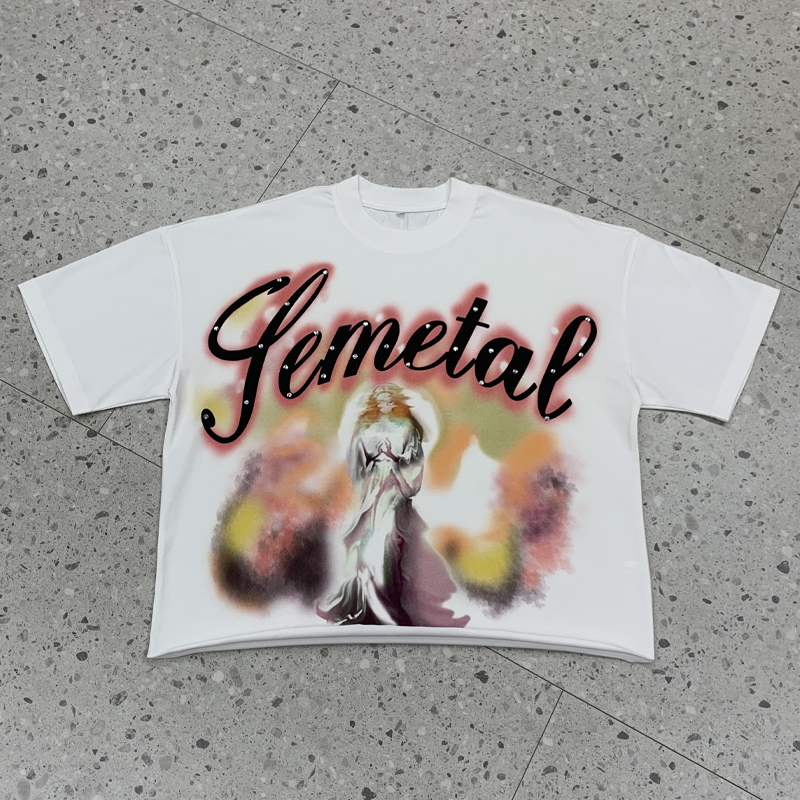
Fabric weight is typically measured in Grams per Square Meter (GSM) or ounces per square yard. However, GSM alone tells an incomplete story. How thread diameter, yarn count, and knitting tension interact creates specific garment profiles, particularly in the trending streetwear category where Heavyweight T-Shirts dominate.
Cotton yarn thickness is measured using an inverse system known as "singles." The lower the number, the thicker the yarn. The higher the number, the finer the yarn. This metric is essential for predicting how a fabric will behave on the cutting table and on the body.
A 16s or 18s singles yarn is thick and robust. A 20s singles yarn represents a standard mid-to-heavy weight. A 30s or 40s singles yarn is very fine. When a manufacturer uses a 30s singles yarn, they knit a fabric that features a soft, lightweight drape suitable for fitted retail fashion tees. The fine yarn allows for a tight, dense knit that feels incredibly smooth and fluid.
The streetwear market heavily relies on thick, durable fabrics, bringing the distinction between 16s and 20s yarn into sharp focus.
Using 16s yarn produces a highly structured, thick, and rigid fabric. It delivers a "vintage" hand feel with maximum durability. Garments knit from 16s yarn hold their shape aggressively, making them perfect for boxy silhouettes that stand away from the body rather than draping over it. When you fold a 16s shirt, it holds a sharp crease.
Conversely, 20s yarn offers a dense, substantial weight but retains more flexibility and elasticity. A heavyweight garment made from 20s yarn feels substantial but possesses a slightly softer hand and better recovery than a 16s garment. It bridges the gap between rugged durability and everyday comfort.
| Yarn Count (Singles) | Relative Thickness | Typical Hand Feel | Best Application |
|---|---|---|---|
| 16s | Thick / Heavy | Rigid, structured, coarse, vintage | Boxy streetwear, rugged workwear |
| 20s | Medium-Heavy | Substantial, dense, moderately soft | Premium standard tees, flexible heavyweights |
| 30s / 40s | Fine / Lightweight | Smooth, fluid, highly drapable | Retail fashion, fitted silhouettes |
It is vital to clarify the distinction between the physical diameter of the yarn and the density of the knit (gauge). A high-gauge, tight knit of fine 30s yarn feels fundamentally different from a loose knit of thick 16s yarn, even if both fabrics ultimately weigh 200 GSM. The tight knit of fine yarn will feel dense, smooth, and compact. The loose knit of thick yarn will feel bulky, porous, and textured. Adjusting the knitting tension allows manufacturers to manipulate the bulk and stretch of the fabric independently of the yarn thickness.
Factory technicians adjust the stitch length on circular knitting machines to control this density. A shorter stitch length packs the yarn tighter, increasing GSM and reducing stretch. A longer stitch length creates a looser, more breathable fabric that drapes easily but may be prone to snagging.
Translating technical yarn specifications into the physical sensation experienced by the end consumer requires understanding how mechanical properties affect human touch.
Cotton yarn possesses inherent stiffness. Unlike synthetic filaments, cotton fibers do not stretch and snap back naturally. High-twist yarns, which are spun tightly to increase durability and reduce pilling, further reduce this natural stretch. This makes the resulting fabric feel stiffer and more taxing to wear or handle. Garments made from high-twist yarns can feel restrictive across the shoulders and chest.
To mitigate this stiffness, manufacturers employ low-twist spinning techniques or utilize mercerization processes. Mercerization treats the cotton with sodium hydroxide, swelling the fibers and permanently altering their chemical structure. This process improves physical elasticity, increases luster, and results in a softer recovery, allowing the fabric to yield comfortably to body movement.
Apparel design often involves a trade-off between elasticity and rigidity. Tightly twisted fine yarns offer fluidity and a soft hand, conforming easily to the wearer's shape. Loosely twisted thick yarns provide boxy structure, creating garments that maintain their own architectural shape. Selecting the right yarn twist and thickness is essential for achieving the intended silhouette.
Yarn smoothness directly impacts the ink deposit during printing. Rough, open-end yarns feature microscopic fuzz (fibrillation) that interferes with ink adhesion. To achieve a solid graphic on open-end fabric, printers must apply thicker ink bases or multiple passes, which creates a heavy, plastic-like shield on the chest, ruining the garment's overall hand feel.
Smooth, combed ringspun yarns provide a flat, pristine canvas. This allows for thinner ink deposits, softer water-based prints, and superior Direct-to-Garment (DTG) resolution. Furthermore, intentional texture variations can be engineered. Slub cotton uses yarn with intentionally uneven thickness, creating a tactile, organic aesthetic that adds visual interest without compromising the structural integrity of the knit.
Navigating supplier spec sheets requires vigilance. Identifying discrepancies between marketed quality and actual physical goods is a critical skill for anyone sourcing Private Label T-Shirts.
Two different manufacturers can offer blanks labeled "100% combed ringspun cotton" yet produce garments with wildly different levels of softness. This variance stems from hidden variables in the manufacturing process. Spinning tension plays a massive role; higher tension yields a harsher feel. Chemical sizing agents used during weaving or knitting can leave stiff residues. Wash treatments, such as silicone or enzyme washes, drastically alter the final texture. Additionally, knit density affects how rigid or pliable the fabric feels in hand.
Cost-cutting measures are common in wholesale manufacturing. A frequent tactic in fleece or heavy knits is using a fine ringspun yarn for the face of the fabric while using cheap, abrasive open-end yarn for the backing loops. Another issue is mislabeled carded cotton being sold as combed cotton. Buyers must inspect the fabric closely; excessive fuzziness or rapid pilling on a supposedly premium blank indicates inferior yarn.
Initial hand feel can be highly deceptive. Factories frequently apply chemical finishes, such as silicone softeners or heavy enzyme washes, to mask the harshness of low-grade open-end yarn. These finishes wash out after one or two laundry cycles, revealing the true, rough nature of the fabric beneath.
Establishing a rigorous testing protocol is mandatory. Before finalizing a contract, subject samples to standard wash tests. Evaluate the true yarn quality once the factory chemicals are stripped away. Check for structural memory, pilling resistance, and shrinkage percentages. Only a washed garment reveals the honest quality of the spun yarn.
Matching technical specifications to the brand's target demographic, retail price point, and unit economics determines the overall value of the production run.
Different markets demand entirely different yarn specifications. Streetwear criteria focus on substantial weight and architectural silhouettes. Brands in this space should target high GSM fabrics knit from 16s or 20s combed ringspun cotton. The goal is a heavy, structured drape with low elasticity to maintain a boxy fit.
Promotional criteria prioritize cost-efficiency and immediate, lightweight comfort over long-term structural durability. For event giveaways or budget merchandise, mid-weight fabrics knit from 20s or 30s open-end or carded ringspun yarns are appropriate. The lower cost of open-end spinning aligns with the short-term use case of the garment.
Investing in higher-grade yarn increases the initial unit cost. However, analyzing the ROI reveals significant long-term benefits. Premium yarn reduces return rates caused by shrinkage or poor fit. It prevents garment distortion after washing and provides a superior printing surface that keeps graphics looking sharp. Ultimately, a garment that feels great and lasts longer drives repeat customer purchases, building solid brand equity that far outweighs the initial savings of sourcing cheap, open-end blanks.
Request a tiered sample kit from manufacturers featuring distinct yarn counts (16s, 20s, 30s) and spinning methods.
Conduct standard wash tests on all samples to assess shrinkage, pilling, and elasticity loss before placing bulk wholesale orders.
Mandate specific yarn requirements (e.g., "100% combed ringspun, 20s singles") in your tech packs to eliminate ambiguity.
Perform blind hand-feel tests with your team to evaluate true fabric softness without brand bias.
A: The "singles" number indicates yarn thickness. 16s yarn is thicker, producing a heavier, more rigid, and structured fabric ideal for boxy streetwear. 20s yarn is slightly finer, yielding a dense but more flexible fabric that offers a softer hand feel while maintaining substantial weight.
A: Roughness usually stems from using short-staple cotton or open-end spinning, which leaves microscopic fiber ends exposed. Stiffness can result from high-twist spinning or a lack of combing. Combed, ringspun long-staple cotton feels significantly softer and smoother.
A: No. GSM only measures fabric weight, not softness. A heavy 250 GSM shirt made from cheap, open-end carded cotton will feel harsh and abrasive, whereas a 180 GSM shirt made from fine, combed ringspun cotton will feel incredibly soft.
A: Ringspun cotton is continuously twisted and thinned, binding fibers tightly to create a smooth, strong, and soft yarn. Open-end cotton is blown together quickly, resulting in a bulkier, fuzzier yarn that feels noticeably coarser and rougher against the skin.
A: Combing physically removes short fibers and impurities from the raw cotton before spinning. This extra refinement step creates a uniform, pure fiber bundle that translates into a premium, exceptionally soft fabric with high resistance to pilling.
A: High-quality, smooth yarns provide a flat canvas, allowing for thinner ink deposits, sharper details, and vibrant DTG prints. Low-quality, fuzzy yarns require thick ink bases to mat down the stray fibers, resulting in a heavy, plastic-feeling print.


