Views: 0 Author: Site Editor Publish Time: 2026-09-28 Origin: Site
Securing reliable uniforms for an entire football roster is a major operational responsibility. You must carefully balance strict budget constraints against rigorous performance needs on the field. Poor material choices often lead to mid-season tear replacements. They also cause deep frustration among players. Unreliable suppliers can introduce inconsistent sizing and waste your limited funds. Furthermore, the custom apparel market remains heavily saturated. Middlemen frequently offer unrealistic turnaround times and make unverifiable durability claims.
This guide provides a clear, objective evaluation framework for your upcoming procurement process. You will learn how to confidently select a high-quality custom mesh football jersey that withstands heavy impact. We will also show you how to properly vet wholesale manufacturing partners. This ensures a seamless purchasing experience from initial design to final delivery on the field.
Fabric Specification is Primary: Prioritize high-GSM nylon mesh sportswear over standard polyester for high-impact durability and shape retention.
Match Print to Usage: Align the customization method (sublimation vs. tackle twill) with your league's durability requirements and budget limits.
Vet Supplier Operations, Not Just Prices: A reliable mesh football jersey manufacturer must provide transparent minimum order quantities (MOQs), physical sizing samples, and clear service-level agreements on turnaround times.
Anticipate Roster Volatility: Structure your team jersey bulk order to accommodate late roster additions without incurring punitive small-batch reprint fees.
Fabric dictates the fundamental lifespan of any athletic garment. Football involves high-impact collisions, aggressive pulling, and abrasive field conditions. Material selection matters immensely. If you choose weak fabrics, they will rip during the first tackle. Teams need gear built for intense friction.
When selecting your fabric base, you typically choose between nylon and polyester. Both synthetic materials offer unique advantages. However, they perform very differently under direct physical stress.
Choosing nylon mesh sportswear provides superior abrasion resistance. Nylon maintains structural integrity during heavy tackling and pulling. It also features slight elasticity. This stretch prevents catastrophic fabric tears when opposing players grab the jersey. These traits make it ideal for high-contact leagues where durability remains non-negotiable.
Polyester mesh offers higher breathability. It also carries a lower manufacturing cost. Many recreational leagues prefer it for summer training camps. However, you must note its inherent susceptibility to tearing. Polyester lacks the tensile strength of nylon. It also generates uncomfortable static electricity if the manufacturer does not blend it correctly.
The weaving technique determines how a jersey breathes and holds custom printing. You will encounter several standard weaves in the athletic apparel industry.
Porthole Mesh: This style features large, visible holes. It delivers maximum breathability and heavy-duty performance. Players often require a compression undershirt when wearing porthole weaves.
Micro-Mesh / Tricot: This fabric offers a much smoother finish. The tightly woven structure makes it better for detailed sublimation printing. It serves as the standard for modern, professional athletic wear.
Beyond the weave, you must evaluate fabric weight. Advise buyers to strictly check grams per square meter (GSM) specifications. GSM serves as the standard evaluation metric for textile density. A low GSM (under 150) indicates a high tear risk in tackle football. You should aim for higher GSM ratings to ensure season-long longevity.
Common Fabric GSM Benchmarks
| GSM Range | Typical Usage | Durability Level | Best Application |
|---|---|---|---|
| 120 - 140 GSM | Lightweight training gear | Low | Flag football, warm-ups |
| 150 - 190 GSM | Standard recreational jerseys | Medium | Youth leagues, touch football |
| 200 - 250+ GSM | Heavy-duty game jerseys | High | Varsity and adult tackle leagues |
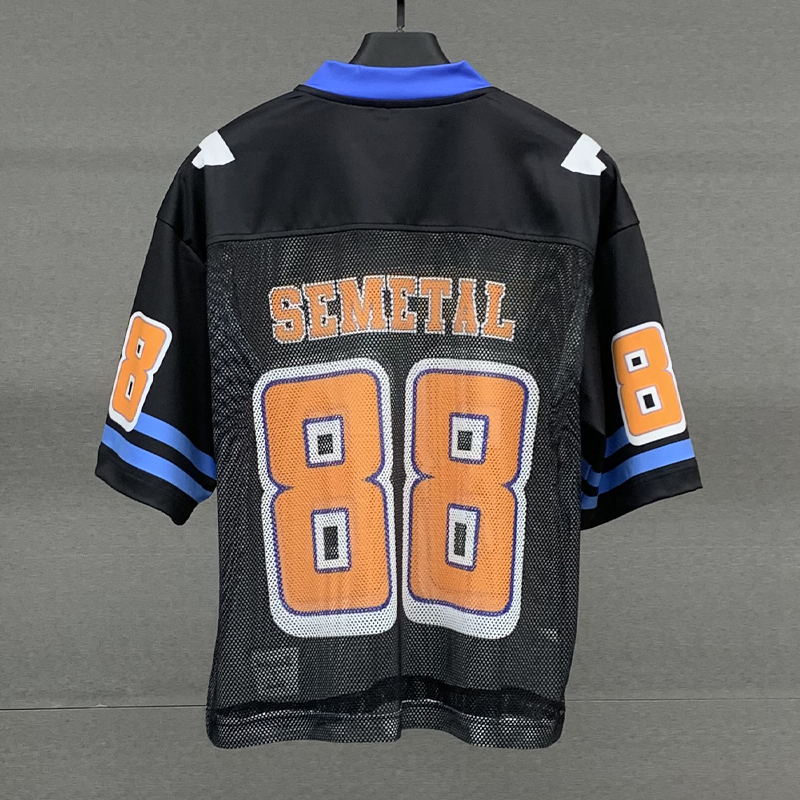
The application of numbers, names, and team logos drastically affects garment lifespan. It also determines the team's professional appearance on the field. You must connect your chosen feature directly to the desired outcome. A poor printing choice ruins an otherwise excellent jersey.
Sublimation represents a massive technological leap in sportswear manufacturing. The mechanism is fascinating. Extreme heat turns solid ink directly into a gas. This gas then permanently bonds into the actual fabric fibers. The ink becomes part of the shirt.
Pros:
It produces zero peeling or cracking over time.
The jersey remains incredibly lightweight.
You can print unlimited colors and intricate gradients without incurring extra costs.
Cons:
Colors can sometimes appear less vibrant on darker mesh materials.
The process strictly requires high-polyester blends. It does not work well on pure nylon.
Tackle twill offers the ultimate premium aesthetic. The mechanism involves custom-cut fabric patches. Workers sew these patches directly onto the mesh using heavy-duty stitching.
Pros:
It serves as the industry standard for professional, traditional aesthetics.
The embroidered edges are highly durable against physical abrasion.
It gives numbers a distinct, raised, three-dimensional texture.
Cons:
The patches add noticeable weight to the garment.
The labor-intensive sewing process results in a higher cost per unit.
You must approach screen printing and heat press methods with extreme caution. We strongly warn buyers against relying on these techniques for high-friction sports. The mechanism involves laying thick plastisol ink or vinyl cutouts on top of the fabric.
In a tackle football environment, high friction quickly destroys these prints. You face a very high probability of cracking, peeling, or fading. Repetitive industrial washing accelerates this degradation. While cheap initially, heat press numbers often fail by week three of a grueling season.
Once you finalize your product evaluation, you must focus on vendor reliability. This shortlisting logic protects your investment. You need to separate true manufacturing partners from basic white-label middlemen. Middlemen mark up prices and rarely control production schedules.
Understanding the supply chain is critical. Partnering with producers of OEM football apparel provides maximum control. These suppliers own the cut-and-sew process. They allow for complex custom paneling and tailored player fits. They also utilize proprietary fabric sourcing to meet specific GSM requests.
Alternatively, you might choose custom sports jersey wholesale distributors. These vendors are better for standard, off-the-shelf blanks. They simply take pre-made shirts and apply your logo. This route offers a faster turnaround. However, it severely limits structural customization and fabric choices.
You cannot afford to skip due diligence. Implement these three criteria before signing any purchasing contract.
Sample Policies: Never finalize a massive order blindly. You must demand a physical, pre-production sample. Use this sample to verify sizing scales. It also lets you confirm accurate color matching against official Pantone standards.
Communication & Tech Packs: Assess how the football jersey supplier handles complex design files. A trustworthy vendor will explicitly require vector files. They will then provide a detailed digital mock-up (a tech pack) for your formal approval.
Quality Control (QC) Protocols: Ask specific questions about their acceptable defect rate. Inquire about their replacement policies for misprints. You need to know who absorbs the cost if stitching errors occur during mass production.
Procuring uniforms involves serious logistical hurdles. You must execute precise operational steps to protect your organization from fulfillment disasters. Poor planning results in players taking the field without proper gear.
You must clarify exactly how volume pricing works. Most factories use Minimum Order Quantities (MOQs) to govern pricing tiers. Ordering 100 jerseys costs less per unit than ordering 20.
Identify the dangerous "reorder trap". This risk factor catches many teams off guard. The initial team jersey bulk order appears very cheap. However, mid-season single-unit replacements for new players carry exorbitant surcharges. Some factories refuse small batches entirely. You must negotiate reasonable "add-on" pricing upfront before signing the initial bulk contract.
You need to map out a highly realistic timeline. Ignore marketing promises of overnight deliveries. Quality manufacturing takes time.
Design Approval: Takes about 1 week of back-and-forth communication.
Sample Creation: Requires 1-2 weeks for cutting, printing, and shipping.
Bulk Production: Takes 3-4 weeks depending on factory queue limits.
Shipping and Customs: Adds another 1-2 weeks for international freight.
We strongly advise buyers to initiate this entire process at least 8-10 weeks before the season opener. Late orders force costly expedited shipping and invite careless manufacturing mistakes.
Sizing discrepancies cause massive headaches. Emphasize the risk of relying purely on player self-reporting. Players frequently guess incorrectly or misunderstand modern athletic fits.
Follow a proven best practice. Order a complete blank sizing run from your chosen vendor. This means buying one unprinted jersey of every size, from Youth Small to Adult 3XL. Use these blanks to hold an mandatory physical fitting session. Document each player's exact size. This simple step eliminates post-delivery sizing complaints entirely.
Securing uniforms for your team requires a disciplined procurement framework. Always start by evaluating fabric weight and demanding high GSM materials. Next, select a highly durable print method like Sublimation or Tackle Twill. Finally, rigidly vet the supplier’s sample policy and confirm their bulk production timelines.
Your immediate next steps are clear. Gather your exact roster numbers and secure high-resolution vector logo files. Then, reach out to a reputable mesh football jersey manufacturer. Request baseline quotes and demand physical fabric swatches from at least two or three shortlisted suppliers today.
A: A realistic timeline spans 6 to 8 weeks. This accounts for design approvals, physical sample creation, bulk OEM production, and final shipping. Rushed jobs under 3 weeks usually bypass vital quality control steps or rely on inferior off-the-shelf blanks.
A: Yes, standard industry practice allows mixed sizes within a single bulk order. The MOQ generally applies to the total unit count of a specific design and colorway, not the individual sizes. Always confirm this distribution policy with your vendor beforehand.
A: You must use universal Pantone (PMS) color codes in your digital design files. Additionally, demand physical "strike-offs" or pre-production fabric samples. Looking at colors on a computer monitor is unreliable; holding the dyed fabric ensures perfect accuracy.
A: Overseas OEM manufacturers generally offer deeper structural customization and significant cost savings at high volumes. Local suppliers offer faster communication, quicker shipping, and no import duties, but they often act as middlemen marking up imported goods.


