Views: 0 Author: Site Editor Publish Time: 2026-10-17 Origin: Site
Choosing between mesh and cotton shorts can affect comfort, appearance, and product positioning. Mesh is often associated with basketball and performance-inspired designs, while cotton is popular for relaxed streetwear. Neither fabric is ideal for every application. Yite Clothing helps brands explore custom shorts options based on their intended use, design, and target customers.
Mesh shorts are commonly made from polyester or other synthetic fibers knitted into an open or patterned structure. The openings in the fabric can encourage airflow, making mesh a popular choice for basketball shorts and athletic-inspired streetwear.
Polyester mesh is generally lightweight and can dry relatively quickly, although actual performance depends on yarn construction, fabric density, and any moisture-management treatment. Mesh also creates a distinctive sporty texture that works well with team graphics, contrasting panels, and bold prints.
For brands developing custom mesh shorts, the choice of mesh structure, lining, and fabric weight should reflect the intended activity and visual style.
Cotton shorts are made from several fabric constructions, including cotton jersey and French Terry. These materials differ in thickness, texture, and drape.
Cotton jersey usually has a relatively smooth surface and can create a lightweight, casual garment. French Terry has characteristic loops on the inside and often provides a more substantial feel, making it suitable for relaxed streetwear silhouettes.
Cotton is valued for its familiar softness and moisture absorption. However, it can retain moisture and take longer to dry than many polyester fabrics. Brands should therefore consider the intended activity rather than choosing cotton solely for its hand feel.
Open mesh structures can allow air to pass through the fabric more readily than many dense cotton constructions. This can make mesh a practical option for basketball, training, and other activities involving frequent movement.
However, breathability is not determined by fiber composition alone. Mesh opening size, yarn thickness, fabric density, and garment fit all influence airflow. A tightly constructed mesh may behave differently from a more open athletic knit.
For basketball brands, the goal is to balance ventilation with coverage, durability, and comfort during movement.
Polyester absorbs less moisture into the fiber than cotton and often dries relatively quickly. This can be useful for athletic shorts that become damp during exercise.
Nevertheless, not every polyester mesh fabric provides advanced moisture-wicking performance. That benefit depends on fabric construction and any functional finishing applied by the manufacturer.
Cotton absorbs moisture readily, which can make it comfortable during casual wear but less suitable for some high-intensity activities. Brands should evaluate drying time and comfort using the actual fabric rather than assuming that every synthetic material performs identically.
Mesh openings can make shorts more transparent, particularly in light colors. This is an important consideration for basketball uniforms and products intended for everyday wear.
Some designs use a separate liner to improve coverage and support. Others use denser mesh or a carefully selected inner layer. Each option affects garment weight, comfort, cost, and construction.
Before approving a design, brands should inspect the shorts under different lighting conditions and test coverage during movement. This helps prevent problems that may not be obvious when the fabric is viewed as a flat swatch.
Cotton shorts are a strong option for lifestyle collections that prioritize a soft hand feel and relaxed appearance. They work well with oversized T-shirts, hoodies, and other casual garments.
Depending on the fabric construction, cotton shorts can create anything from a lightweight summer silhouette to a substantial, structured design. Their versatility makes them suitable for minimalist basics, vintage-inspired collections, and coordinated streetwear sets.
The final result still depends on yarn quality, fabric weight, finishing, and pattern design. Cotton content alone does not guarantee softness or durability.
French Terry and cotton jersey serve different design purposes.
French Terry is generally more substantial and has a looped inner surface. It can support relaxed silhouettes and a premium casual appearance. Cotton jersey is often lighter and more flexible, making it suitable for simple everyday shorts.
For brands choosing between these constructions, the key considerations are the desired drape, thickness, climate, and price positioning. A heavier fabric may help create a structured silhouette, while a lighter jersey may feel more suitable for warm weather.
Cotton fabrics can support a range of branding techniques, including screen printing, embroidery, and selected heat-applied graphics. The best method depends on the fabric's surface, thickness, stretch, and finishing.
Embroidery can add texture and a premium appearance, but dense stitching may affect lightweight fabrics or create stiffness. Printing can provide larger graphic areas, although ink compatibility and wash durability should be checked.
Brands developing custom cotton shorts should test their chosen decoration on the actual fabric before bulk production.
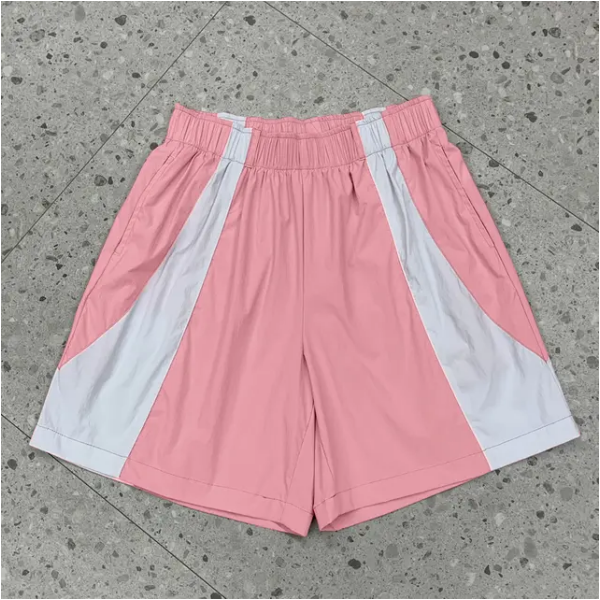
The most useful way to compare mesh vs cotton shorts is to evaluate their performance alongside the intended product category.
Feature | Polyester Mesh Shorts | Cotton Shorts |
Fabric structure | Open or patterned knit | Jersey, French Terry, or other cotton constructions |
Airflow | Often high with open mesh structures | Depends on fabric density and knit structure |
Moisture behavior | Often dries quickly; performance varies | Absorbs moisture and may dry more slowly |
Hand feel | Often lightweight and sporty | Often soft and substantial |
Basketball use | Suitable for many performance-oriented designs | Better suited to lifestyle use or lower-intensity activities, depending on construction |
Streetwear styling | Athletic and performance-inspired | Casual, vintage, and relaxed |
Decoration | Print coverage requires testing on open structures | Supports various printing and embroidery options |
Care considerations | Check heat sensitivity and dimensional stability | Check shrinkage, colorfastness, and surface changes |
Mesh shorts are often a practical choice for hot weather and high-activity settings because open structures can promote airflow. Cotton shorts can also work well in summer, particularly when made from lightweight jersey.
Comfort depends on more than fabric type. Fit, waistband construction, lining, and fabric weight all influence how the garment feels during wear.
Polyester mesh often offers good dimensional stability, but heat can affect some synthetic fabrics. Cotton may shrink if it has not been appropriately treated, and its dimensions can change during washing.
Brands should follow the fabric's recommended care instructions and evaluate shrinkage, colorfastness, and surface condition before production approval.
Mesh can work well with athletic graphics, sublimation on suitable polyester fabrics, and selected printing methods. However, open structures can affect print coverage and visual sharpness.
Cotton provides a versatile surface for many common streetwear decoration techniques, although the fabric and finishing still determine the final result. In both cases, testing is necessary to confirm adhesion, appearance, and wash performance.
The cost of custom shorts depends on fabric pricing, garment dimensions, lining, pockets, decoration, sewing operations, and order quantity.
Mesh shorts may require additional lining or construction details to achieve the desired coverage. Cotton shorts may involve different fabric consumption, finishing, or shrinkage-control requirements.
Neither option is automatically cheaper. Brands should compare quotations based on the complete garment specification rather than fabric price alone.
Mesh is a strong starting point for basketball collections that emphasize airflow, lightweight construction, and an athletic appearance.
Brands should prioritize appropriate coverage, durable seams, comfortable waistbands, and fabric performance. The finished sample should be assessed during movement, not just on a hanger.
Cotton is often the better choice when the collection focuses on everyday comfort, relaxed styling, and a soft hand feel.
Jersey may suit lighter designs, while French Terry can provide a more substantial appearance. The selection should reflect the target climate, intended fit, and overall collection aesthetic.
Brands exploring different styles can browse Yite Clothing's custom shorts collection to compare options for their product development needs.
Some brands may benefit from combining materials or using different fabrics in separate garment panels. For example, a design might use mesh for ventilation and another fabric for selected structural or decorative elements.
Such combinations require careful consideration of stretch, shrinkage, color matching, and seam construction. Different materials can behave differently during washing, so the complete garment should be tested before bulk production.
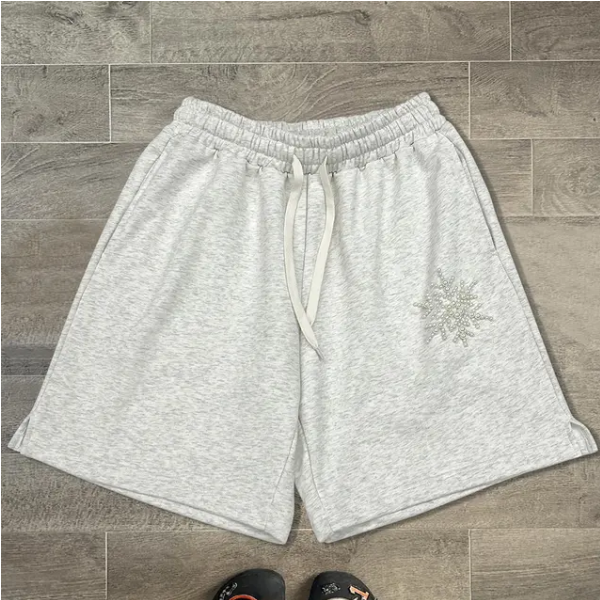
Specify the fiber composition, target GSM, fabric construction, and acceptable tolerances. Ask the supplier to confirm the actual material specification rather than relying on broad descriptions such as lightweight mesh or premium cotton.
Check waist measurements, inseam, outseam, leg opening, pocket placement, and waistband construction. For mesh shorts, assess whether a liner is needed and confirm coverage under realistic lighting conditions.
Apply the intended decoration to the actual fabric and evaluate the results after washing. Check for color changes, shrinkage, print damage, and distortion around seams.
Before bulk manufacturing, confirm the sample, size chart, fabric specification, decoration placement, and construction details. This reduces the risk of receiving garments that differ from the approved design.
Brands can also review Yite Clothing's company background and apparel manufacturing services when evaluating a potential manufacturing partner for custom shorts development.
Mesh shorts are often better suited to performance-focused collections, while cotton shorts offer versatility for relaxed streetwear. The right choice depends on comfort, fabric construction, intended use, and branding requirements. Yite Clothing helps brands explore custom shorts options and develop products aligned with their collection goals.
Mesh is often a suitable choice because open-knit structures can promote airflow and lightweight comfort. Cotton may work for casual basketball-inspired styles, but the best option depends on activity level and garment construction.
Not necessarily. Lightweight cotton jersey can be comfortable in warm weather, while heavier French Terry may feel more substantial. Fabric weight and construction are important factors.
Yes. Mesh shorts are widely suited to athletic-inspired streetwear. Brands should consider opacity, lining, fit, and styling to ensure the garment works for everyday use.
Yes, subject to the supplier's available materials and production capabilities. Brands should confirm fabric options, minimum order quantities, decoration methods, sampling requirements, and production specifications before placing an order.


