Views: 0 Author: Site Editor Publish Time: 2026-10-27 Origin: Site
The difference between a cheap, disposable graphic tee and a luxury streetwear piece often comes down to one fundamental engineering element: the material. Imagine unboxing a highly anticipated drop. Before you even register the graphic, your hands feel the weight, the texture, and the density of the garment. That tactile first impression dictates everything. In the current fashion landscape, the booming urban apparel industry has undergone a massive evolution. Consumer expectations have decisively shifted away from thin, easily degraded garments toward high-quality, heavyweight materials that offer exceptional longevity and superior structural integrity.
For new brand owners, technical designers, or fashion enthusiasts, navigating the specifications of textiles—such as yarn density, loopback structures, and synthetic blends—can feel incredibly overwhelming. Making the wrong sourcing choice leads to garments that shrink, prints that crack, or silhouettes that completely fall flat. This comprehensive analysis will demystify textile science, providing you with the objective engineering knowledge needed to make informed decisions for your next clothing line. Whether you are developing structured heavy tees or insulating outerwear, understanding fabric mechanics is the first step toward creating premium apparel.
Historically, early streetwear in the 1990s was built on standard, tubular-knit promotional blanks. Brands would simply print aggressive graphics on lightweight, cost-efficient shirts prone to massive shrinkage. However, modern market data reveals a definitive convergence between high-end luxury houses and underground skate brands. Consequently, consumer expectations have skyrocketed. The current market trend heavily favors hyper-durable, heavy-gauge knits. Shoppers are actively rebelling against flimsy fast-fashion garments, demanding investment pieces that age gracefully over years of wear.
Furthermore, there is a surging demand for eco-conscious, organic heavyweight materials that deliver sustainability without compromising the rigid, architectural drape expected in modern collections. Today's consumers are highly educated on textile weights and are willing to pay a premium for garments that utilize custom-milled, high-density fabrics rather than off-the-shelf basic blanks.
When sourcing materials for premium cotton T-shirts, GSM is the most critical technical specification to evaluate. GSM stands for Grams per Square Meter. It serves as an objective measurement of a fabric's density and thickness, acting as the universal language between designers and textile engineers. A higher metric indicates a denser, thicker, and generally more resilient material. In the context of urban fashion, this measurement is not merely an indicator of quality; it is a deliberate design choice.
A high-density fabric will hold its shape independently. It prevents the collar from sagging and the hem from curling, which are common structural failures that plague lower-tier garments. Lower weight fabrics are softer and more fluid but completely lack the rigidity required for authentic oversized fits.
| Weight Category | GSM Range | Drape & Structure | Ideal Application |
|---|---|---|---|
| Lightweight | 120 - 150 | Fluid, clings to the body, high airflow. | Activewear, base layers, summer releases. |
| Midweight | 160 - 200 | Balanced drape, standard opacity. | Skate-focused mobility wear, everyday basics. |
| Heavyweight | 210 - 300+ | Rigid, boxy, completely opaque. | Luxury streetwear, oversized silhouettes. |
Beyond sheer weight, the processing of the cotton fiber itself drastically impacts the final product. Carded cotton is the baseline standard, but for a premium hand-feel, brands must look toward combed or ringspun cotton. The combing process removes short, protruding fibers, resulting in a smoother surface that is far less prone to surface pilling. Ringspun cotton continuously twists and thins the yarn, making it significantly stronger and softer than standard open-end processing. Combining a high density, such as 250 GSM, with fully combed ringspun cotton yields a garment that is structurally robust yet luxurious against the skin.
Moving from base layers to outerwear introduces a completely different set of textile variables. For hoodies and sweatshirts, the exterior surface is typically smooth to accommodate complex printing techniques, but the interior texture dictates the garment's entire functionality, thermal retention, and seasonality.
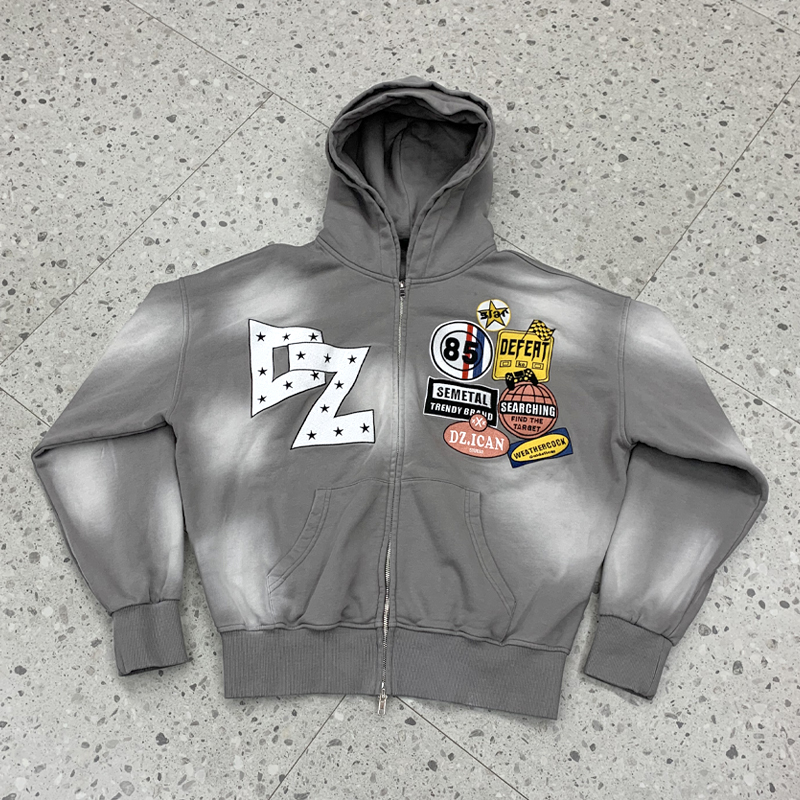
French Terry is a knit fabric characterized by unbrushed loops of yarn on the interior and a smooth, flat surface on the exterior. Because these loops remain intact, the fabric maintains a high degree of breathability and excellent moisture-wicking properties. The physical structure of the loops draws sweat away from the body, making French Terry hoodies highly functional for transitional weather, spring layering, or active environments. Specifically, this material tends to drape slightly more naturally than its brushed counterparts, offering a relaxed but refined silhouette without causing the wearer to overheat. For instance, engineering a 500gsm French Terry zip hoodie provides immense visual bulk and luxury appeal while maintaining crucial airflow for the wearer.
Conversely, brushed fleece utilizes a similar knitting process, but the interior loops are mechanically brushed with fine wire brushes during the finishing stage. This process breaks the loops and creates a soft, fuzzy texture composed of microscopic fibers. These fibers trap dead air against the body, acting as a highly effective thermal insulator. Because of this unparalleled heat-trapping capability, fleece hoodies remain the absolute standard for winter and fall collections. The brushing process also adds physical volume to the fabric, resulting in a stiffer, thicker garment that heavily enhances the oversized, architectural aesthetic.
| Feature | French Terry | Brushed Fleece |
|---|---|---|
| Interior Texture | Visible, unbrushed yarn loops. | Soft, fuzzy, brushed fibers. |
| Thermal Retention | Moderate; highly breathable. | High; excellent heat insulation. |
| Drape & Volume | Relaxed, heavy but fluid. | Stiff, voluminous, highly structured. |
| Best Seasonality | Spring, Summer, Transitional. | Fall, Winter, Cold Climates. |
While pure cotton remains the cornerstone of the industry, building a comprehensive Streetwear fabric library requires exploring synthetic blends and woven textiles. These materials offer distinct mechanical advantages for specific garment types, allowing technical designers to expand into functional outerwear and structured bottoms.
Blending natural cotton with synthetic polyester, commonly in an 80 percent cotton to 20 percent polyester ratio, is a standard engineering practice for heavyweight outerwear. The inclusion of polyester serves several vital functional purposes. It significantly reduces the shrink rate of the garment after washing, increases overall tensile strength, and accelerates drying time. For brands producing heavy 400-plus GSM sweaters, a synthetic blend helps maintain the structural integrity of the garment over time while keeping manufacturing costs manageable, all without sacrificing the premium natural hand-feel on the exterior.
The explosive rise of utility-focused fashion has also brought synthetic woven fabrics to the forefront. Nylon is highly regarded for its exceptional strength-to-weight ratio and water-resistant properties. Ripstop is a specific weaving technique where reinforcement threads are interwoven in a crosshatch pattern. This grid structure effectively prevents small tears from expanding under stress. Today, these advanced fabrics are the industry standard for cargo pants, lightweight windbreakers, tactical vests, and weather-resistant outerwear.
Transforming fabric theory into practical application requires aligning material specifications with a brand's target demographic, pricing model, and aesthetic goals. Raw material sourcing is a critical bottom-of-funnel business decision that directly impacts profit margins and long-term customer retention.
A luxury label positioning itself alongside high-end fashion houses must utilize materials that justify a premium price tag. This typically involves sourcing organic cotton, utilizing custom-milled fabrics with extreme weights, and ensuring meticulous stitch finishing. In contrast, an independent skate brand aiming for a more accessible price point might prioritize rugged durability and cost-efficiency. They might opt for midweight pure cotton tees and durable poly-blend fleece. The fabric must mathematically align with the retail price while exceeding the functional expectations of the end-user.
Furthermore, the most premium textile will fail if it cannot properly hold a brand's artwork. Different customization techniques require very specific fabric properties. When a screen-printing squeegee glides over a 250 GSM combed cotton surface, the ink sits proudly on top rather than sinking into the fibers, resulting in a razor-sharp graphic. Fabrics with high polyester content, however, may experience dye migration, where the fabric's dye bleeds into the printed ink during the heat curing process. Direct-to-Garment printing utilizes water-based inks that must bond directly with natural fibers. Therefore, this printing method requires a fabric composition of at least 80 percent cotton; printing on pure synthetics will result in faded, washed-out graphics that deteriorate rapidly.
Understanding fabric theory is only half the battle. Turning those choices into physical garments requires navigating the logistical realities of apparel manufacturing. Understanding how factories operate is essential for maintaining strict quality control and managing production cash flow.
Minimum Order Quantity is the lowest number of units a manufacturer is willing to produce in a single production run. Fabric choices directly dictate these minimums. If a brand requests a completely custom-milled fabric dyed to a proprietary Pantone color, the factory must produce a minimum yield of that raw textile, often pushing minimums to hundreds of pieces per colorway. Alternatively, utilizing pre-existing, high-quality premium blanks allows brands to bypass fabric milling minimums, drastically reducing upfront financial risk.
Selecting the right manufacturing partner is as critical as selecting the fabric itself. A factory must possess the technical capability to execute streetwear-specific patterns. Standard promotional factories often use outdated, slim-fit templates. A specialized manufacturer will seamlessly execute modern silhouettes featuring drop-shoulder seams, oversized armholes, and widened chest measurements. Furthermore, they must have the heavy-duty machinery required to cut and sew dense fabrics without causing needle breakage or uneven tension stitching.
Mastering garment textiles is the undeniable secret to long-term brand success. From engineering the precise density of a heavyweight tee to debating the thermal coefficients of brushed interiors versus loopback constructions, every textile decision shapes the final identity of your product. Stop guessing with cheap, disposable clothing blanks that degrade after a single wash. Start sourcing premium, architectural fabrics that elevate your perceived value and ensure extreme longevity. Take the next step today by exploring the professional manufacturing capabilities and premium custom garments at Yite Clothing. Whether you need custom 500gsm outerwear or structured heavyweight tees, partner with experts who understand the exact science behind premium apparel.
There is no single perfect fabric, as it heavily depends on the garment's intended purpose. However, heavyweight pure cotton is the undisputed industry standard for premium tees. For outerwear, heavy cotton-polyester blends are universally preferred due to their perfect balance of comfort, warmth, and structural durability.
Generally, any fabric weighing above 210 GSM is classified as a heavyweight T-shirt. This specific weight provides a highly structured, opaque, and durable fit that is inherently resistant to wrinkling and drapes squarely on the body, rather than clinging to it.
Yes, if a French Terry hoodie is constructed from pure cotton, it is prone to slight shrinkage when exposed to high heat during washing or tumble drying. Opting for synthetic blends or ensuring the manufacturer utilizes pre-shrunk fabrics is highly recommended to minimize this dimensional change.
Thick, high-density shirts provide a specific boxy drape that stands away from the body, which is a visual hallmark of the modern urban aesthetic. Additionally, thicker shirts last significantly longer, resist surface pilling, and provide a much more stable canvas for heavy custom screen prints compared to thin materials.
Direct-to-Garment printing requires water-based inks to chemically bond with natural fibers. Therefore, a fabric must be composed of at least 80 percent cotton for optimal results. If applied to synthetic materials like polyester, the ink cannot bond properly, resulting in a dull, faded image that washes out quickly.
A 500gsm hoodie utilizes a significantly higher yarn density than a standard 300gsm sweatshirt. This extreme weight translates to superior wind resistance, incredible thermal retention, and a stiff, architectural drape that holds its oversized shape without collapsing. It feels like a piece of heavy outerwear rather than a basic layering piece.
Look for suppliers who transparently list their density metrics and exact material compositions. A reliable manufacturing partner should offer diverse textile options like brushed fleece, loopback knits, and ripstop, while also providing comprehensive customization services tailored specifically to oversized silhouettes and advanced printing techniques.