Views: 0 Author: Site Editor Publish Time: 2026-04-07 Origin: Site
If you’re a US-based DTC brand founder or ecom operator sourcing hoodies and t-shirts from overseas factories, you’ve probably felt the pain: a customer orders what they think is a “Large” only to find it fits like a Medium. Returns skyrocket, margins shrink, and brand trust takes a hit. The root cause? US sizing vs Asian sizing differences that go far beyond labels.
As an OEM/ODM factory with years of experience producing for North American brands, we see this mismatch daily on the production floor. Asian (primarily Chinese) sizing is built for slimmer body frames and fitted silhouettes, while US sizing assumes broader builds, taller torsos, and relaxed comfort. Understanding these differences isn’t just nice-to-know—it directly impacts your hoodie size guide, production costs, return rates, and ultimately your clothing fit accuracy. In this guide, we break it down with real measurements, factory data, and actionable procurement tips tailored for US DTC brands.
US sizing prioritizes ease and comfort. A US Large hoodie typically offers 4–6 inches of chest ease for layering and movement, longer body lengths (often 28–30 inches for size M), and roomier armholes. Asian sizing, by contrast, is body-skimming: the same labeled “Large” might deliver only 2–3 inches of ease, shorter torsos (26–28 inches), and narrower shoulders—designed for average Asian body proportions that are 2–4 inches smaller in key areas.
This isn’t a flaw; it’s cultural and manufacturing reality. Factories default to Asian blocks unless you specify otherwise, which is why simply copying a supplier’s standard chart leads to poor clothing fit accuracy for US customers.
For hoodies, the gap widens: US versions need deeper hoods (to accommodate baseball caps) and larger kangaroo pockets. T-shirts see differences in neck rib stretch and hem drop—US styles often sit lower for a relaxed drape.
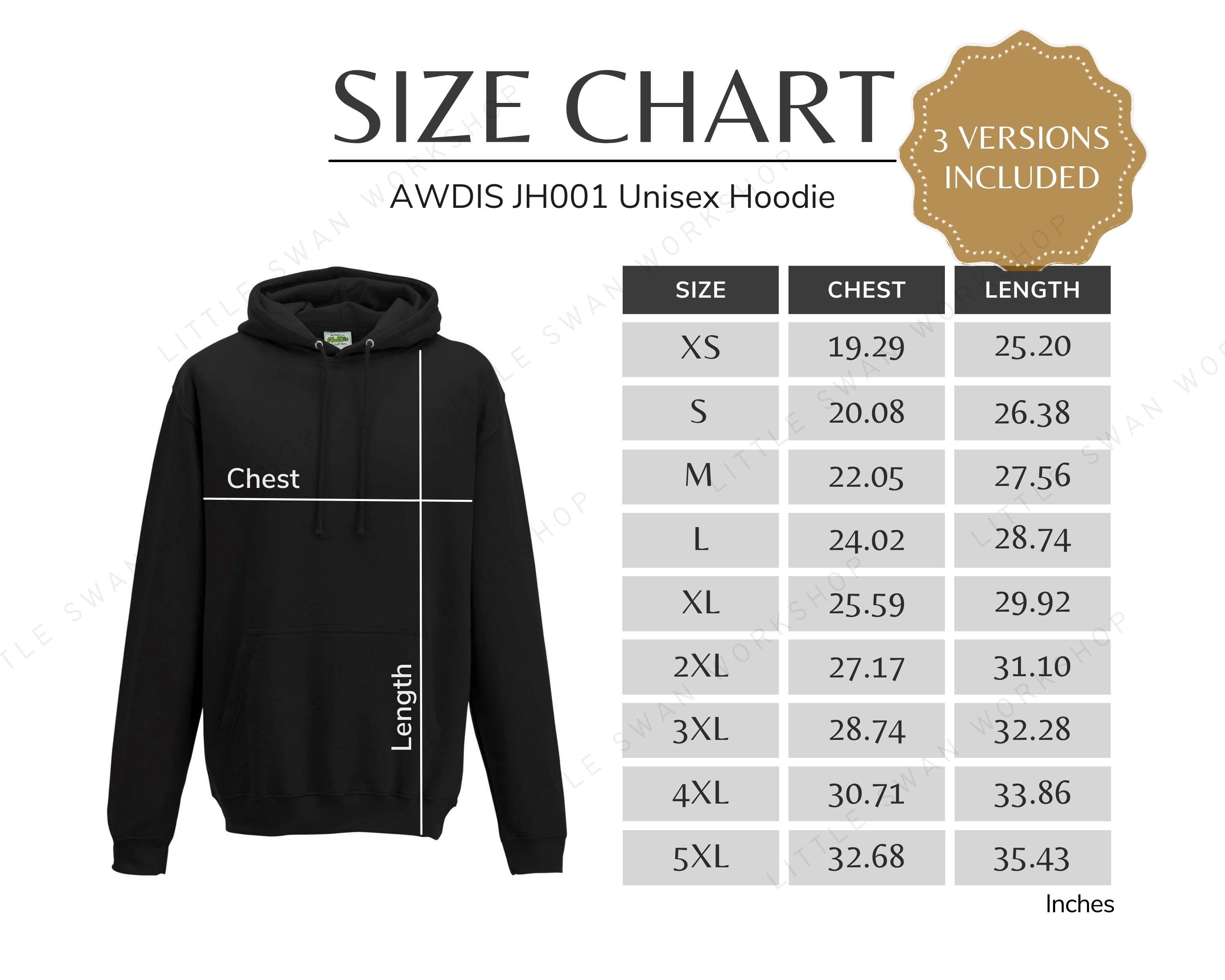
Here’s the data that matters most—flat measurements from actual production runs (men’s/unisex, average 300–380 GSM fleece or jersey). Always verify with samples, as tolerances run ±1 cm / 0.4 inches.
| Size | Asian Chest (in/cm) | US Chest (in/cm) | Asian Body Length (in/cm) | US Body Length (in/cm) | Sleeve (from shoulder) Asian vs US |
|---|---|---|---|---|---|
| S | 36–38 / 91–97 | 38–40 / 97–102 | 26–27 / 66–69 | 27–28 / 69–71 | 23 / 58 vs 24 / 61 |
| M | 38–40 / 97–102 | 40–42 / 102–107 | 27–28 / 69–71 | 28–29 / 71–74 | 24 / 61 vs 25 / 63.5 |
| L | 40–42 / 102–107 | 42–44 / 107–112 | 28–29 / 71–74 | 29–30 / 74–76 | 25 / 63.5 vs 26 / 66 |
| XL | 42–44 / 107–112 | 44–46 / 112–117 | 29–30 / 74–76 | 30–31 / 76–79 | 26 / 66 vs 27 / 68.5 |
| 2XL | 44–46 / 112–117 | 46–48 / 117–122 | 30–31 / 76–79 | 31–32 / 79–81 | 27 / 68.5 vs 28 / 71 |
Key takeaway for your hoodie size guide: An Asian “L” hoodie equals roughly a US “M” in chest but still feels tight in length and shoulders for American customers. Women’s charts follow the same 1–2 size shift but with narrower hips and shorter sleeves.
From pattern-making to final QC, we measure 8–10 critical points on every hoodie and t-shirt:
Chest (1" below armpit): US adds extra ease for layering.
Body length (center back): US styles run 1–2 inches longer.
Sleeve length (center back to cuff): US sleeves are longer to avoid riding up.
Shoulder width: US patterns are 1–2 inches broader.
Armhole depth: Larger in US for mobility.
Hood depth/width (hoodies only): US hoods accommodate beanies and ponytails.
Hem width and cuff rib stretch: US hems sit straighter without riding up.
Pre-wash testing is non-negotiable—cotton fleece shrinks 3–5%, so we measure post-wash for true clothing fit accuracy. US brands that skip this step see 15–25% higher returns.
Switching to US patterns isn’t free, but the ROI is massive. Relaxed US fits increase fabric consumption by 8–12% per garment (extra 0.3–0.5 yards of 380 GSM fleece at $4–6/yard). Grading rules differ: US sizes increment 2 inches per size vs 1.5 inches in Asian blocks, raising pattern development time by 20%.
Typical costs:
Standard Asian chart production: no extra.
Custom US size grading + samples: $40–90 per style (one-time).
MOQ for custom US patterns: 150–300 pieces per color/size (can drop to 100 with shared fabric inventory).
Yet these upfront costs pay off fast. Accurate US sizing vs Asian sizing alignment cuts sample iterations from 3 to 1 and slashes bulk return rates.
Industry data shows size and fit issues cause 20–53% of all apparel returns, costing brands hundreds of millions annually. For DTC hoodie and t-shirt lines, a mismatched Asian chart can push return rates from 15% to 35%+. Brands using detailed hoodie size guide pages with flat measurements, model stats, and “how to measure” videos routinely drop returns below 12%.
| Aspect | Using Asian Sizing for US Market | Using Proper US Sizing | Impact on Your Brand |
|---|---|---|---|
| Fit Perception | Tight, short sleeves | Comfortable, true-to-size | +25% customer satisfaction |
| Return Rate | 25–40% | 10–15% | Saves $2–5 per unit |
| Production Waste | Lower fabric use | 8–12% more fabric | Higher per-unit cost but lower overall returns |
| Customer Loyalty | Frequent complaints | Repeat purchases | Higher LTV |
Startup phase (under 500 units/month): Request dual US/Asian charts and order samples in US sizes only. Use existing factory stock patterns where possible to keep MOQ at 100.
Growth phase (500–5,000 units): Invest in custom grading and fit-model testing (US models, sizes 4–14 for women, M–3XL for men). Add size stickers or tags with both systems for flexibility.
Mature DTC brands: Co-develop seasonal size guides with your factory, including plus-size extensions. This level of clothing fit accuracy becomes your competitive edge.
From the cutting table to the shipping dock, we’ve watched brands transform their margins simply by treating sizing as a technical specification, not an afterthought. In 2026, with DTC competition fiercer than ever, the brands winning aren’t just those with trendy designs—they’re the ones delivering consistent clothing fit accuracy that makes customers say “it fits perfectly” on the first try. US sizing vs Asian sizing mastery can cut returns by 25–40% and boost lifetime value by double digits.
Realizing that level of precision starts with choosing a manufacturing partner fluent in both systems. That’s the core value of yiteclothing.com—your dedicated OEM/ODM factory that doesn’t just produce hoodies and t-shirts but engineers them for the US market from day one. We provide ready-to-use US-optimized size charts, low-MOQ custom grading, pre-wash testing, and full tech-pack support so your hoodie size guide sells confidence, not guesswork.
Ready to eliminate sizing headaches and scale with accuracy? Visit yiteclothing.com today for a free size consultation and sample kit tailored to your next collection. Your customers—and your bottom line—will thank you.