Views: 0 Author: Site Editor Publish Time: 2026-09-26 Origin: Site
Acid wash is far more than a nostalgic streetwear staple. It represents a highly complex manufacturing challenge for private label brands. You likely recognize the aesthetic instantly by its high-contrast, mottled fading. Yet, achieving consistent, high-quality washes at scale demands intense technical precision. If factories cut corners during the bleaching phase, fabrics quickly degrade and sizing fluctuates wildly across a single batch. This unpredictability ruins profit margins.
This guide equips apparel founders and buyers with essential technical knowledge to navigate these hurdles. You will learn how to evaluate chemical processes, compare different fabric finishes side-by-side, and confidently select a capable production partner. By mastering these variables, you can build a scalable, profitable custom apparel line.
Process Reality: Acid washing relies on chemical stripping (usually chlorine-soaked pumice stones), requiring strict neutralization to prevent fabric degradation.
Finish Selection: Choosing between acid wash, garment dye, and vintage wash depends on the brand's desired contrast level, cost constraints, and target demographic.
Sourcing Criteria: A reliable acid wash t-shirt manufacturer must demonstrate consistent batch matching, sustainable water treatment, and low-variance sampling.
Design Compatibility: Not all fabrics or printing techniques survive the acid wash process; 100% heavy-weight cotton and post-wash screen printing yield the best ROI for custom lines.
Consumers view acid wash merely as a stylistic choice. As an apparel brand, you must view it as a controlled chemical breakdown. Understanding factory-level mechanics is crucial when developing a custom washed t-shirt. Knowing the science behind the aesthetic allows you to spot poor manufacturing practices before you place a bulk order.
Despite the name, commercial acid washing rarely uses actual acid. Factories primarily use sodium hypochlorite (industrial bleach). Workers soak highly porous pumice stones in this chemical agent. They load these soaked stones into massive industrial washing machines alongside dyed, finished garments.
As the drum tumbles, the abrasive stones strike the fabric randomly. Wherever a stone hits the cotton, the bleach strips away the top layer of dye. This friction and chemical reaction create the signature high-contrast, localized fading. Because the stones cannot touch every millimeter of the fabric, you get the characteristic mottled, marbled effect.
The initial wash is only half the battle. Once garments achieve the desired fade, workers must immediately halt the chemical reaction. This requires a strict neutralization phase. Factories introduce anti-chlorine agents, such as sodium bisulfite, into a secondary wash cycle.
Common Mistake: Cheap manufacturing facilities often skip or rush this neutralization step to save time and water. This oversight leaves residual bleach active within the cotton fibers. Over time, the chemical continues eating away at the fabric. The result? Brittle shirts tearing after a single wear, disastrous shelf life, and potential skin irritation for the end-user. Always demand proof of pH testing from your manufacturing partners to guarantee complete neutralization.
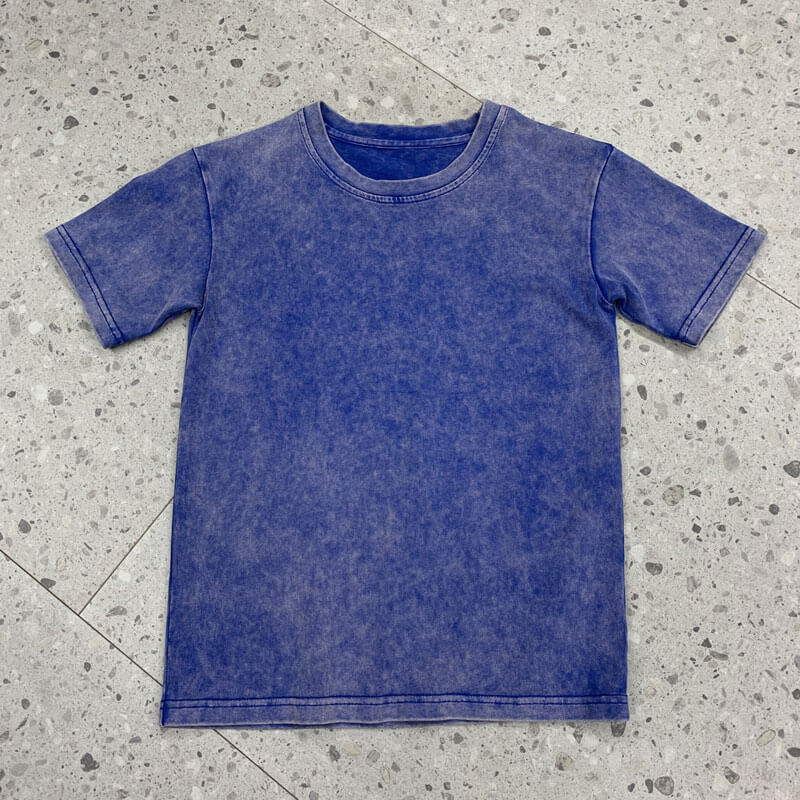
Apparel buyers often confuse various wash techniques. Each process requires different baseline fabrics, yields distinct aesthetics, and carries unique production costs. Use the framework below to align your brand identity with the correct finishing technique.
This technique creates extreme highs and lows in color. The visuals present a marbled, aggressive, and highly contrasted effect. This aggressive stripping process weakens fibers slightly, requiring a heavier base garment. It works best for edgy, retro, or loud graphic streetwear where the shirt itself acts as a statement piece.
If you want to produce premium garment-dyed streetwear, factories take a different approach. They sew the shirt entirely using raw, uncolored cotton (PFD or Prepared for Dye). They submerge the finished shirt into dye baths. This creates soft, uniform color saturation. Shrinkage happens during the dye bath, providing consumers with a pre-shrunk, ultra-soft fit. It features subtle, authentic fading around heavy seams. It suits monochromatic collections and premium basics perfectly.
Enzyme washing relies on cellulase enzymes rather than harsh bleach. These organic proteins safely eat away protruding cotton fibers. The result feels incredibly soft and features an overall muted, even fade. It simulates years of natural wear without the aggressive marbling of an acid wash. Heritage brands favoring subtle, elevated aesthetics rely heavily on this method.
Apparel Wash Technique Comparison Matrix
| Feature | Acid Wash | Garment-Dyed | Vintage / Enzyme Wash |
|---|---|---|---|
| Visual Effect | High-contrast, mottled, marbled fading | Uniform saturation, subtle seam fading | Overall muted, soft, even fade |
| Primary Agent | Bleach-soaked pumice stones | Post-sewing immersion dye bath | Cellulase enzymes |
| Fabric Stress | High (requires heavy GSM cotton) | Low to Moderate | Low (preserves structural integrity) |
| Best Used For | Edgy streetwear, retro graphics | Premium basics, soft monochromatic lines | Heritage brands, worn-in luxury aesthetic |
Finding a factory to bleach shirts is easy. Finding a dependable acid wash t-shirt manufacturer capable of scaling your brand requires strict vetting. You must separate premium partners from unreliable facilities immediately to protect your capital.
You must understand one crucial reality: zero variance in acid washing is impossible. Because pumice stones strike garments randomly, no two shirts will ever look identical. However, acceptable variance exists. You must define this acceptable window in your Service Level Agreement (SLA).
Always ask a custom vintage t-shirt supplier for "strike-offs" or wash samples before committing to a bulk order. Approve a "lightest acceptable" and "darkest acceptable" sample. Keep these physical samples in your office to compare against the final bulk delivery.
Bleach and pumice stones degrade cotton. If you start with a cheap, lightweight fabric, the shirts will disintegrate in the wash drums. Follow these sourcing rules:
Demand Heavyweight Cotton: Verify the supplier uses durable fabrics, ideally 200+ GSM (Grams per Square Meter).
Check Tensile Strength: Ask the factory how much tensile strength the fabric loses during their specific wash cycle.
Verify Thread Composition: Ensure they use cotton sewing threads. Polyester threads will not lose color during the wash, leaving awkward, brightly colored seams on a faded shirt.
Beware of suppliers offering unusually low prices. In this industry, cheap quotes often indicate poor chemical disposal methods, skipped neutralization phases, or weakened fabric integrity. If a factory cannot explain their wastewater management process clearly, walk away.
The traditional fashion industry carries a heavy environmental burden, and chemical washing historically played a large role. Traditional acid washing consumes massive amounts of water and introduces toxic chlorine into local ecosystems if left untreated.
Forward-thinking factories now offer sustainable alternatives to traditional pumice and bleach. Ozone washing represents a major breakthrough. This process uses ozone gas to bleach the fabric. It requires virtually zero water and minimal chemicals, converting the ozone back into oxygen afterward. Laser distressing also provides a waterless alternative. Technicians program lasers to burn microscopic layers of dye from the fabric, perfectly replicating the mottled acid wash look with zero chemical waste. Synthetic eco-stones have also replaced pumice in many facilities, as they do not crumble and clog drainage systems.
Protect your brand by demanding documentation. Instruct your buyers to ask manufacturers for OEKO-TEX Standard 100 certifications. This guarantees the final garment contains no harmful chemical residues. Additionally, look for ZDHC (Zero Discharge of Hazardous Chemicals) compliance, which ensures the factory treats its wastewater properly before releasing it.
Partnering with compliant factories does more than protect local water supplies. It protects your brand reputation. Consumers care deeply about supply chain transparency. Using ozone technology or eco-certified factories allows for credible eco-conscious marketing. You can confidently sell a premium product while avoiding greenwashing accusations.
Designing custom apparel involves more than slapping a logo onto a blank canvas. When developing private label acid wash shirts, the chemical treatment dictates your design boundaries. Ignoring these implementation realities leads to ruined inventory.
You cannot effectively acid wash synthetic fabrics. If you are sourcing an acid wash cotton tee wholesale, it must be 100% cotton. Polyester and synthetic blends do not react to the bleach and stripping process uniformly. A 50/50 poly-cotton blend will look muddy and pill heavily because the bleach only attacks the cotton fibers, leaving the polyester fibers brightly colored and intact.
Deciding when to print your graphics determines the final aesthetic.
Printing After the Wash (Recommended): This represents the safest rule of thumb. Printing after the chemical treatment maintains crisp, vibrant graphics. The ink sits cleanly on top of the finished fabric.
Printing Before the Wash (High Risk, High Reward): If you want a heavily distressed, integrated vintage graphic, print first. The pumice stones and bleach will attack the ink, cracking and fading it alongside the fabric. This requires extensive sampling to ensure the graphic remains legible.
Water-based inks soak into the fabric. If you apply them after a heavy acid wash, any residual chemicals left in the fabric (due to poor neutralization) can alter the ink's color over time. Plastisol inks sit on top of the fabric like a plastic layer. They provide better color accuracy on washed garments but feel heavier. Discuss curing temperatures with your printer, as pre-washed fabrics shrink differently under extreme heat.
Acid washing corrodes metal. If you design hoodies or shirts featuring metal zippers, eyelets, or aglets, the sodium hypochlorite will oxidize them. They will rust, and that rust will bleed onto the fabric. We recommend using specialized anti-corrosive hardware or, ideally, applying all metal trims purely post-wash.
Sourcing a high-quality acid wash t-shirt requires a delicate balancing act. You must align your aesthetic desires with structural fabric integrity, rigorous quality control, and strict environmental compliance. Understanding the technical mechanics of pumice washing and chemical neutralization prevents costly manufacturing disasters.
Your next step involves reaching out to vetted suppliers. Request a physical wash sample before negotiating bulk pricing. Define your acceptable variance clearly in your contracts, and aggressively vet their chemical neutralization and wastewater processes.
Ready to build a reliable supply chain? Contact our production team for a deep technical consultation. We can provide accurate quotes on custom runs, guide you through eco-friendly wash alternatives, or send a sample pack of our premium washed blanks right to your office.
A: No, we strongly advise against it. The chemistry behind acid washing relies on stripping dye from natural cellulose fibers. Polyester is essentially plastic; it resists the bleach and pumice stone abrasion. Washing a poly-blend results in an uneven, muddy appearance with severe pilling, rather than a clean, high-contrast fade. Always stick to 100% cotton.
A: Some inconsistency is a natural byproduct of the random pumice stone tumbling process. No two shirts will look identical. However, wild swings in color from black to light grey indicate poor factory quality control. It usually means the factory overloaded the wash drums, applied chemicals unevenly, or failed to standardize their wash timers.
A: While DIY Reddit trends make it look easy, hand-bleaching is not scalable for a professional brand. Non-industrial bleaching poses serious respiratory health hazards. Furthermore, domestic washing machines cannot properly neutralize the bleach, leading to weakened fabrics that tear after a few wears. Professional wholesale manufacturing ensures safety, consistency, and fabric longevity.
A: Yes. The industrial washing and high-heat tumbling process naturally pre-shrinks the cotton fibers. While this offers the end-consumer a stable garment that won't shrink further at home, buyers must account for this. You should adjust your sizing charts and cutting patterns prior to manufacturing to ensure the post-wash garment meets your target fit.


