Views: 0 Author: Site Editor Publish Time: 2026-08-17 Origin: Site
Private label shorts become recognizably yours through the details customers handle before and after they wear them: the neck or waistband label, size indicator, care information, hang tag, bag, insert, and shipment marks. Those elements must do more than carry a logo. They need to suit the garment construction, selling channel, fulfillment process, and the information required for the intended market. For brands ordering Custom Shorts, a practical customization plan defines every touchpoint early, then proves it in the sample. This guide explains which labels and packaging elements can be specified and how to make them production-ready.
Private label shorts can use customized main labels, size labels, care labels, hang tags, patches, and packaging components.
Choose each element based on use, fabric, retail channel, and the information it must carry—not logo preference alone.
Keep artwork, placement, wording, materials, and packing instructions in one approved specification.
Test labels and packaging on a finished Custom Shorts sample before bulk production.
Treat barcode labels and carton marks as operational data, not just visual branding.
Map the customer journey before selecting components. A shopper may first see a short folded in a polybag at a warehouse, hanging on a retail fixture, photographed online, or delivered in a mailer. Each route makes different details important. For retail, a hang tag, barcode, fold, and size visibility may be central. For direct-to-consumer orders, an insert and mailer can shape the unboxing experience. For uniforms or teamwear, a durable garment label and clear size identification may matter more than elaborate external packaging.
Private label is not simply adding a woven label. It is the coordinated application of a brand identity to product and presentation. The Yite customization service lists customized packaging, logo, hangtags, and styles among its OEM/ODM options. The buyer should convert that broad capability into a precise plan: which items receive branding, what each item says, where it goes, and what the finished presentation must look like.
Begin with the required information. Establish the exact brand name, logo file, size system, content and care wording, origin wording where applicable, SKU logic, barcode data, and retailer requirements. Legal and regulatory requirements vary by destination and product, so the brand should validate its own requirements with appropriate qualified guidance rather than copying a label from a different market. Once that content is accurate, the creative decisions can be built around it.
The main label identifies the brand on the garment. On Custom Shorts, it may sit inside the back waistband, on a pocket, on a side seam, or on an exterior patch depending on the style. The best construction balances brand character, comfort, garment fabric, and attachment method.
Woven labels can communicate a tactile, established look and are commonly used at the waistband or side seam. They should be sized so that fine text stays legible and edges do not irritate the wearer. Decide whether the label is folded, flat, or looped, and whether it needs an end fold for a clean attachment. The label’s base color, weave density, yarn color, and edge treatment should be visible in the physical sample because a digital file cannot fully show texture or softness.
Printed labels can be suitable when low bulk or comfort is important. A printed waistband label may reduce the scratch risk associated with a sewn label, but it needs testing for adhesion, legibility, color, and wash durability on the exact fabric. Heat-transfer branding can also be useful for a small exterior logo or internal information, yet it must be evaluated with the fabric’s stretch and finish. A transfer that looks clean on a flat sample might crack or lift if used on a highly elastic waistband without the right specification.
Exterior patches offer a clear fashion statement. They can be woven, embroidered, rubber-like, leather-like, or another approved construction, but must be appropriate for the garment’s care and use. A bulky patch near a seat or thigh may affect comfort. A rigid patch may not suit a lightweight running short. Specify dimensions, placement, edge finish, stitch color, and attachment method rather than only providing a logo.
| Branding element | Best used when | What to specify |
| Woven label | A tactile, sewn-in identity suits the garment | Weave, fold, size, yarn colors, edge finish, location |
| Printed label | Low bulk and soft contact are priorities | Ink/color, size, placement, fabric compatibility, wash result |
| Heat-transfer logo | A clean graphic mark is needed on fabric | Artwork, transfer type, size, placement, stretch and wash approval |
| Exterior patch | The brand needs a visible premium or utility cue | Material, edge, backing, stitch method, exact location |
| Side-seam flag | A subtle brand signature is appropriate | Fold style, visible length, colors, seam location |
Size labels help the wearer and retailer identify the garment quickly. They may be separate from the main label, integrated into it, or printed. Agree on the size format—such as S through XXL or a numeric system—and make sure it matches the selling channel and size chart. On shorts with a reversible or minimal interior design, the placement should remain easy to find without compromising comfort.
Care labels carry information that a buyer should not treat as filler. They need correct, readable, durable content and a placement that does not rub or bunch during wear. The content normally relates to fiber composition, care, origin, and other market-specific information. The exact requirements must be confirmed by the brand for the destination market. From a production standpoint, the buyer needs to approve label material, print quality, fold, attachment, location, and wording as a single unit.
For active or lightweight private label shorts, a long folded care label can be uncomfortable. A brand may consider a soft printed label, a carefully folded satin-like label, or another construction that meets its needs. For heavier streetwear shorts, a label at the inner waistband may suit the product. The intended wearer must be able to use the garment comfortably, so label choices should be tested during the fitting and wash process.
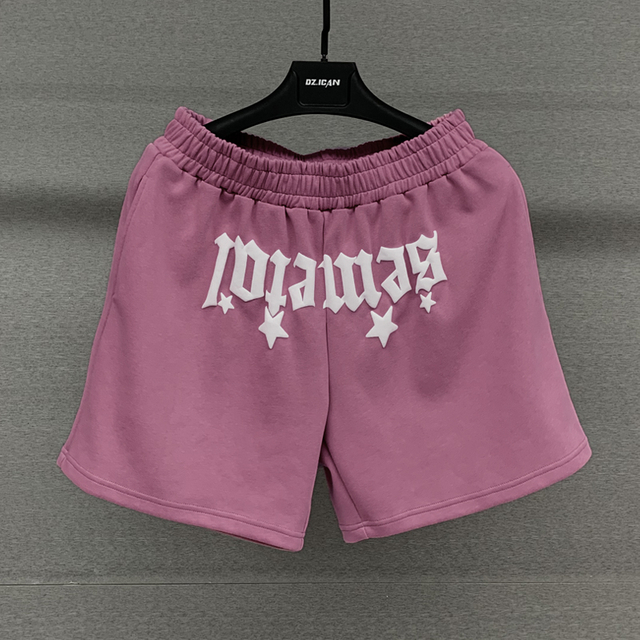
Hang tags are optional for some channels but valuable for many private label shorts programs. They can introduce the brand, identify the style, explain a feature, carry the barcode and SKU, and reinforce a price-positioning story. A good hang tag has an operational side as well as a visual side: it should attach cleanly, remain readable, not damage the fabric, and work with the retailer’s scanning or receiving process.
Specify the stock, size, shape, print colors, front and back content, hole position, string or fastener type, and attachment location. If a tag must include a barcode, provide the final data and test it with the intended scanning method before production. If several colorways or sizes share the same artwork, define how variable information will be managed. Avoid handwriting or late-stage manual labeling unless it is part of a controlled process; it creates avoidable inventory errors.
Do not let a good-looking tag obscure the garment. A large tag with an abrasive fastener can mark a delicate fabric during shipping. A poorly placed fastener can pierce a waistband or leave a visible hole. Approve the attached sample rather than the flat tag only.
Custom packaging can include polybags, belly bands, tissue, mailers, boxes, sticker seals, and packaging inserts. The correct set depends on whether the order moves to a retailer, a fulfillment center, a wholesale customer, or directly to consumers. Packaging should protect the shorts and support consistent identification without adding waste or unnecessary cost.
Polybags are a common protective layer. Decide the bag dimensions, transparency or opacity, self-seal style, venting or warning language where applicable, size sticker location, and barcode placement. The bag should hold the folded garment without excessive compression, but it should not be so large that the presentation becomes untidy or causes movement in a carton. If the fabric is sensitive to creasing, test the folding method after transit simulation or normal handling.
For direct-to-consumer programs, a branded mailer, tissue, thank-you card, or care card may make sense. Packaging inserts can reinforce brand storytelling or explain garment care, but the content should be useful and should not substitute for legally required label information. For wholesale, a simple, standardized pack may be more effective if it helps the buyer’s warehouse process goods quickly and accurately.
Yite’s Custom Shorts range includes directions from French terry to nylon gym shorts, so packaging should match the product. A premium folded French terry style may suit tissue and a sturdy presentation bag; a lightweight active short may need a compact, practical pack that keeps the garment clean and identifiable. The packaging should serve the actual product rather than imitate a packaging trend.
Barcode labels may look like small stickers, but they connect the physical garment to inventory, retail systems, fulfillment, and returns. Establish a SKU structure before labels are printed. It should distinguish style, color, size, and any other attribute needed by the channel. Share the exact data file with the manufacturer, then verify the first printed labels by scanning them.
Confirm where the barcode will appear. It could be on a hang tag, polybag, sticker, or another controlled location. The placement should be consistent and accessible to a receiver without opening the package. If a retailer supplies its own label format, include that format in the approved packaging instructions rather than asking the factory to infer it from a spreadsheet.
Carton marks deserve the same discipline. They may need to state a purchase-order number, style, color, size range, carton quantity, carton sequence, shipping marks, and destination. The buyer should provide an approved layout and check a first carton or packing reference. Accurate external identification protects the order after it leaves the sewing line.
Labels and packaging should be reviewed on the actual short, not as separate unconnected components. Request a finished sample with the approved main label, size label, care label, hang tag, polybag, and any relevant insert. Place it beside the tech pack and evaluate it from three viewpoints: the wearer, the retailer or warehouse team, and the brand owner.
For the wearer, check softness, comfort, and whether labels remain legible after care. For operations, check whether size and barcode information can be found and scanned, whether the fold is consistent, and whether the bag protects the garment. For the brand, check visual hierarchy, logo accuracy, color, and whether the unboxing or shelf presentation matches the intended position.
The quality page describes quality control throughout production. A buyer makes those controls concrete by approving a packaging specification with objective checks: correct label version, correct placement, scannable code, matching size, clean fold, and correct carton marks. If any one element is wrong, state whether it requires a new sample, a photo confirmation, or a corrected production reference.
An effective private label shorts specification is concise enough to use on the floor and detailed enough to prevent assumptions. Include a component list for all labels and packaging, an artwork page, placement diagrams, dimensions, materials, colors, variable data, fold instructions, barcode files, carton marks, and clear photos of the approved finished pack. Assign revision numbers and do not mix old and new artwork in the same order folder.
Where there are options, choose one. “Use woven or printed label depending on availability” creates an uncontrolled variation. If a substitute may be permitted, define the conditions and the approval path. This is especially important for labels, since a substitution may alter comfort, look, care durability, or market information.
The sample process can also reveal opportunities to simplify. Perhaps a hang tag and a large polybag sticker duplicate the same data, or a complex insert does not add value in a wholesale channel. Remove components that do not help the customer, operation, or brand. A simpler approved system is usually easier to execute consistently.
Private label Custom Shorts can be customized through main labels, woven labels, care labels, size identifiers, exterior patches, hang tags, custom packaging, polybags, packaging inserts, barcode labels, and carton marks. The strongest program does not use every option; it selects the elements that serve the product, channel, and brand position. Yite can support the customization discussion, but the buyer should establish the exact information, placements, materials, and pack-out standard before bulk production. When the branded sample is approved as a complete system, the final garment is easier to recognize, sell, receive, and reorder.
Yes. A brand may use a woven main label for identity and a printed internal label for low-bulk care or sizing information, provided both are comfortable, durable, and correctly specified for the product.
The content depends on the destination market and product. Brands should determine required fiber, care, origin, and other information with appropriate qualified guidance, then provide the approved wording and layout to the manufacturer.
Not always. They are often useful for retail presentation, barcode data, and product storytelling. For some direct-fulfillment or uniform programs, a simpler pack may be more appropriate.
Check that the bag fits the folded garment, protects it, carries correct size or barcode information, seals as intended, and meets any required warning or channel instructions. Review it with the actual short inside.
Use the location required by the selling channel, commonly a hang tag or outer polybag. The label must be consistently placed, legible, linked to the correct SKU, and scannable without opening the package.
Yes. They should be part of the finished sample approval wherever possible. Correcting a label, barcode, or carton mark after goods are packed can create costly rework and receiving delays.


