Views: 0 Author: Site Editor Publish Time: 2026-08-05 Origin: Site
Approving bulk apparel production based on a superficial glance at a prototype carries immense financial and reputational risks. A single measurement error in a pre-production sample can ruin an entire production run, leaving you with thousands of unsellable garments. When evaluating a sample, looking only at the color or logo placement is a mistake that often leads to disastrous outcomes on the factory floor.
Buyers frequently lack a standardized, technical framework for evaluating these pre-production samples. They tend to focus heavily on basic aesthetics while neglecting the structural elements that actually determine garment quality. Factors like fabric shrinkage, seam tension, sizing scaling, and decoration alignment are often overlooked until the final bulk order arrives at the warehouse, at which point it is too late to make corrections.
To prevent these errors, you need a systematic, technical checklist for evaluating a size sample. This framework ensures the final bulk order aligns perfectly with the approved tech pack. By rigorously testing fit, fabric, and finishes, you mitigate production risks, hold manufacturers accountable, and guarantee end-customer satisfaction.
Fit and Grading Dictate Success: Approving a base size sample requires verifying exact measurements against the tech pack to ensure accurate grading across the entire size run.
The Wash Test is Non-Negotiable: Never approve a sample without subjecting it to standard wash and dry cycles to calculate shrinkage rates and test colorfastness.
Decorations and Brand Assets Require Strict QC: Logo placement, embroidery, sublimation clarity, patches, and custom labels must be verified for alignment, scale, and durability during the sample phase.
Hardware and Finishes Matter: Zippers, aglets, drawstrings, and ribbing elasticity are the primary failure points in a hoodie and sweatpants set; they require rigorous stress testing.
Documentation is Protection: Final approval must be tied to a signed, physical "golden sample" and an updated tech pack to hold manufacturers accountable during bulk production.
There is a distinct difference between a design prototype and a pre-production size sample. A design prototype is a "looks-like" model used to visualize the concept, while a size sample is a "works-like" and "fits-like" garment built for technical evaluation. The ultimate success criterion for evaluating Custom Hoodie Sets is absolute alignment with the technical specifications outlined in your tech pack. Every seam, measurement, and material choice must match the documented requirements.
When you receive that first physical unit, you are not just checking if the color matches your Pantone reference. You are verifying the factory's ability to interpret your technical drawings and translate them into a wearable, durable product. If the factory cuts corners on the sample, they will absolutely cut corners on the bulk run. You must treat this stage as an audit of their manufacturing capabilities.
Minor discrepancies in the sample stage compound exponentially during bulk manufacturing. If you assume a slightly tight sleeve on a medium sample will resolve itself in production, you are setting the stage for failure. A one-inch sleeve deficit in the medium sample translates directly into the grading formula, potentially becoming a two-inch deficit in the XXL size. Catching these errors early prevents cascading fit issues across your entire inventory.
Never assume the factory knows what you want. If the tech pack specifies a 3-inch ribbed cuff and the sample arrives with a 2.5-inch cuff, reject it or document the required change explicitly. Factories operate on volume and speed. If you approve a flawed sample, you give them legal permission to produce thousands of flawed units.
The industry standard for quality control relies on establishing a "golden sample." This is the final, approved physical garment that serves as the definitive benchmark for all bulk production. Once approved, this sample is signed, dated, and retained. Factory quality control inspectors use this exact garment to verify that the bulk run matches your approved standards before authorizing final shipment.
You should always request two identical samples for the final approval round. You keep one in your office, and you mail the signed counterpart back to the factory floor. This eliminates any disputes about what was approved. If the bulk delivery deviates from the golden sample you hold, you have the physical evidence needed to demand a remake or a refund.
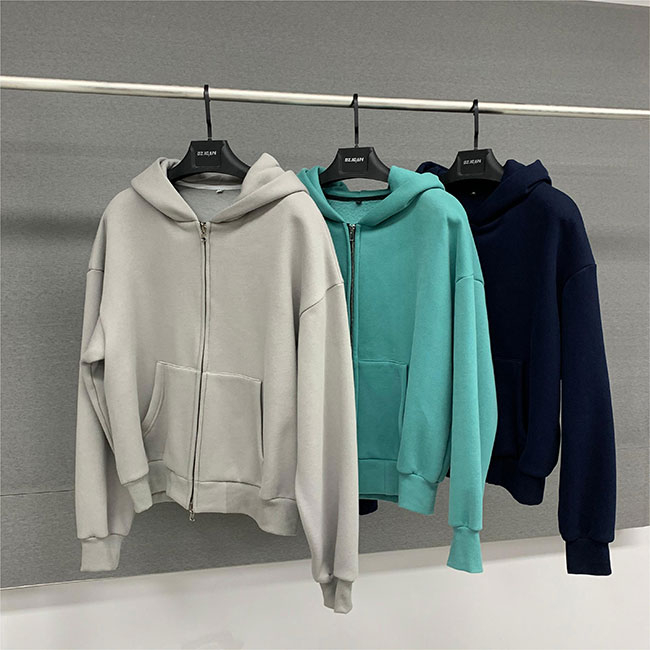
Measurement verification requires laying the garments completely flat on a large table. You must measure critical points including chest width, body length, shoulder drop, inseam, outseam, and the front and back rise. Compare these physical measurements directly against the tech pack tolerances, which generally allow for a variance of +/- 0.5 inches. Any measurement falling outside this tolerance requires a pattern adjustment.
To measure accurately, follow these steps:
Lay the garment flat and smooth out all wrinkles without stretching the fabric.
Measure the chest width exactly one inch below the armhole seam.
Measure the body length from the high point shoulder (HPS) straight down to the bottom hem.
Measure the inseam from the crotch gusset down to the bottom edge of the ankle cuff.
Beyond flat measurements, articulation and movement are essential. You must wear-test the sample to evaluate the range of motion. Test the crotch gusset functionality in the sweatpants by performing deep squats, and assess shoulder mobility in the hoodie by reaching overhead. The garment must drape naturally without pulling or restricting movement.
Verifying the Grams per Square Meter (GSM) ensures the fabric weight matches your specification. A heavy 400 GSM fleece feels substantially different from a lighter 250 GSM French terry. You can verify this by weighing a specific cut of the fabric or by comparing the hand-feel against a known swatch standard. The density directly impacts the drape and warmth of the final garment.
Composition checks evaluate the actual fiber blend. A 100% cotton construction offers superior breathability and a premium hand-feel, but it is prone to shrinkage. Conversely, an 80/20 cotton-poly blend adds durability and shape retention while minimizing post-wash distortion. You must ensure the factory used the exact blend specified in your tech pack.
Hardware requires rigorous stress testing. Evaluate all zippers to ensure smooth operation without catching on the fabric. Inspect metal versus plastic aglets for secure attachment, and check that all eyelets are firmly pressed into the fabric without fraying the surrounding knit. Zip the garment up and down rapidly twenty times to check for teeth misalignment.
Drawstring and hood construction heavily influence the perceived quality of the garment. Evaluate the hood's depth to ensure it provides adequate coverage. Check whether the lining is double-layered or single-layered, and test the durability of the drawstring channel by pulling the cords firmly to check for weak stitching.
Custom labels, tags, and brand assets must be inspected for correct sewing methods. Evaluate woven neck labels, care labels, size tags, and hangtags. Ensure the print or weave quality is legible, the placement is exactly as specified, and the stitching does not cause irritation on the inside of the neck.
Stitch density, measured in Stitches Per Inch (SPI), is a primary indicator of durability. A higher SPI generally indicates a stronger seam. Inspect the entire garment for skipped stitches, loose threads, or puckering along the seams. Poor tension settings on the sewing machines will cause the fabric to bunch or the threads to snap under pressure.
Evaluate the specific seam types used across the garment. Look for overlock, flatlock, or cover-stitching in high-stress areas. The crotch of the sweatpants and the armholes of the hoodie require reinforced stitching to withstand daily wear and tear. A premium Streetwear Tracksuit relies heavily on robust seam construction.
| Seam Type | Best Application | Durability Level |
|---|---|---|
| Overlock (Serged) | Internal side seams, finishing raw edges. | Standard |
| Flatlock | Activewear, base layers, reducing chafing. | High |
| Coverstitch | Hems, cuffs, necklines. | High |
| Twin Needle | Topstitching pockets, reinforcing hoods. | Very High |
Positioning and alignment quality control requires precise measuring. Lay the garment flat and use a ruler to verify the exact placement of all decorations. Check that chest graphics are perfectly centered relative to the kangaroo pocket and measure the exact distance from the neck seam to the top of the print.
Evaluate specialty decoration techniques thoroughly. Check sublimation printing for clarity and color saturation. Inspect embroidery for proper puff levels and ensure there is no puckering around the design. Chenille patches and silicone appliques must be securely adhered or stitched without lifting at the edges.
Proportional scaling is a critical check. You must verify how the artwork scales across different sizes. A graphic that looks perfect on a medium sample might look disproportionately small on an XXL or overwhelmingly large on a small. Ensure the factory has a clear scaling matrix for all brand assets.
Recovery testing determines the lifespan of the cuffs and waistband. Stretch the ribbing to its maximum capacity and measure the recovery time and shape retention. If the ribbing remains stretched out or ripples after being pulled, the elastane quality is insufficient.
Assess the density of the ribbing relative to the primary fabric. The ribbing must match the weight of the fleece or terry to prevent premature sagging. Flimsy cuffs on a heavyweight hoodie will degrade quickly, ruining the structural integrity of the sleeves and waist.
Calculating shrinkage is a mandatory step before approving any sample. Measure the garment flat, wash and dry it exactly according to the care label instructions, and then re-measure all critical points. Acceptable shrinkage for standard cotton fleece is typically between 3% and 5%. Anything beyond this requires pattern adjustments or pre-washing the fabric rolls before cutting.
Check for torque and twisting post-wash. Lay the laundered garment flat and inspect the side seams. If the side seams twist toward the front or back of the garment, it indicates poor fabric cutting or low-quality yarn tension. Torquing ruins the fit and drape of the garment permanently.
Decoration integrity must be evaluated after laundering. Inspect screen prints for micro-cracking and check puff prints for deflation or peeling. Sublimated panels should be checked for fading, while embroidery and patches must be inspected for puckering or thread bleeding caused by the wash cycle.
Colorfastness and bleeding are major risks, especially in contrasting color block designs. Check for any dye transfer after the first wash. Washing dark garments with lighter accents requires strict colorfastness standards to ensure the dark dyes do not bleed into the lighter fabrics.
The sample you receive is usually a base size, typically a Medium or Large. Approving this sample means you are approving the foundation for all other sizes. You must review the manufacturer's grading rules, which is the mathematical formula used to scale the pattern up to XXL and down to XS. If the base size is flawed, the graded sizes will be exponentially worse.
A major risk is linear grading, where all dimensions are scaled at the exact same rate. Human bodies do not scale linearly. Neck holes and armscyes do not grow at the same rate as body width or length. You must double-check specific grading dimensions on the tech pack to ensure the proportions remain ergonomic across the entire size spectrum.
| Measurement Point | Standard Tolerance | Grading Risk Factor |
|---|---|---|
| Chest Width | +/- 0.5 inches | Low - Scales relatively linearly. |
| Body Length | +/- 0.5 inches | Medium - Over-scaling leads to dress-like fits on larger sizes. |
| Neck Opening | +/- 0.25 inches | High - Does not scale linearly; requires fractional adjustments. |
| Armhole (Armscye) | +/- 0.25 inches | High - Poor grading restricts shoulder mobility in larger sizes. |
Requesting premium blends versus standard materials impacts your bottom line. Upgrading to a higher GSM or requesting a custom Pantone dye will increase costs compared to accepting stock fabric colors. You must weigh the financial impact against the target retail price of the garment.
Custom hardware and appliques elevate the product but come with strict trade-offs. Custom-molded zippers, branded aglets, and bespoke patches increase minimum order quantities and extend lead times. While these details differentiate a premium Hoodie and Sweatpants Set, they require higher upfront capital.
Requesting a second sample incurs both financial costs and timeline delays. You must decide whether to demand a completely new physical sample or conditionally approve the current sample with documented, minor revisions for the bulk run. Conditional approvals should only be used for minor measurement tweaks, never for fabric or construction failures.
Align the final size sample approval date with your production lead times and shipping schedules. Delays in the sample phase push back the entire manufacturing timeline. Ensure your approval process is efficient to avoid missing seasonal launch windows.
Sign and date the physical sample with a permanent marker on the inner care label to establish it as the official golden sample.
Update your tech pack immediately with any approved measurement deviations or hardware substitutions noted during the review.
Ship the signed golden sample back to the manufacturer's quality control department via tracked courier.
Authorize the bulk production deposit only after receiving written confirmation that the factory has received and reviewed the updated tech pack.
A: Sample pricing is typically two to three times the cost of a bulk unit due to the labor-intensive nature of one-off production. Many manufacturers will credit the sample cost toward your final invoice if you proceed with a bulk order that meets their minimum requirements.
A: Standard lead times range from two to four weeks. This timeline depends heavily on whether you are using in-stock fabrics or requiring custom fabric sourcing, specialized dye processes, and custom-molded hardware.
A: For standard cotton fleece, an acceptable shrinkage rate is between 3% and 5%. Synthetic blends or pre-shrunk fabrics should exhibit significantly less shrinkage, typically under 2%.
A: Ordering a base size is standard for initial approval to verify construction and materials. However, ordering a size run or jump size sample set is highly recommended for highly technical fits to verify the accuracy of the grading formula.
A: Lay the garment completely flat on a hard surface. Use a T-square or a clear grid ruler to measure the distance from structural seams to the edges of the print to ensure perfect centering and alignment.
A: Design changes post-sample require a new prototype, which adds time and cost to your project. Minor fit adjustments can sometimes be applied directly to the bulk tech pack, but structural or aesthetic changes demand a new physical sample.
A: GSM stands for Grams per Square Meter. It measures the density and weight of the fabric. Higher GSM indicates a thicker, warmer, and generally more durable garment, directly correlating to the perceived premium quality of the hoodie.


