Views: 0 Author: Site Editor Publish Time: 2026-10-16 Origin: Site
Choosing the right rhinestone size can make a significant difference to a hoodie's appearance, comfort, and overall design. Small stones can create detailed graphics, while larger stones produce a bolder visual effect. For streetwear brands developing custom rhinestone hoodies, the best choice depends on artwork, fabric construction, and decoration density. Yite Clothing helps brands explore custom hoodie designs that match their product vision.
SS stands for Stone Size, a numbering system commonly used to identify rhinestones in apparel decoration. Instead of specifying every stone only by its diameter, suppliers often use SS numbers to distinguish different sizes.
Smaller stones are generally used for fine details and compact lettering, while larger stones are more suitable for bold graphics and decorative accents. However, the best size is not necessarily the largest one. The design must remain clear at the intended viewing distance, and the stones must fit the available space.
For clothing brands, understanding SS sizing makes it easier to communicate artwork requirements with manufacturers and decoration suppliers.
SS sizes correspond to approximate stone diameters, but the exact dimensions can vary by supplier, stone type, and cutting specification. Brands should therefore use size charts as a starting point rather than treating every conversion as universal.
Before approving a design, confirm the supplier's actual diameter measurements and request physical samples when precise spacing matters. This is particularly important for small lettering, narrow outlines, and patterns containing several stone sizes.
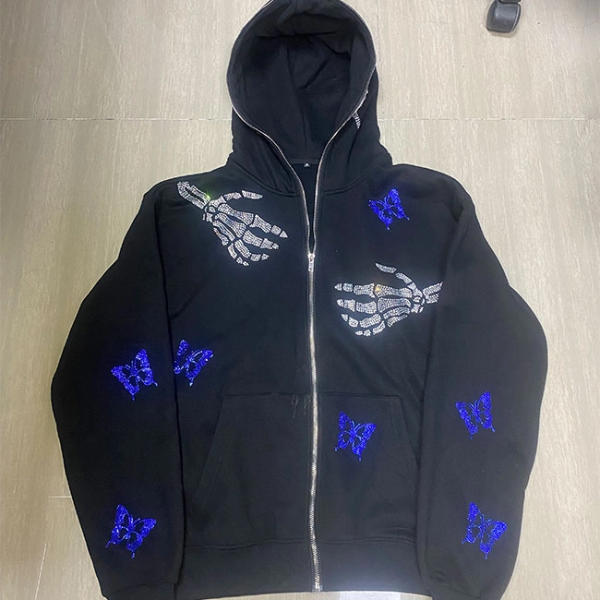
The following table provides a practical starting point for choosing rhinestone sizes for clothing. The most suitable option depends on the design's scale, spacing, and intended visual effect.
Rhinestone Size | Approximate Diameter | Potential Clothing Application |
SS6 | 2.0 mm | Fine details and small lettering |
SS8 | 2.3–2.5 mm | Small motifs and detailed outlines |
SS10 | 2.7–2.9 mm | Compact logos and dense patterns |
SS12 | 3.0–3.2 mm | Medium-detail graphics |
SS16 | 3.8–4.0 mm | Visible logos and decorative patterns |
SS20 | 4.6–5.0 mm | Bold lettering and statement details |
SS30 | 6.3–6.5 mm | Large accents and focal points |
Note: Diameters are approximate reference values. Confirm the exact measurements with the chosen supplier before production.
Smaller stones, such as SS6 and SS8, can work well for delicate outlines, compact symbols, and detailed lettering. Their smaller diameter allows more stones to fit within a limited area, which is useful when a design contains fine visual elements.
However, very small stones require careful placement. If the spacing is too tight, the graphic may appear crowded. If the design contains extremely fine lines, some details may also become difficult to reproduce consistently during production.
Medium sizes, such as SS10, SS12, and SS16, offer a useful balance between visibility and design flexibility. They can work for chest logos, decorative lettering, and medium-sized graphics.
For many custom rhinestone hoodie designs, this range provides a practical starting point. The final choice should still depend on the artwork, stone spacing, and size of the printed or decorated area.
Larger stones, including SS20 and SS30, are useful for bold accents and prominent decorative elements. They can make selected parts of a design stand out, particularly on oversized streetwear garments.
However, larger stones occupy more space and may not reproduce small text or intricate outlines effectively. They can also increase the weight and stiffness of a decorated area. Brands should use them selectively when the design calls for a strong visual focal point.
For small logos and detailed lettering, readability should be the priority. Smaller stones may help reproduce narrow lines, but the design still needs sufficient spacing between individual stones.
Before production, review the artwork at its actual garment size. Letters that appear clear on a large computer screen may become difficult to recognize when reduced to a small chest logo.
Chest graphics usually need to remain visible without overwhelming the garment. Medium-sized stones can provide a useful balance for many designs, while smaller stones may be better for delicate symbols or compact brand names.
Placement also matters. A design near the neckline, pocket, or zipper may require adjustments to prevent the decoration from looking crowded or interfering with garment construction.
Brands developing a rhinestone hoodie can review Yite Clothing's unisex rhinestone full-zip heavyweight hoodie as a reference when considering how crystal decoration works with a substantial streetwear silhouette.
Large back graphics offer more space for creative layouts, including oversized lettering, decorative motifs, and repeating patterns. Medium and large stones can help establish a clear visual hierarchy.
The key is to balance stone size with the overall artwork. Using large stones everywhere may make the design feel heavy, while mixing sizes can emphasize important elements and preserve finer details.
The finished design should also be evaluated on the garment rather than only on a flat artwork file, because the hoodie may fold or stretch slightly during wear.
Combining different rhinestone sizes can create visual depth and variation. Smaller stones may form fine outlines or transition areas, while larger stones draw attention to selected parts of the graphic.
However, mixed-size designs require more careful artwork preparation and placement control. Stone spacing, alignment, and the visual transition between sizes should be confirmed before production.
A placement map can help the manufacturer reproduce the intended design consistently across different garment sizes.
Heavyweight fleece and French Terry can provide a substantial base for rhinestone decoration, but their surface structures are different. Brushed fleece has a raised inner surface, while French Terry typically features loops on the inside.
Fabric thickness alone does not determine how well stones adhere. Surface texture, fiber composition, stretch, and the selected attachment method all affect the result.
For example, a thick hoodie may support a bold graphic visually, but the decoration still needs to remain secure without making the fabric excessively stiff. Brands considering heavyweight styles can also review Yite Clothing's 500 GSM custom full-zip hoodie when evaluating garment weight and construction.
Stretch fabrics may move during wear, placing additional stress on decorative elements. Rough or uneven surfaces can also make consistent attachment more difficult.
Before selecting a stone size, test the decoration on the actual fabric. Check whether the stones remain secure when the garment is gently stretched and whether the decorated area retains a comfortable hand feel.
The attachment method and application settings must be compatible with both the stones and the fabric.
A high stone count can create a striking effect, but dense decoration may add weight and stiffness. This can affect how a hoodie drapes, particularly when the design covers a large area of the chest or back.
Brands should consider the size of each stone, the spacing between stones, and the total decorated area. A balanced design can often achieve a strong visual effect without covering the entire garment.
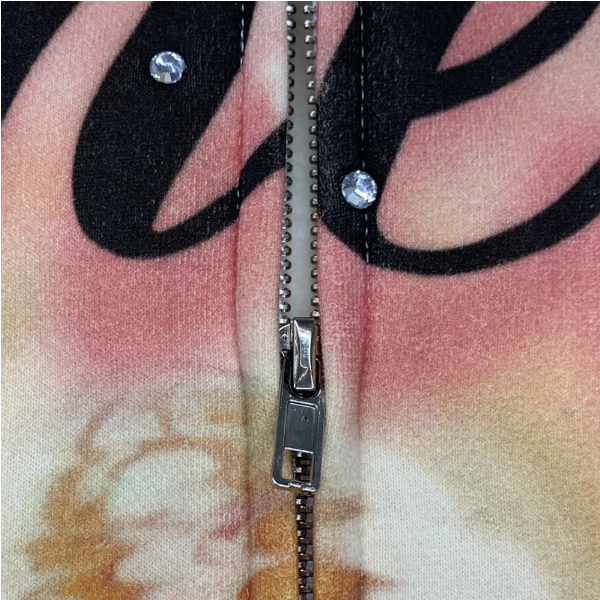
Hotfix rhinestones have a heat-activated adhesive backing. When the correct combination of temperature, pressure, and application time is used, the adhesive bonds the stone to the fabric.
This method is commonly used for apparel decoration, but the application settings vary by stone supplier, adhesive, and fabric. Excessive heat may damage the garment, while insufficient heat or pressure can lead to poor adhesion.
Brands should follow the supplier's instructions and test the process on the actual hoodie fabric before approving bulk production.
Some rhinestones require a separate adhesive or another attachment method rather than heat-activated backing. The appropriate choice depends on the stone's construction, the fabric, the garment's intended use, and the production process.
Regardless of the method, test the finished garment for adhesion, surface appearance, and comfort. Washing requirements should also be considered before the decoration method is finalized.
Specify the SS size, approximate diameter, stone material, color, and surface effect. If several sizes are used, list each size separately in the product specification.
This helps reduce confusion during sourcing and ensures that the production team works from the same approved design.
The artwork should identify the location, quantity, and arrangement of the stones. Confirm the finished graphic dimensions and its position relative to the neckline, seams, pockets, and zipper.
For designs containing lettering, inspect the actual-size artwork to ensure that the text remains legible.
Confirm the recommended temperature, pressure, and application time with the supplier. Test these settings on the intended fabric rather than applying a universal setting to every hoodie.
Inspect the sample for fabric damage, adhesive marks, uneven attachment, and changes in hand feel.
Wash testing helps identify loose stones, discoloration, and changes in the decorated area. The test should follow the intended garment care instructions and the brand's quality requirements.
Before finalizing a manufacturing partner, brands can learn about Yite Clothing's apparel manufacturing background and customization services to better understand its business and garment development capabilities.
The best rhinestone size for a hoodie depends on the artwork, fabric, placement, and desired visual effect. Small stones suit fine details, medium sizes offer versatility, and larger stones create bold accents. By confirming the specifications and testing decoration on the actual fabric, brands can develop custom rhinestone streetwear with more consistent results. Yite Clothing helps brands explore custom hoodie designs that align with their product and manufacturing requirements.
Medium sizes such as SS10, SS12, and SS16 can be useful starting points for many hoodie graphics. The best choice depends on the artwork, placement, and desired visual effect.
Not necessarily. Larger stones create stronger visual accents, while smaller stones are better suited to fine details. The right combination depends on the design.
Yes. Combining sizes can create depth and emphasize selected details. A placement map and physical sample help ensure consistent results.
They can remain secure when the stones, adhesive, fabric, and application settings are compatible. Brands should conduct washing tests before approving bulk production.


