Views: 0 Author: Site Editor Publish Time: 2026-09-26 Origin: Site
Choosing activewear dictates how well you perform on the training floor. Selecting the right workout shorts remains a functional decision, not merely an aesthetic one. Purchasing the wrong inseam leads to restricted range of motion during heavy lifts, excessive fabric drag during cardio, or severe inner-thigh chafing. Many athletes sacrifice comfort because they ignore how garments interact under physical stress. This guide breaks down how to evaluate men shorts based on biomechanical requirements, specific sport demands, and anatomical proportions. You will learn the exact measurements tailored to your unique height and training style. We will explore fabric choices, pocket configurations, and liner dependencies determining garment performance. By prioritizing these structural details, you can ensure a high-ROI addition to your athletic wardrobe. Proper gear empowers you to focus entirely on your workout execution rather than constantly adjusting your clothing.
Inseam length dictates performance: Less fabric equals higher mobility; more fabric equals higher durability and coverage.
The ideal shorts length for men generally lands 1 to 3 inches above the knee, varying by overall height and thigh circumference.
5 inch workout shorts are the standard for maximal leg mobility (running, deep squatting).
7 inch gym shorts offer the most versatile, cross-functional performance for general fitness.
Built-in liners (compression or brief) are critical variables that change how an inseam length performs in high-friction environments.
Understanding inseam measurements is the first step toward optimizing your athletic performance. The inseam is the seam running from the crotch gusset down to the bottom hem of the leg opening. Different lengths serve drastically different biomechanical purposes.
Manufacturers build 3-inch inseams exclusively for elite runners, track athletes, and marathoners. This minimalist design provides zero fabric interference during a maximal running stride. Every ounce of weight matters over long distances. Less fabric means faster heat dissipation and unrestricted knee drive. However, we do not recommend this length for general gym floors due to extreme exposure. Using them for ground-based core work or stretching in a commercial facility often compromises modesty.
A well-tailored pair of 5 inch workout shorts hits right at the mid-thigh. This category serves as the gold standard for functional fitness, CrossFit, and heavy leg days. When you drop into a deep squat, the hip crease closes aggressively. A 5-inch inseam allows full hip flexion without the fabric catching on the quadriceps or bunching up in the hip flexor region. If you regularly perform Olympic lifts or box jumps, this length ensures your clothing never restricts your upward momentum.
For average-height men, 7 inch gym shorts land just above the knee. They represent the most versatile, cross-functional option available today. They balance necessary mobility with conservative coverage. You can comfortably transition from heavy weightlifting to casual grocery shopping without feeling overly exposed. If you want a single pair of shorts to handle moderate cardio, upper body days, and weekend errands, the 7-inch category provides an optimal foundation.
These lengths purposefully drop below the knee. They cater best to sports requiring frequent lateral movement, sudden direction changes, and defensive stances. In environments where physical contact is common, extra fabric provides a protective barrier. Knee-to-fabric friction is always preferable to skin-to-floor contact. We commonly see these lengths utilized in traditional basketball and casual streetwear settings.
Your chosen activity subjects your body to specific movement patterns. Selecting gear tailored to these patterns prevents distraction and physical discomfort.
The standard running shorts inseam sits between 3 and 5 inches. Distance runners must prioritize minimal weight and maximum airflow. When evaluating running gear, always look for split hems. A split hem features an overlapping fabric slit on the outer thigh. It flares open during long strides, preventing the material from pulling against your leg. Extra fabric in running environments traps body heat and creates drag. This rapidly increases the risk of painful inner-thigh chafing over long distances.
Heavy resistance training requires uninterrupted hip and knee flexion. A 5-inch to 7-inch inseam excels in these environments. Consider the mechanics of a conventional deadlift. The barbell must travel in a straight vertical line, dragging directly up the shins and over the knees. If you wear baggy, 11-inch shorts, the rough barbell knurling will catch the bottom hem. This pulls the fabric down, disrupts your bar path, and ruins your lifting mechanics. Shorter lengths keep the knee completely clear of obstructions.
Court sports rely heavily on wide defensive stances and lateral shuffles. The traditional basketball shorts length ranges from 9 to 11 inches to accommodate these specific needs. When evaluating basketball gear, look for wider leg openings. A wider hem accommodates aggressive lateral shifts without binding around the thigh. Furthermore, the extra fabric serves a functional purpose. Athletes frequently use the extended hem to wipe excess sweat from their palms between plays, improving their grip on the ball.
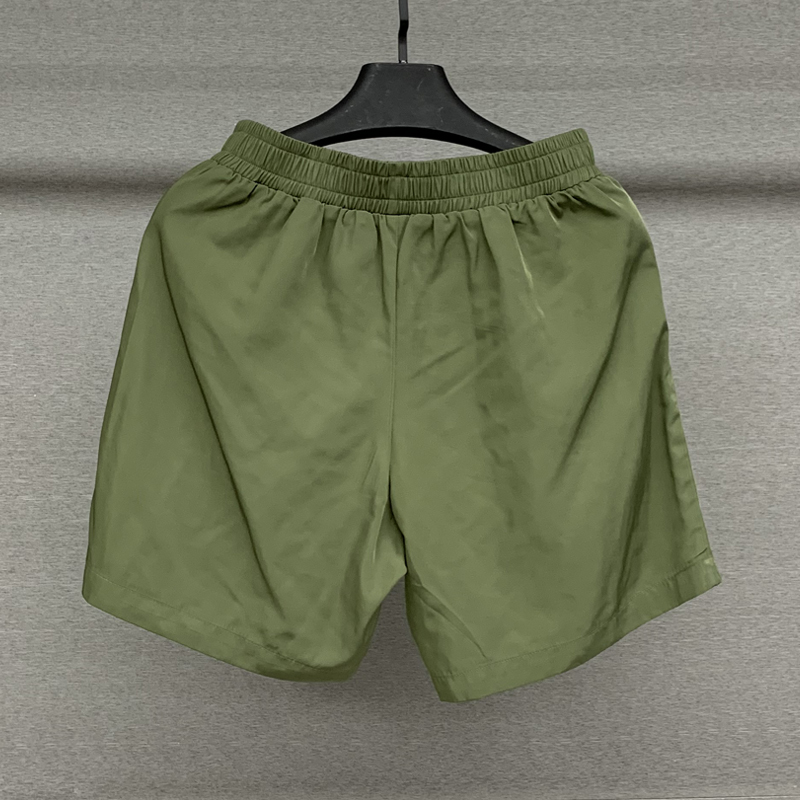
Standard inseam numbers mean nothing without context. Your anatomical proportions dictate how a specific garment actually performs.
Regardless of your overall height, the universally flattering and functional benchmark is a hemline resting 1 to 3 inches above the top of the patella (kneecap). Fabric covering the patella creates friction every time the knee bends. Keeping the hem above this joint eliminates resistance during walking, running, or squatting. This visual break also elongates the appearance of the leg.
Finding the ideal shorts length for men requires factoring in total leg length.
Men under 5'9": A 5-inch inseam often functions like a 7-inch visually and mechanically. It will hit perfectly above the knee without looking excessively short. Buying standard 7-inch shorts might push the hem below the knee, restricting mobility.
Men 5'9" to 6'1": This is the median range. A 7-inch inseam will sit right above the patella, while a 5-inch will hit true mid-thigh. Both remain excellent functional choices.
Men over 6'1": A 7-inch inseam will look and perform like a 5-inch. Tall athletes often find standard 5-inch shorts function like 3-inch track gear. Upsizing the inseam helps maintain intended coverage.
Leg girth drastically impacts how garments behave. Men possessing larger, muscular thighs often experience severe "ride-up" with shorter unlined shorts. During the walking or running gait cycle, inner thighs rub together. Fabric naturally seeks the path of least resistance, aggressively creeping upward toward the crotch. Instead of simply sizing up the inseam and adding unnecessary fabric bulk, opt for built-in compression liners. A tight base layer anchors the garment to your thigh, preventing ride-up entirely.
An optimal inseam fails if the garment uses poor materials or lacks functional features. You must evaluate the internal structure.
An inseam length is only as good as its foundation. A 5-inch short without a liner requires separate compression gear underneath to prevent inner-thigh friction. Buying separate layers adds overall cost and traps excess body heat. Integrated liners resolve this issue. Brief liners offer maximal airflow for runners, while compression box-brief liners offer muscular support and eliminate chafing for lifters.
If you prefer longer shorts (7 to 9 inches), ensure the fabric features a high percentage of elastane for 4-way stretch. Rigid fabrics at longer lengths aggressively restrict vertical mobility. Additionally, check the crotch seam. High-quality athletic wear utilizes a crotch gusset—a diamond-shaped piece of fabric sewn into the crotch intersection. Gussets distribute stress evenly across the garment, preventing embarrassing blowouts at the bottom of a deep squat.
Shorter inseams offer less structural real estate for heavy items like smartphones or keys. High-impact movements highlight this flaw. A heavy phone in a loose side pocket creates a severe "pendulum effect," swinging outward and bruising your thigh during sprints or box jumps. To combat this, choose side-zip pockets that lock items tightly against the hip, or look for liner-integrated phone sleeves. These internal sleeves anchor your device directly to the thigh muscle.
Fabric and Feature Compatibility Matrix
| Configuration | Mobility Impact | Friction Control | Best Application |
|---|---|---|---|
| Unlined (Rigid Fabric) | Low | Poor | Casual wear, upper body focused days |
| Unlined (4-Way Stretch) | High | Moderate | Weightlifting, moderate steady-state cardio |
| Built-In Compression Liner | High | Excellent | Cross-training, high-intensity intervals |
| Built-In Brief Liner | Maximum | Good | Track sprints, marathon racing, agility drills |
Off-the-rack options sometimes fail to meet specific athletic demands. In these scenarios, exploring tailored solutions becomes necessary.
Many athletes fall completely outside standard sizing matrixes. Exceptionally tall distance runners needing a true 5-inch visual fit often find retail options laughably short. Conversely, competitive bodybuilders possess massive quad circumferences but narrow waists. Standard sizes either fit the waist but crush the thighs, or fit the thighs but fall off the hips. Custom sizing resolves these anatomical extremes.
Gym owners, functional fitness event organizers, and sports teams require unified branding. However, applying a blanket 7-inch inseam rule across an entire roster sacrifices individual athlete performance. A cohesive team look should never compromise biomechanical efficiency.
When searching for custom workout shorts, prioritize manufacturers offering variable inseam selections within the same bulk order. This ensures both the 6'4" center and the 5'9" point guard receive biomechanically appropriate gear. Evaluate suppliers based on their ability to mix lengths, liner options, and pocket configurations while maintaining consistent team colors and logos.
Do not buy athletic apparel based on generic style trends or mannequin displays. Your body type and training style must dictate your purchase. Start by measuring your favorite current shorts from the crotch seam to the hem to establish your personal baseline. Default to a 7-inch length for maximum cross-training utility and casual transitions. Step down to a 5-inch length when you require maximal range of motion for heavy lifting or distance running. Finally, reserve 9-inch lengths for specific court sports demanding lateral movement and extra coverage. By respecting these biomechanical guidelines, you will train harder, move faster, and eliminate frustrating wardrobe distractions.
A: Yes. If the hem limits your ability to comfortably execute ground-based exercises (like stretching or core work) without excessive exposure, the inseam is too short. 5 inches is generally the shortest accepted length for mixed-use public gyms. Anything shorter should be reserved for dedicated track running.
A: Always evaluate based on the inseam (the seam running from the crotch gusset to the bottom hem). Outseams vary wildly based on waistband height, rise drops, and specific styling choices. Inseam measurements provide the only true indicator of where the fabric will hit your leg.
A: This is typically a thigh-girth to leg-opening ratio issue, not strictly a length issue. When muscular thighs rub together, friction pushes loose fabric upward. Upgrading to a short featuring an integrated compression liner usually resolves the friction that causes this annoying ride-up effect.


