Views: 0 Author: Site Editor Publish Time: 2026-10-21 Origin: Site
Urban fashion has unmistakably evolved from a localized subculture into a dominant global force. What initially sparked as a rebellious movement across coastal skate parks and underground hip-hop clubs now dictates mainstream apparel standards. Because this aesthetic adapts so rapidly, consumers and emerging designers frequently ask a core question. What type of clothing is streetwear today? It is no longer just basic casual wear. It is a highly engineered blend of physical comfort, extreme fabric durability, and bold cultural expression. This comprehensive guide breaks down the structural elements of Streetwear clothing. We will explore its foundational garments, advanced manufacturing techniques, and the most reliable strategies for sourcing premium pieces.
At its core, this genre represents a highly intentional approach to daily attire. It prioritizes physical ease but drastically elevates standard loungewear through heavy fabric weights, custom silhouettes, and visually striking designs. The movement traces its authentic roots back to the late twentieth century. In California, surfers and skateboarders began printing tribal logos on heavy cotton to foster a sense of community. Simultaneously, the vibrant hip-hop scene in New York established its own sartorial codes. This East Coast movement heavily favored oversized athletic gear and rugged, abrasion-resistant workwear.
Looking at current market trajectories, the landscape of urban apparel is experiencing a fascinating structural shift. Consumers demand far more than just a screen-printed logo on a basic blank. Recent industry data indicates a massive surge in utilitarian functionality, often categorized as techwear or gorpcore. Modern buyers actively seek weather-resistant textiles, modular pocket systems, and sustainable manufacturing processes alongside traditional heavy cottons. Furthermore, the historical barrier between the pavement and the high-fashion runway has completely dissolved. Heritage luxury houses routinely adopt relaxed silhouettes and custom boxy fits. This convergence proves that the aesthetic is a permanent, structural evolution in global fashion rather than a fleeting seasonal trend.
To properly understand this category, you must analyze the specific garments that serve as its architectural foundation. Standard sizing conventions do not apply here. These items require specialized pattern making to achieve their signature drape.
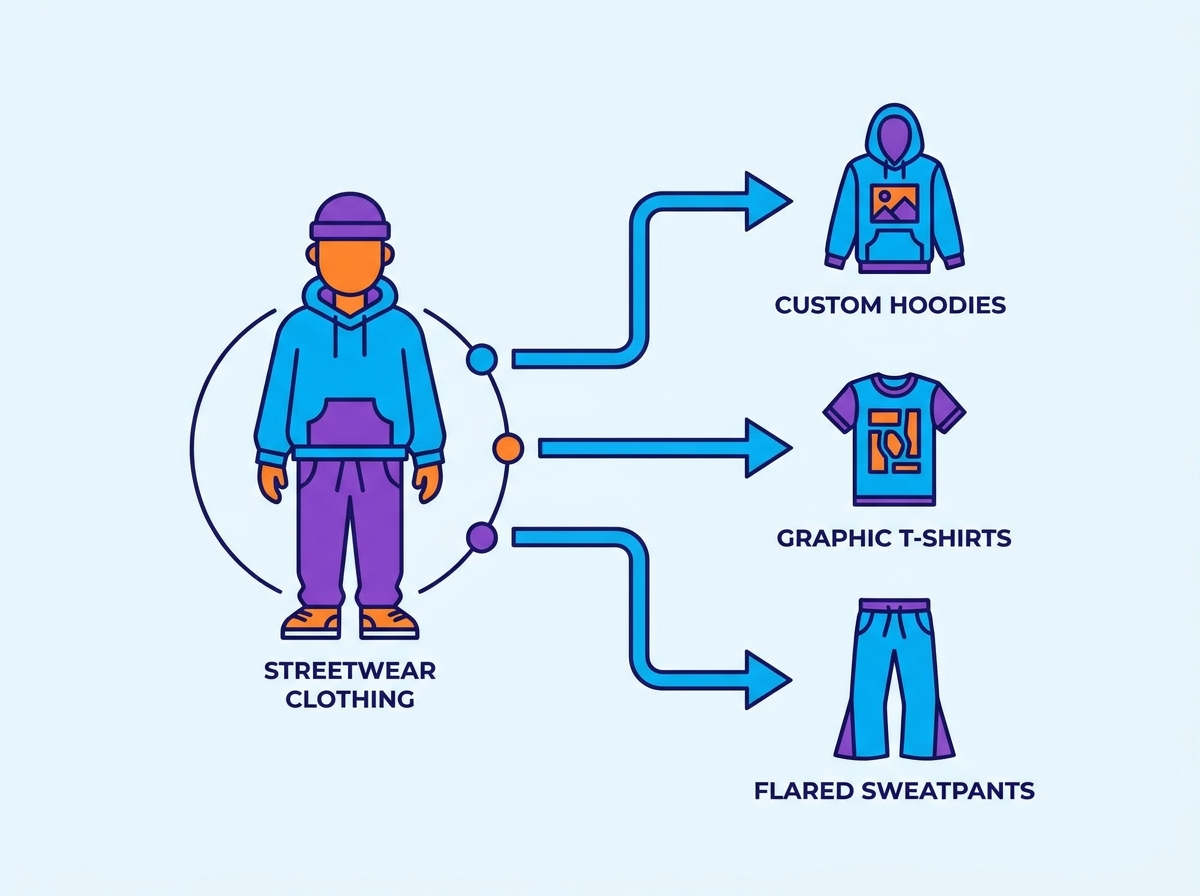
The graphic tee functions as the undisputed anchor of the culture. Unlike flimsy mass-produced undershirts, a proper graphic T-shirts collection relies on an engineered oversized fit. Pattern makers purposefully drop the shoulder seams and widen the chest measurements to create a distinctively relaxed, boxy drape. High-quality iterations utilize heavyweight combed cotton, typically ranging from 210 to 250 grams per square meter. This dense material provides a sturdy canvas for high-density puff printing or intricate embroidery, ensuring the garment refuses to warp after repeated laundering.
Alongside the humble tee, the hooded sweatshirt stands as a non-negotiable pillar of the modern wardrobe. Why does a premium piece feel so different from a standard mall hoodie? The secret lies in the fabric density and hood construction. Today, premium custom hoodies are highly coveted for their complex engineering. They feature 400 to 500 grams per square meter heavyweight French terry or dense fleece interiors. This immense weight ensures the garment maintains a rigid, architectural shape. When the double-lined hood stands upright rather than laying lifelessly against the upper back, you are dealing with a top-tier piece of apparel.
The trajectory of lower-body garments has shifted dramatically away from restrictive skinny silhouettes. Current styling heavily favors relaxed, wide-leg, and utilitarian designs. For instance, flared sweatpants have masterfully combined the inherent coziness of heavy fleece with a highly tailored, fashion-forward cut. The flared hem is purposefully designed to drape cleanly over chunky athletic footwear. This creates a seamless visual transition from the ankle to the shoe, balancing the heavy proportions of the upper body.
Separating premium garments from cheap imitations requires a methodical understanding of garment construction. The most defining metric is undoubtedly the silhouette grading. Standard casual wear relies on a conventional grading system meant to closely hug the body's natural lines. In contrast, authentic street fashion utilizes custom cut-and-sew techniques to engineer that signature anti-tailored look.
Material selection directly dictates the lifespan of the piece. Premium labels abandon cheap synthetic polyester blends. Instead, they favor 100 percent combed cotton and heavyweight fleece that gracefully withstand daily wear, tear, and friction. To illustrate the stark differences in construction, review the technical comparison below.
| Technical Specification | Standard Casual Wear | Premium Street Apparel |
|---|---|---|
| Fabric Weight | 130 - 150 GSM | 210 - 500 GSM |
| Silhouette & Fit | Standard tubular fit, tight armholes | Custom boxy fit, dropped shoulders |
| Collar Construction | Single-stitched, prone to warping | Thick ribbing, twin-needle topstitch |
| Print Application | Basic heat transfer, cracks easily | Direct-to-Garment, High-density Puff |
Securing top-tier apparel requires distinct, analytical strategies. You cannot simply rely on visual aesthetics. Whether you are an everyday consumer upgrading your wardrobe or a brand creator looking for a Business-to-Business manufacturing partner, you must evaluate garments like an engineer.
First, always verify the fabric density. Scrutinize product descriptions for explicit mentions of fabric weight. If a brand does not proudly state their grams per square meter, they are likely hiding a thin, inferior fabric. Look for tees above 210 GSM and hoodies above 400 GSM to prevent shrinkage and collar baconing.
Second, inspect the silhouette grading. Meticulously check size charts and product imagery. Ensure the shoulder seams sit several inches below the natural shoulder line. This dropped shoulder is the hallmark of an authentic, custom-engineered drape.
Finally, evaluate the manufacturing capabilities. For independent designers, identifying a reliable apparel manufacturer is the most critical operational hurdle. A competent partner must offer transparent supply chains, consistent quality control, and comprehensive customization capabilities. Leveraging advanced techniques like vintage acid washing or complex needlework infuses your collections with a highly curated aesthetic that deeply resonates with discerning buyers.
This dynamic fashion category has permanently rewired the global apparel landscape. Rooted in authentic subcultural history, it revolves around meticulously crafted staples that champion durable materials, unique boxy silhouettes, and bold self-expression. Street fashion is no longer an exclusive underground club. It is a universal language of style and structural garment engineering. When you are ready to elevate your daily rotation or launch a proprietary independent label, partnering with an experienced manufacturer is non-negotiable. Explore the premium blank canvases and custom manufacturing capabilities at Yite Clothing to source garments that meet these exact engineering standards.
While both prioritize physical ease, streetwear is deeply intertwined with specific subcultures like skate, surf, and hip-hop. It distinguishes itself through bolder graphic applications, intentionally oversized silhouettes, and heavy fabric weights. Furthermore, its distribution model heavily favors exclusivity and limited drops, setting it far apart from mass-market casual clothing.
The price difference directly reflects the garment engineering and material costs. Premium pieces utilize custom cut-and-sew patterns rather than cheap tubular blanks. They require significantly more raw cotton to achieve weights of 300 to 500 grams per square meter. Additionally, advanced applications like high-density puff printing and double-lined hoods drastically increase production expenses.
A classic iteration must feature a relaxed, slightly oversized, or boxy drape. Key structural indicators include dropped shoulder seams, a widened chest area, and a cropped hem that sits exactly at the waistline. The substantial fabric weight should provide thermal comfort while allowing the hood to retain a rigid, architectural shape.
Current empirical trends highlight baggy denim, utilitarian cargo pants, and heavy fleece flared bottoms as the premier choices. These voluminous silhouettes perfectly complement the relaxed nature of oversized tops. They provide a cohesive and intentional proportional balance to the overall look, preventing the upper body from appearing top-heavy.
Industry data confirms this is a permanent structural shift in global fashion. The integration of high-performance utilitarian fabrics, the adoption of relaxed silhouettes by heritage luxury houses, and the massive consumer demand for comfort-driven durability prove that this style has fundamentally redefined modern dress codes.
Yes, entirely. Numerous specialized Business-to-Business apparel manufacturers focus specifically on helping independent creators bring their visions to life. By utilizing custom manufacturing services, you can develop unique garments with specific fabric weights, proprietary cuts, and personalized branding to successfully launch your own label.