Views: 0 Author: Site Editor Publish Time: 2026-07-24 Origin: Site
The distinction between a high-margin luxury streetwear brand and a low-retention promotional merchandise line is rarely the logo. It is almost entirely dictated by fabric architecture, drape, and hand-feel. Brand founders and merchandise managers face a saturated market where consumers immediately identify cheap blanks. Sourcing the right fabric requires balancing perceived value and durability against unit economics, minimum order quantities, and decoration compatibility. Navigating the sourcing landscape requires moving beyond generic supplier descriptions. This guide breaks down the technical specifications necessary to architect premium Custom Hoodies that justify higher retail price points and drive repeat purchases. We cover everything from GSM thresholds and knit structures to fiber blends. You need to understand the mechanics of textile production to build a successful apparel line.
GSM is a baseline, not a guarantee: While premium heavyweight hoodies typically start at 350 GSM (with 400–500 GSM serving as the streetwear standard), the yarn quality (ring-spun vs. open-end) and knit construction (3-end fleece) dictate the actual structural integrity.
Fiber composition dictates decoration viability: 100% cotton provides the optimal surface for discharge printing and Direct-to-Garment (DTG), while polyester blends are mandatory for sublimation and offer superior shape retention.
French Terry vs. Brushed Fleece: French Terry offers year-round breathability and a premium looped interior, whereas brushed cotton fleece delivers the rigid drape and insulation expected in traditional streetwear.
Component construction elevates perceived quality: Heavyweight ribbing with elastane/spandex recovery and double-layered self-fabric hoods are critical to preventing the structural failure (sagging and stretching) that consumers associate with cheap blanks.
Wash testing is non-negotiable: Premium private label hoodies must account for shrinkage tolerances (ideally pre-shrunk to under 3% variance) and pilling resistance before scaling production.
Grams per Square Meter (GSM) directly correlates to perceived quality in garment manufacturing. Standard hoodies range from 200 to 280 GSM, offering lightweight utility for basic layering. Mid-weight garments sit between 280 and 350 GSM, providing a balance of warmth and mobility. Heavyweight Hoodies start at 350 GSM and can easily exceed 500 GSM for specialized winter collections. The weight of the fabric dictates how the garment falls on the body. Heavier fabrics resist clinging and create a structured silhouette.
Higher GSM requires specific needle gauges during knitting. If a factory uses the wrong gauge for a 450 GSM fabric, the resulting material becomes overly stiff or brittle, compromising wearability. You need dense construction that maintains flexibility. The knitting machines must be calibrated to handle thicker yarns without creating excessive tension. This prevents the fabric from feeling like cardboard. Proper tension control ensures the knit loops remain uniform, which directly impacts the final texture and durability of the garment.
| Weight Category | GSM Range | Primary Use Case | Drape Characteristics |
|---|---|---|---|
| Lightweight | 200 - 280 GSM | Activewear, Summer Layering | Fluid, close to body, high mobility |
| Mid-weight | 280 - 350 GSM | Standard Retail, Fall/Spring | Moderate structure, versatile fit |
| Heavyweight | 350 - 500+ GSM | Premium Streetwear, Winter | Rigid, boxy, holds shape off shoulder |
Carded cotton is cheap and prone to pilling. The fibers are simply brushed before spinning, leaving short, uneven strands intact. Ring-spun cotton offers better durability by tightly twisting the fibers together. Combed ring-spun cotton stands as the gold standard for smoothness and longevity. This process actively removes short fibers and impurities before spinning. The resulting yarn is exceptionally smooth, strong, and resistant to surface abrasion.
Knit construction matters just as much as the raw fiber. A 3-end fleece utilizes face yarn, tie yarn, and backing yarn. This structure provides a smooth print surface on the face while maintaining a plush interior. It outperforms standard 2-end fleece in both durability and decoration compatibility. The tie yarn acts as a structural bridge, preventing the face and backing from separating or warping during heavy wear. This complex knitting technique requires specialized machinery but delivers a vastly superior product.
Chemical and mechanical finishing processes elevate the hand-feel of raw fabric. Carbon brushing, or sueding, creates a peach-fuzz texture on the exterior by running the fabric over abrasive rollers. Silicon washing adds a slick, smooth finish that reduces surface friction. Enzyme washes use biological catalysts to break down stray fibers, yielding a butter-soft hand-feel without degrading core fiber strength. These treatments allow heavy fabrics to drape naturally.
Mechanical softening involves physically manipulating the fabric to break its initial stiffness. Tumble drying at specific temperatures relaxes the fibers. Compacting machines compress the fabric lengthways to pre-shrink it and enhance density. These steps add time and cost to production but separate premium garments from basic promotional wear. You must specify these finishing treatments in your tech pack to guarantee the desired hand-feel.
Fabric rigidity dictates silhouette. Oversized or boxy fits require stiffer, heavier fabrics to hold their shape off the shoulder. Slim fits demand lighter blends or elastane integration for mobility. The pattern grading must account for the fabric's natural stretch and recovery. A heavy fleece will not stretch like a lightweight jersey, so the armholes and chest width must be adjusted accordingly.
The Hood Architecture: Premium hood architecture relies on double-lined, self-fabric construction. Using the same heavyweight fabric inside and out ensures the hood holds its structure. Single-lined hoods collapse and look floppy on the shoulder. A three-piece hood construction provides a more contoured fit around the head compared to a standard two-piece design.
The Ribbing Blueprint: Standard 100% cotton ribbing fails over time. You must specify 1x1 or 2x2 cotton-spandex ribbing, typically incorporating 5% spandex for cuffs and waistbands. This guarantees elasticity recovery and prevents stretching. The ribbing must be dyed to match the body fabric perfectly, requiring precise color management at the mill.
Seam Engineering: Seam engineering impacts comfort and durability. Flatlock stitching reduces interior bulk and prevents skin irritation compared to standard overlock stitching. It also increases seam tensile strength. Coverstitching around the neck, armholes, and waistband adds visual appeal and reinforces high-stress areas.
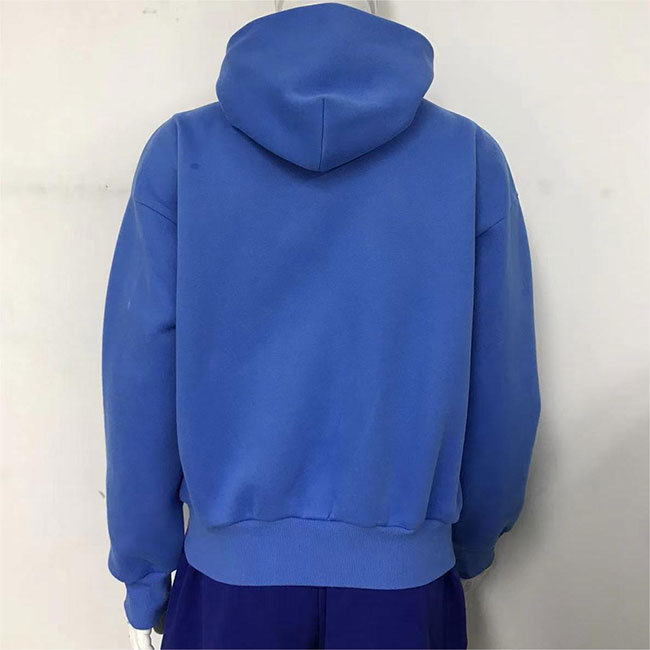
This is the streetwear standard. It offers maximum breathability, superior hand-feel, and zero synthetic shine. It positions a brand perfectly for high-end retail. The brushed interior traps air, providing excellent insulation without relying on synthetic fibers. Consumers associate the weight and texture of 100% cotton fleece with luxury and durability.
However, 100% cotton carries higher costs and a higher natural shrinkage rate. It requires rigorous pre-shrinking processes at the mill level. You must account for a 3-5% shrinkage tolerance in your sizing charts. The dyeing process for pure cotton is straightforward, allowing for deep, rich colors that fade naturally over time, creating a desirable vintage aesthetic.
French Terry features unbrushed interior loops, providing high moisture-wicking capability and a clean interior surface. It serves as the year-round luxury option. The loops draw sweat away from the body, making it comfortable in varying temperatures. It lacks the heavy insulation of brushed fleece, allowing for better temperature regulation.
It works best for premium athleisure, spring collections, and brands targeting a sophisticated, layered aesthetic without heavy insulation. French Terry drapes more fluidly than brushed fleece, making it ideal for tailored or slim-fit silhouettes. The smooth face provides an excellent canvas for intricate embroidery and high-resolution screen printing.
Blends represent a performance and margin play. Common ratios include 80/20, 70/30, and 50/50. Polyester introduces tensile strength, reduces shrinkage, and lowers unit costs. The synthetic fibers stabilize the cotton, preventing excessive warping or twisting after washing. This makes blends highly reliable for large-scale uniform or merchandise programs.
The risk lies in synthetic pilling and a cheap sheen. To mitigate this, ensure the fabric is milled with a 100% cotton face for printing, burying the polyester in the backing yarn. This construction technique gives you the durability of polyester with the premium look and feel of pure cotton. You must verify the yarn structure with your manufacturer before approving production.
These fabrics consist of two layers knitted together, presenting a smooth surface on both sides without loops or fleece backing. They offer exceptional structural retention and a clean, minimalist drape. The dense construction blocks wind and provides a modern, technical aesthetic. They are heavier than standard jersey but lack the bulk of traditional fleece.
Highly resistant to fraying or pilling, double-knits fit perfectly into tech-wear and modern luxury collections. The smooth interior feels cool against the skin. These fabrics require precise cutting and sewing techniques, as the edges can curl if not handled correctly. They pair well with waterproof zippers and bonded seams for a futuristic look.
GOTS-certified organic cotton, recycled polyester, and bamboo blends appeal to conscious consumers. They offer premium markup potential. Organic cotton eliminates toxic pesticides from the supply chain, resulting in a softer, hypoallergenic fiber. Recycled polyester utilizes post-consumer plastic waste, reducing environmental impact while maintaining performance characteristics.
However, they introduce supply chain complexities. You must verify certifications and manage longer lead times when sourcing these specialty materials. The raw material costs are significantly higher, which impacts your unit economics. You need a strong marketing narrative to justify the price premium to your end consumer.
A 100% cotton face is critical for plastisol and water-based inks, even on blended hoodies. It prevents dye migration, where the polyester dye bleeds into the printed ink during curing. When printing on high-polyester blends, you must use specialized low-bleed inks and a grey blocker base to maintain color accuracy. This adds time and cost to the printing process.
Water-based and discharge inks perform best on 100% cotton. Discharge printing removes the garment's dye and replaces it with the ink pigment, resulting in a zero-hand feel. This technique fails on polyester fibers, leaving a muted, washed-out image. You must align your fabric choice with your intended printing method to achieve professional results.
Heavyweight fabrics exceeding 400 GSM support dense stitch counts and 3D puff embroidery without puckering. The thick material acts as a natural stabilizer, holding the stitches firmly in place. You can execute large, complex designs on the chest or back without distorting the garment's shape. The needle penetration requires heavy-duty embroidery machines.
Lighter French Terry requires specialized backing stabilizers to maintain shape under heavy thread tension. If you skip the backing, the fabric will bunch up around the design, ruining the aesthetic. Cut-away stabilizers provide the best support for knits, ensuring the embroidery remains flat and crisp after multiple washes. Always run a test swatch before embroidering a full production run.
Direct-to-Garment printing requires high cotton percentages for proper ink absorption and vibrancy. The water-based DTG inks bind directly to natural fibers. If you attempt DTG on a 50/50 blend, the image will look faded and wash out quickly. Pre-treatment is mandatory for dark garments to create a white underbase for the colors to pop.
Sublimation strictly requires high polyester counts, as the gas dye only bonds with synthetic fibers. The process involves heating solid ink until it turns into a gas, which then permeates the polyester. This results in a permanent, vibrant print that will never crack or peel. You cannot sublimate on cotton; the ink will simply wash away.
Buying premium blank hoodies offers lower MOQs but higher unit costs. This route allows you to launch a brand quickly with minimal upfront capital. You rely on the blank manufacturer's fit and fabric choices. It limits your ability to customize the garment's architecture, but it drastically reduces lead times and development headaches.
Full cut-and-sew manufacturing requires higher MOQs but delivers lower unit costs at scale and allows total customization of the fit and fabric. You control every detail, from the GSM to the zipper hardware. This approach requires significant investment in tech packs, pattern making, and sampling. It is the only way to build a truly unique Private Label Hoodies collection that stands out in a crowded market.
Piece-dyed fabrics offer consistent color across large runs. The fabric is dyed in large rolls before being cut and sewn. This ensures uniformity and excellent color fastness. It is the standard method for most commercial apparel. You can achieve exact Pantone matches with minimal variance between batches.
Garment dyeing creates a vintage, lived-in look but introduces higher variance in sizing and color matching across batches due to the high-heat washing process. The garments are cut and sewn from raw, undyed fabric, then dyed as finished pieces. The seams absorb dye differently than the flat panels, creating a unique, washed-down aesthetic. You must account for the high shrinkage rate during the garment dye process when grading your patterns.
Establish acceptable tolerance levels for color matching across different production runs. Use the Delta E metric to quantify acceptable color variance with your manufacturer. A Delta E of less than 2.0 is generally imperceptible to the human eye. Require lab dips for every new colorway and approve them under standardized D65 daylight bulbs.
Fabric mills often change yarn suppliers or adjust knitting tensions without notifying the buyer. This leads to inconsistent weights and hand-feels between orders. You must specify the exact yarn composition, knit structure, and finishing treatments in your manufacturing agreement. Conduct random quality control inspections during production to verify compliance.
Independent wash testing is mandatory before approving a golden sample. Test for torque (the twisting of side seams), shrinkage percentages, and surface friction to ensure the garment holds up after consumer washing. A premium hoodie should not shrink more than 3% in length or width. Side seam torque should not exceed 5%.
Pilling occurs when loose fibers tangle together on the fabric surface. Conduct a Martindale abrasion test to evaluate pilling resistance. Fabrics that fail this test will look old and worn after a few washes. Specify anti-pilling treatments and high-twist yarns to mitigate this risk. Your reputation depends on the garment's longevity.
Premium fabric is negated by cheap hardware. Outline strict standards for your production runs. Specify metal aglets, flat braided drawcords, reinforced eyelets, and reliable zippers like YKK to maintain a high-end feel. Plastic aglets crack and fall off, ruining the perceived value of the garment.
Pay attention to the neck tape and brand labels. A scratchy woven label will irritate the wearer and lead to negative reviews. Use soft, high-density woven labels or tagless heat transfers. The twill tape covering the back neck seam should be dyed to match and sewn flat to prevent chafing. These small details separate amateur merchandise from professional apparel.
Order a full size run of blank samples from your shortlisted manufacturers to verify fit grading across all dimensions.
Execute a 5-cycle wash test on the samples to check for shrinkage, color fading, and side seam torque.
Inspect the structural integrity of the hood and ribbing post-wash to ensure elasticity recovery and shape retention.
Run a test print using your specific embellishment technique to confirm fabric compatibility and ink adhesion.
Finalize your tech pack with exact GSM, yarn specifications, and hardware details before committing to a bulk purchase order.
A: True heavyweight status begins at 350 GSM. Premium streetwear brands often utilize 400 to 500 GSM fabrics to achieve a structured, boxy drape that holds its shape off the body. This weight provides excellent insulation and durability, making it ideal for high-end retail collections.
A: French Terry features a looped, breathable interior ideal for year-round wear and layering. Cotton fleece has a brushed, insulating interior better suited for colder climates and traditional streetwear fits. Your choice depends entirely on your target climate and desired garment drape.
A: 100% cotton offers zero synthetic pilling, superior hand-feel, and acts as the ideal canvas for high-end discharge and water-based screen printing without the risk of dye migration. It provides a luxurious weight and natural breathability that synthetic blends cannot replicate.
A: While 100% cotton is best, an 80/20 cotton-poly blend with a strictly 100% cotton face yarn offers the best balance of printability, durability, and shape retention. The cotton face ensures clean ink absorption, while the polyester backing provides structural stability.
A: Specify combed ring-spun cotton, avoid high-polyester blends on the face yarn, and utilize tight-knit 3-end fleece constructions to minimize loose fibers that cause pilling. Additionally, request mechanical finishing treatments like singeing or enzyme washing to remove stray surface fibers.
A: Source ribbing constructed with a 95% cotton and 5% spandex or elastane blend. This ensures high-elasticity recovery compared to standard 100% cotton ribbing, which loses shape quickly. Specify a 1x1 or 2x2 rib knit structure for maximum durability and stretch resistance.


