Views: 0 Author: Site Editor Publish Time: 2026-07-28 Origin: Site
The tactile difference between a basic promotional sweatshirt and a premium retail garment often comes down to minor manufacturing upgrades. Brands attempting to scale into higher market tiers frequently fail because they rely on standard white-label blanks. These off-the-shelf garments lack proprietary brand signaling, leading directly to low perceived value and poor customer retention. Consumers instantly recognize the difference between a generic blank and a purpose-built garment.
Transitioning to a retail-ready model requires a strategic framework for selecting private label details. Every component matters, from fabric weight to custom hardware. These specific design choices justify premium market positioning and ensure technical durability. Building a lasting apparel brand demands strict attention to structural integrity, custom labeling, and precise finishing techniques. You must engineer the garment from the ground up to meet retail expectations.
Fabric Weight Dictates Positioning: Upgrading to heavyweight hoodies (400+ GSM) immediately shifts product perception from promotional merchandise to streetwear or luxury apparel.
Proprietary Labeling is Non-Negotiable: Replacing manufacturer tear-away tags with custom woven neck labels and exterior hem tags is the baseline requirement for establishing brand authority.
Hardware Elevates Perceived Value: Custom aglets, engraved eyelets, and premium zipper pulls offer the highest ROI for brand differentiation in a crowded market.
Compliance and Packaging Complete the Product: Retail readiness requires strict adherence to FTC care labeling laws and premium unboxing experiences via custom hangtags and frosted polybags.
Consumers evaluate apparel long before they examine the core graphic design. The initial assessment relies entirely on drape, hand-feel, and micro-branding. A standard blank with a screen-printed logo remains promotional merchandise. A true clothing brand engineers the entire physical experience. When a customer picks up a garment, the weight of the fabric and the texture of the neck label immediately communicate its market position. Brands must bridge this gap by focusing on the physical construction of their Custom Hoodies rather than just surface-level decoration. You cannot build a loyal customer base if the garment loses its shape after three wash cycles. The fabric must hold its structure, the seams must resist tension, and the dye must remain vibrant.
Retail-ready garments must meet rigorous technical benchmarks. Shrinkage limits must remain under three percent after standard washing cycles. Colorfastness is critical; the dye cannot bleed onto lighter garments or fade significantly after the first wash. Stitch density separates premium construction from fast fashion. Higher stitches per inch (SPI) ensure seams do not unravel under stress. Meeting these criteria allows a brand to position its products in the premium tier, satisfying consumer expectations for longevity and performance. We regularly see brands fail because they ignore these technical specifications during the sampling phase, resulting in bulk production that falls apart on the retail floor.
Understanding manufacturing models helps brands choose the right production path. The spectrum ranges from off-the-shelf blanks to entirely custom silhouettes. Selecting the correct model dictates your supply chain complexity and your ability to implement custom details.
| Manufacturing Model | Customization Level | Lead Time | Quality Control |
|---|---|---|---|
| White Label / POD | Low (Print only) | Fast (Days to Weeks) | Low (Rely on blank manufacturer) |
| Semi-Custom (ODM) | Medium (Fabric, colors, trims) | Moderate (4-8 Weeks) | Medium (Control over finishing) |
| Fully Bespoke (OEM) | High (Custom patterns, full control) | Slow (8-12+ Weeks) | High (Strict tech pack adherence) |
White Label involves pre-manufactured blanks with post-production decoration. It offers low overhead and fast turnaround times. However, brands face severe limitations in quality control, fit customization, and unique detailing. Semi-Custom (ODM) utilizes a manufacturer's proven fit patterns and silhouette blocks. Brands customize fabrics, colors, labels, and trims. This approach reduces pattern-making lead times while delivering a proprietary feel. Fully Bespoke (OEM / Cut-and-Sew) represents complete control over custom tech packs. Brands dictate proprietary sizing charts, specific panel construction, and unique material sourcing. It requires higher initial volume but yields a completely unique garment.
Fabric weight fundamentally alters how a garment drapes on the body. Grams per Square Meter (GSM) serves as the standard measurement for fabric density. Standard promotional hoodies typically range from 250 to 300 GSM. Upgrading to Heavyweight Hoodies featuring 400 to 500+ GSM fleece completely changes the product category. The heavier fabric provides a structured, architectural drape characteristic of high-end streetwear. It resists wrinkling and hangs cleanly off the shoulders, creating a superior silhouette.
Material composition involves specific trade-offs. A 100% cotton French Terry offers exceptional breathability and a premium loopback texture. It feels substantial and absorbs dye beautifully. However, incorporating a small percentage of polyester into the blend can increase durability and reduce pilling. Brands must weigh the luxury appeal of pure cotton against the structural stability provided by synthetic blends. In field testing, a 90/10 cotton-poly blend often provides the best balance of hand-feel and longevity for heavy fleece applications.
Relying on standard manufacturer stock colors limits brand identity. Premium brands utilize Pantone Matching System (PMS) codes to dye fabrics to exact specifications. This custom sourcing ensures consistency across different production runs and distinct seasonal collections. When you control the dye lot, you eliminate the slight color variations that plague off-the-shelf blanks.
The chosen dye process impacts the final aesthetic. Reactive dyeing bonds color directly to the fabric fibers, resulting in intense colorfastness and deep, uniform shades. Conversely, garment-dyeing, pigment-washing, and acid washes create a vintage, lived-in aesthetic. These specialized wash effects cause the color to fade naturally around the seams, adding character and depth to the final product. Pigment dyes sit on the surface of the fabric, allowing for that desirable high-low color variation after the initial wash.
Construction techniques determine a garment's lifespan. Double-needle coverstitching on critical seams reinforces high-stress areas like shoulders, armholes, and waistbands. This stitching technique prevents blowouts and adds a clean, finished look to the exterior. We always check the stitch density on the armhole seams; if you can pull the fabric apart and see the threads stretching, the SPI is too low.
Ribbing quality directly affects shape retention. A 1x1 rib knit offers a standard finish, while a 2x2 rib knit blended with a small percentage of spandex provides superior elasticity. This ensures the cuffs and waistband snap back into shape after repeated wear. Additionally, utilizing cross-grain cutting techniques mitigates vertical shrinkage. By cutting the fabric panels perpendicular to the natural grain, the garment shrinks slightly in width rather than losing length over time. This technique is mandatory for any fleece over 400 GSM to prevent the garment from becoming unwearably short after washing.
The neck label serves as the first point of physical brand interaction. Woven damask labels offer a traditional, high-quality finish with excellent durability. They communicate permanence and attention to detail. Printed neck tags provide superior comfort by eliminating any scratching against the skin, though they may fade over time. The implementation of these labels requires precision. When converting blanks, removing manufacturer tags by unpicking the seams preserves collar integrity better than simply cutting the tag, which leaves an unsightly remnant. For cut-and-sew operations, the label is sewn directly into the neck tape during assembly, providing a flawless finish.
Hardware upgrades transform the visual landscape of Private Label Hoodies. Drawcords offer immediate customization opportunities. Brands must choose between flat or round profiles and cotton or polyester compositions. Custom-dying the drawcords to match the fleece body creates a cohesive, monochromatic look. Implementing custom hardware requires a systematic approach:
Select the base material for your aglets and eyelets, such as brass, zinc alloy, or silicone.
Determine the finish, choosing between matte, polished, or antique plating.
Submit vector artwork for any engraved logos on the hardware surfaces.
Request physical strike-offs of the hardware before attaching them to the pre-production sample.
Aglets and eyelets serve as premium signifiers. Replacing standard knotted strings with matte metal aglets, engraved branding, or silicone-dipped finishes elevates the entire garment. For zip-up styles, the zipper hardware is crucial. Upgrading from standard coil zippers to custom-molded two-way zippers improves functionality and adds substantial visual weight to the center front. YKK remains the industry standard, but custom-branded pullers offer an additional touchpoint for brand identity.
Micro-branding allows for brand recognition without relying on massive chest prints. Woven hem tags placed on the bottom ribbing or the edge of the hood offer subtle, sophisticated detailing. Modern streetwear aesthetics frequently utilize silicone patches or PVC rubber labels stitched onto the sleeve or chest. These dimensional elements provide a tactile contrast against the soft fleece background. Placement must be exact; a hem tag sewn even a quarter-inch off-center ruins the premium illusion.
Standard screen printing faces limitations when applied to heavy, textured fleece. The ink can crack or fibrillate as the thick fabric stretches. High-density printing and puff print applications solve this by creating a raised, durable surface that interacts dynamically with the fabric texture. These methods add a three-dimensional quality to graphic designs. Water-based inks sink into the fabric for a soft hand-feel, while plastisol sits on top for maximum opacity.
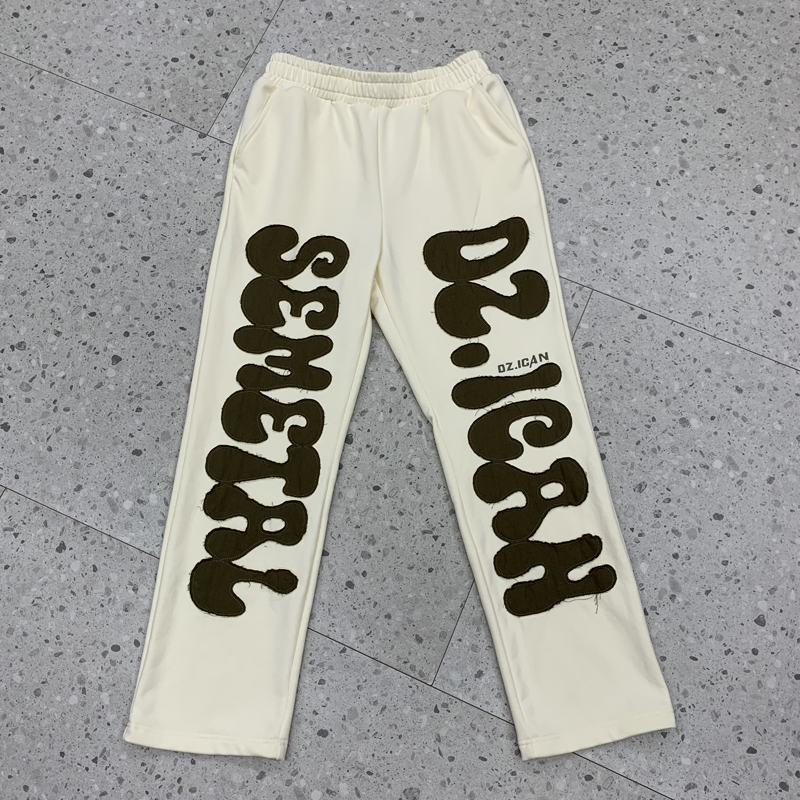
Precision embroidery requires careful execution on heavyweight materials. High stitch counts demand robust backing materials to prevent the heavy fleece from puckering around the design. Appliqué and chenille patches offer excellent alternatives for collegiate or vintage positioning. These techniques layer different fabrics onto the garment, creating substantial, textured graphics that withstand heavy wear. When applying chenille, the backing must be heat-sealed and stitched to prevent the edges from lifting over time.
Quality control separates professional brands from amateurs. You must establish strict, acceptable tolerances for print cracking, color fading, and thread unraveling. A single defective batch can ruin a brand's reputation. Demand third-party wash-test reports from manufacturing partners before approving bulk production. These reports verify that the fabric, dye, and prints hold up to standard consumer washing and drying cycles. We recommend a minimum of five wash-and-dry cycles for the pre-production sample to evaluate shrinkage and print stability accurately.
Retail readiness mandates strict legal compliance. The Federal Trade Commission (FTC) requires specific inclusions on all apparel care labels. You must clearly state the fiber content, country of origin, and manufacturer identity. Standardized care instructions must be legible and accurate. Mitigating legal risks during importation requires verifying that all private label garments meet these federal labeling standards before they leave the factory. Failure to comply can result in customs seizures or forced relabeling at the port of entry.
The hang tag communicates brand identity and vital product information. Cardstock weight matters; a thick, textured paper stock feels premium in the hand. The attachment method also influences perception. Using waxed cotton string and safety pins looks far more sophisticated than standard plastic swift tacks. For wholesale readiness, hang tags must integrate barcodes, SKUs, and MSRP information clearly and scannably. The placement of the hang tag should not interfere with the garment's fabric; attaching it to the woven neck label or underarm seam prevents pinholes in the fleece.
The unboxing experience represents the final retail touchpoint. Shipping garments in standard, thin clear polybags diminishes the perceived value of a premium product. Transitioning to frosted, branded EVA zip-lock bags elevates the presentation significantly. These bags protect the garment during transit and provide a reusable storage option for the consumer. Alternatively, utilizing sustainable, compostable packaging aligns with modern consumer expectations and reinforces a brand's commitment to environmental responsibility.
Understanding the manufacturing cost curve is essential for scaling. Adding custom hardware, woven labels, and specific dye treatments impacts the per-unit cost significantly at lower volumes. A production run of 100 units carries a much higher per-garment burden for custom molds and setup fees than a run of 1,000 units. Brands must compare the overhead of semi-ready OEM programs, which typically offer lower MOQs, against fully bespoke cut-and-sew operations that demand higher volume commitments. You must calculate the break-even point where the cost of custom molds for zippers and aglets makes sense for your production volume.
Never proceed to bulk manufacturing without a finalized Pre-Production Sample (PPS). The PPS serves as the physical contract between the brand and the factory. It highlights common discrepancies between digital tech packs and physical reality. You must verify color matching under different light sources, check sizing grading across different sizes, and test the functionality of all custom hardware during this phase. If the PPS requires revisions, demand a second sample. Approving bulk production based on photos or promises of corrections during the main run always leads to disaster.
Choosing between domestic and overseas manufacturing involves balancing speed against customization. Domestic production generally offers faster speed-to-market and easier communication. However, overseas manufacturing typically provides deeper customization capabilities, access to specialized fabrics, and more complex trim sourcing under one roof. Map your production calendar carefully to account for shipping delays and customs clearance. Factor in an additional two weeks for unexpected port delays when importing fully custom garments.
Retail-ready custom apparel requires a holistic approach to garment construction. Fabric weight, structural integrity, and micro-branding must align perfectly to justify premium positioning. Cutting corners on hardware or labeling immediately downgrades the consumer experience. Success depends on executing these technical details flawlessly across every production run.
Brands should prioritize manufacturing partners capable of handling both cut-and-sew construction and custom trim sourcing in-house. This consolidation reduces supply chain fragmentation and ensures quality control remains consistent from the fabric mill to the final polybag.
To move forward effectively, take these immediate actions:
Develop a comprehensive tech pack detailing exact GSM, hardware specifications, and precise label placements.
Request physical fabric swatches to verify hand-feel and weight before committing to a silhouette.
Commission a fully branded pre-production sample to test wash durability and fit accuracy.
Establish clear quality control tolerances for stitching, print longevity, and colorfastness in writing.
A: White label hoodies are pre-manufactured blanks that brands purchase and decorate with their own prints. Private label hoodies are manufactured specifically for a brand, allowing for customization of fabric, fit, custom neck labels, and unique hardware right on the production line.
A: Premium heavyweight fleece typically ranges from 400 to 500+ GSM. This weight provides a structured drape, superior warmth, and a high-quality hand-feel that distinguishes it from standard 250-300 GSM promotional garments.
A: ODM uses a factory's existing patterns and fits, allowing brands to customize fabrics and labels. OEM is fully bespoke cut-and-sew, where the brand provides custom tech packs and unique sizing blocks for a completely original garment.
A: The FTC requires care labels to clearly state the garment's fiber content percentages, the country of origin, the manufacturer's identity, and standardized care instructions for washing and drying.
A: Specify cross-grain cutting in your tech pack to minimize vertical shrinkage. To prevent pilling, select high-quality combed cotton or a strategic cotton-polyester blend, and demand third-party wash-test reports from your manufacturer.
A: Yes, decorators can remove standard drawstrings from blanks and thread custom drawcords with premium metal or silicone aglets. However, it is more efficient to integrate custom hardware during the initial manufacturing process.


